1 Comment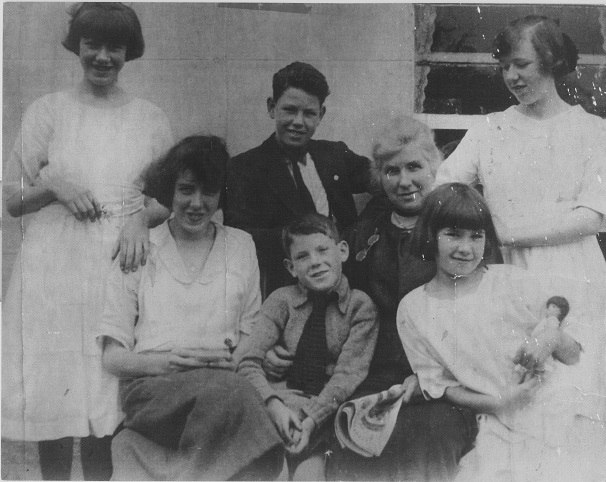
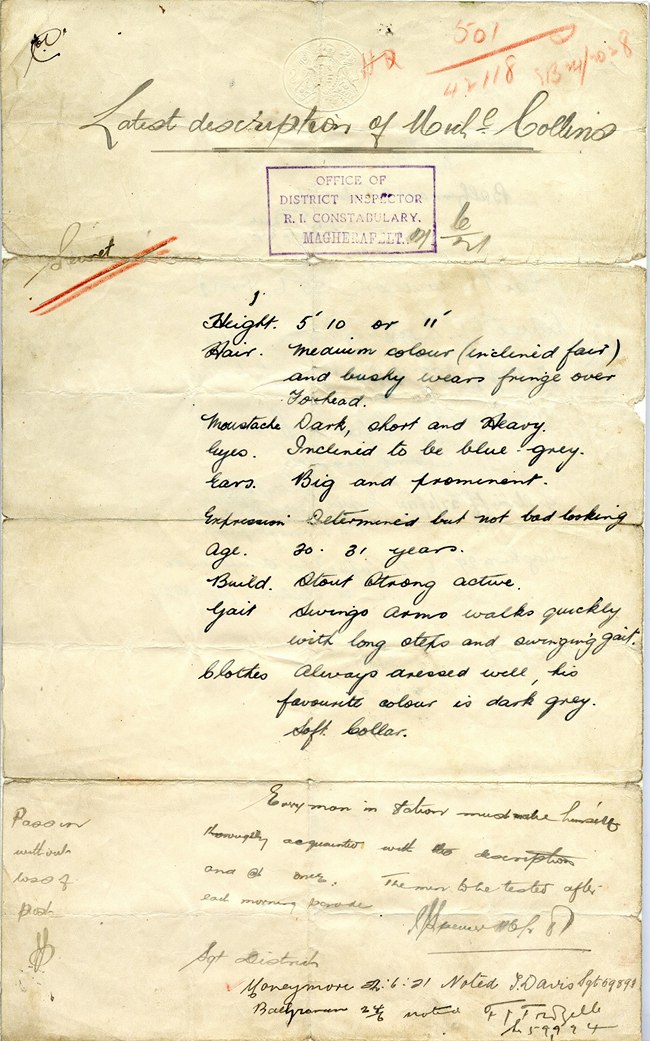
Éamon Donnelly (1877–1944) was a Nationalist politician who lived at “Teach Mhuire,” Courtenay Hill, Newry. The Museum holds his collection of c.400 documents, including correspondence, speeches/lectures, photographs and contemporary newspaper cuttings. The correspondence is from leading figures in Irish nationalism, including Éamon de Valera, Michael Collins, William O’Brien, Cahir Healy, Mary MacSwiney, Maud Gonne MacBride, Kathleen Clarke and, the contemporary author of The Irish Republic, Dorothy MacArdle.

Éamon Donnelly (named Edward John Donnelly) was born in Middletown, Co. Armagh on 19th July 1877. After receiving his education, Donnelly became a labourer and later was storekeeper at the Armagh Asylum. He joined the G.A.A., the Gaelic League, and Sinn Féin, and was one of the first of the Irish Volunteers in Armagh. On Easter Sunday 1916 he joined with Volunteers from the north who mobilised at Coalisland, Co. Tyrone. Though they dispersed without fighting Donnelly was arrested because of his involvement and was imprisoned in England.
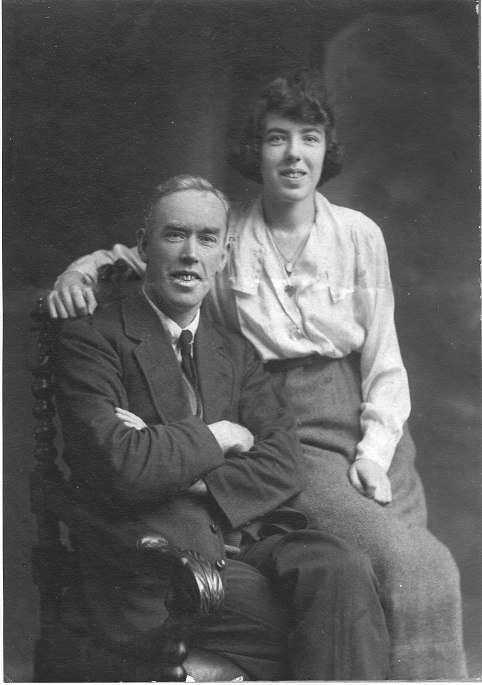
After his release and return to Ireland, Donnelly played a key role in the rise of Sinn Féin in the north. He was dismissed from his post as storekeeper in the mental hospital because of his political convictions and he became a full-time organiser for Sinn Féin in Armagh, where he was President of the local Sinn Féin Club. In the General Election of 1918 he acted as director of elections in north-east Ulster. His determination ensured that Sinn Féin contested every Irish constituency. The election resulted in a landslide victory with Sinn Féin winning 73 out of the 105 seats. The Sinn Féin MPs, however, refused to attend the Westminster Parliament, forming instead a separate legislature, Dáil Éireann.
Donnelly was elected by constituencies in both the north and south of Ireland: Armagh (1925–29), Laois-Offaly (1933–37) and Belfast Falls division (1942–44). Originally a member of Sinn Féin, he joined Fianna Fáil after its formation in 1926 and served as director of elections.
Donnelly died, aged 67, on 29th December 1944 in St. Jarlath’s Nursing Home, Herbert Street, Dublin. A requiem mass was held at St. Andrew’s Church, Westland Row, Dublin, on 30th December, which was attended by the Irish Taoiseach, Éamon de Valera, Ministers of State, members of the Dáil and Senate, and representatives of the main political parties. The next day, Donnelly was buried in St. Mary’s Cemetery, Newry, where a monument, with his image in bas relief, was erected in 1947.
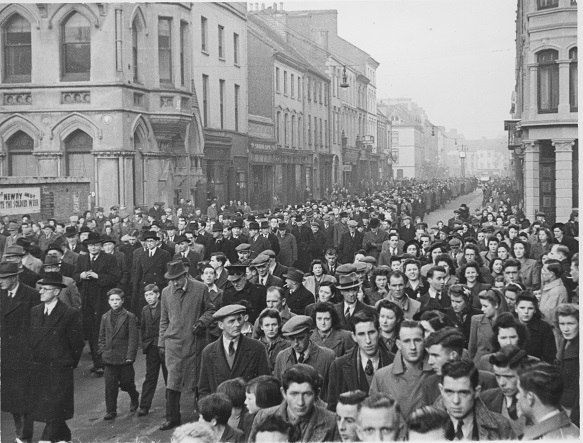
After Donnelly’s death his surviving papers were retained by his eldest child, Nellie (Eleanor Marie). Nellie had worked with her father in some of his political activities. The collection was donated to Newry and Mourne Museum in 2011 by Éamon Donnelly’s grandsons, Donal Donnelly-Wood and Sean Donnelly. Further material was also donated by another grandson, Neill Magee in 2014.
A number of documents from the Éamon Donnelly Collection are currently on display in the Museum’s temporary exhibition, The Legacy: Newry 1920 -1930, which explores the impact of Partition on the local area.
The Museum is currently offering free tours of the exhibition galleries on Wednesdays and Thursdays at 11.00 am. These must be booked in advance by calling our Education Officer at 0330 137 4422.
Newry and Mourne Museum is open Tuesday – Saturday 10.00 am – 4.30 pm. Please call 0330 137 4422 or email museum@nmandd.org for further information.
by Noreen Cunningham and Ken Abraham