 Write a comment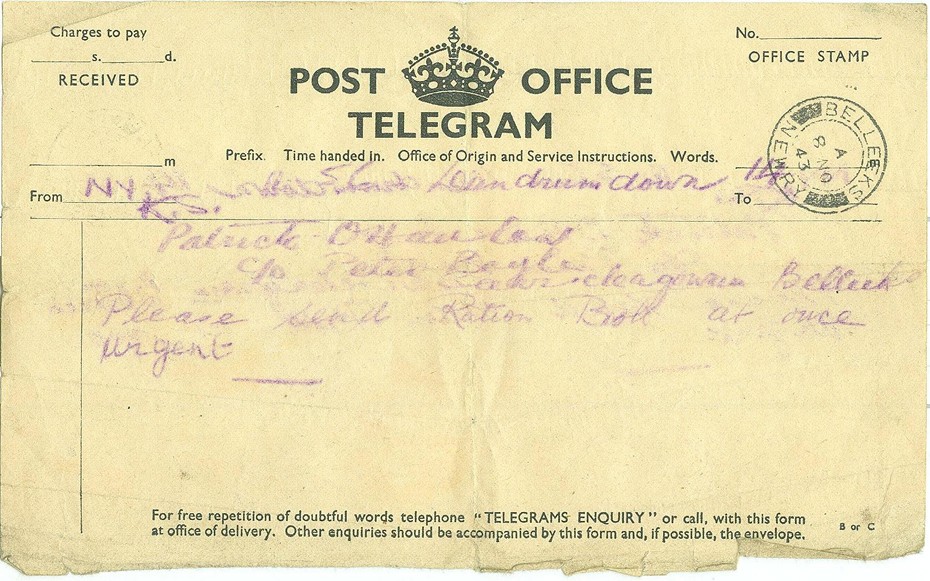
From ancient markings carved in stone to the first text messages sent by mobile phone, the story of communication is also the story of how people have stayed connected across generations. This week, Newry and Mourne Museum is inviting visitors to look again at some familiar, and perhaps surprising, objects from its collection that trace the changing ways people have shared news, kept in touch and recorded their lives.

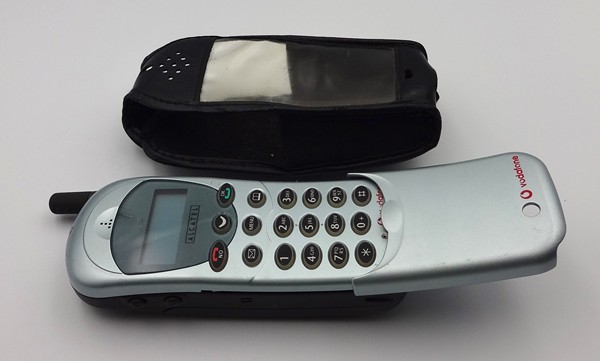
the first text message in 1992 Newry & Mourne Museum Collection
Messages carved in stone
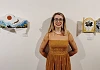
Among the items highlighted is a recent addition to the Museum’s collection: artwork depicting Ogham, now on display in the new Categorically Celtic exhibition. Also known as Beith-luis-nin, after the first letters of the alphabet, Ogham is believed to date from the 4th century. Unlike the writing most of us use today, it is read vertically from bottom to top and was usually carved onto stone to mark places, record land claims and identify burial sites.
Letters that bring history home
For centuries, the letter was one of the most personal and powerful ways to communicate. The origins of the Royal Mail postal service can be traced to the reign of Henry VIII, when Sir Brian Tuke was appointed ‘Master of Posts’. Newry had access to a postal service from as early as 1564, but it was not designated a Post Town until 1784, the same year the Irish Post Office separated from the English Post Office.
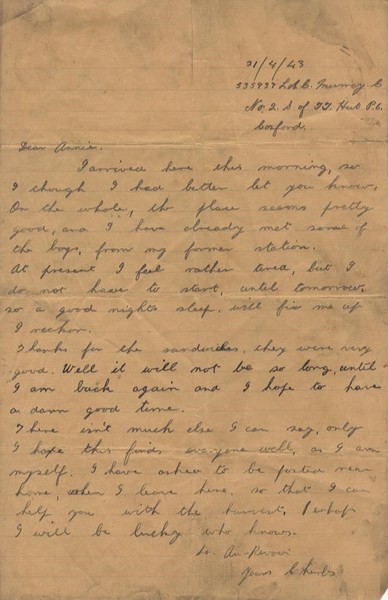
Cosford, to his sister, Annie, dated 21 April 1943.
Refers to his arrival at RAF Cosford (Staffordshire)
and says he has asked to be posted near home to help
with the harvest. Newry & Mourne Museum Collection
The Museum’s collection of letters show how national and international events were felt in local homes. Among them are letters written during the Second World War by Sergeant Charles Murray to his family, particularly his sister Annie. Although wartime censorship limited what he could say, the letters still offer a personal glimpse of life in the RAF. Another wartime letter, written by Cyril Wiltshire of the 1/5 Battalion of the Welsh Regiment while stationed in Newry, was sent to his wife Bridget. On the envelope, he included the affectionate acronym H.O.L.L.A.N.D., meaning “hope our love lasts and never dies”.
When speed mattered
If letters carried personal stories, telegrams changed expectations around speed. In 1837, William Fothergill Cooke and Charles Wheatstone patented a telegraph system in England that used magnetic needles to point to letters on a dial when an electrical current passed through wires. It allowed information to travel far more quickly than a letter- a vital advantage in times of urgency, including during war.
From telegrams to telephones
Even so, letters remained cheaper to send, and the arrival of the telephone gradually reduced the telegram’s importance. After 1982, BT continued a telemessage service as a replacement for telegrams. This was later sold to the Swiss-based company Unitel Telegram Services as Telegrams Online in 2003, although the service has since closed.
The telephone brought another leap forward. Alexander Graham Bell was granted the first telephone patent in 1876, and in the decades that followed, the technology became increasingly accessible and portable. By 1984, the first commercially available mobile phone, the Motorola DynaTAC 8000X, had arrived.
Today, communication is instant, portable and visual. Text messaging, first introduced in 1992 by Vodafone engineer Neil Papworth, helped change not only how quickly people could communicate, but also how they used language. With Wi-Fi added to phones in the early 2000s and emojis now part of everyday conversation, the Museum’s collection offers a timely reminder that every new technology leaves its own mark on how we connect.
The Museum is currently offering free tours of the main exhibition galleries on Wednesdays at 2.00 pm. These must be booked in advance by calling our Education Officer at 0330 137 4422.
Newry and Mourne Museum is open Tuesday – Saturday 10.00 am – 4.30 pm. Please call 0330 137 4422 or email museums@nmandd.org for further information.
Visit their website at www.visitmournegullionstrangford.com/museums