 Write a comment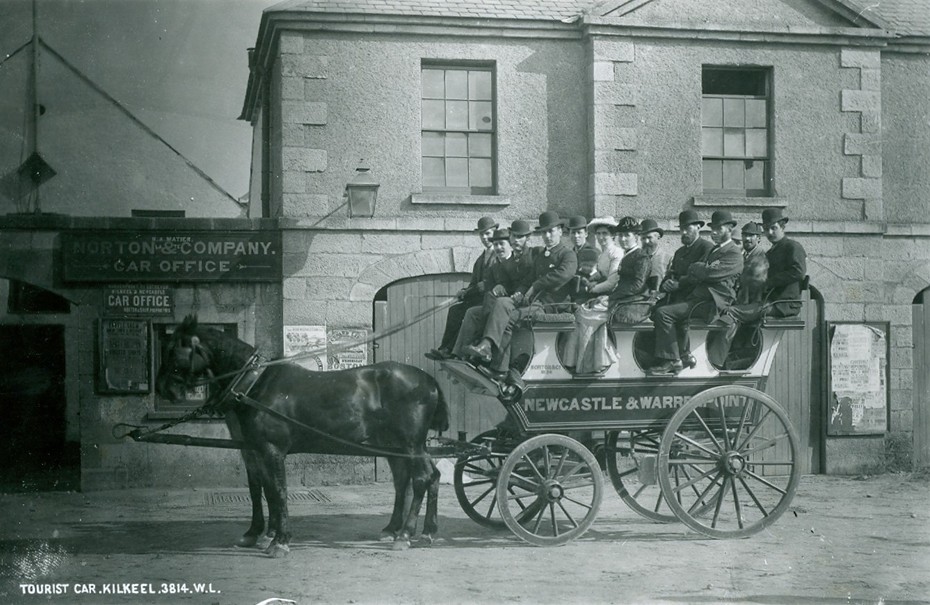
The Mourne Mountains have long attracted visitors to the area. Early tourists of the 19th century were drawn to the healing powers of the sea and the awe-inspiring beauty of the granite peaks and deep glacial valleys formed by the last Ice-Age.



picnic site in the Mourne Mountains. Newry & Mourne Museum, Newman Collection
From the early 1800s, the seaside was deemed to be beneficial for both body and mind, with sea-bathing recommended for mental health and physical energy. Warrenpoint’s transformation into a popular sea-side resort had already begun in 1824, with lodging houses, accommodation for visitors, hot and cold baths and an excellent inn available to travellers.

Tourism was further boosted by the opening of the railway line between Warrenpoint and Newry in 1849. Visitors could continue their journey to Rostrevor via an open horse-drawn tram, known as “the toast rack”. In 1876, Warrenpoint was described in A Historical Sketch of Newry by Newriensis, as important, “in the eyes of the health-seeking and pleasure-loving denizens of Newry”. From the mid-1800s, a variety of entertainment became available, with military bands and later, Pierrots - seaside concert-party entertainers, usually dressed in distinctive white costumes performing at the bandstand on the promenade. ‘Promenading’ became an activity in itself, a leisurely walk to see and be seen. The tourist popularity of the town increased again in the early 1900s with the opening of the Municipal Park and Warrenpoint Baths.
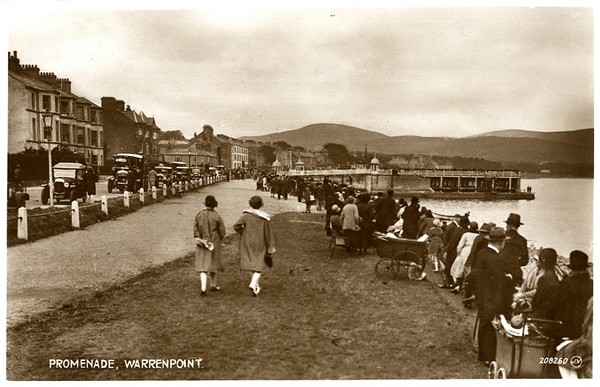
can be seen in the background, 1929. Newry & Mourne Museum Collection
In July 1877, The Graphic, a British weekly illustrated newspaper, published a series of sketches of the area under the title, “The Mourne Mountains – A New Field for Tourists”, featuring scenes of mountains, sea and resorts, along with a drawing of Norton and Shaw’s “Long Cars”.
As well as stunning scenery, the Mourne area contains a wealth of archaeological, ecclesiastical and historical sites, covering 8,000 years of human history, including Neolithic tombs, castles and mountain trails, once used by smugglers.
20th century engineering projects have also provided access to visitors. One such project, the Silent Valley Reservoir, was completed in 1933 and the surrounding Mourne Wall, a 22-mile wall connecting fifteen mountains, built between 1904 and 1922 both became popular destinations with tourists and outdoor enthusiasts.
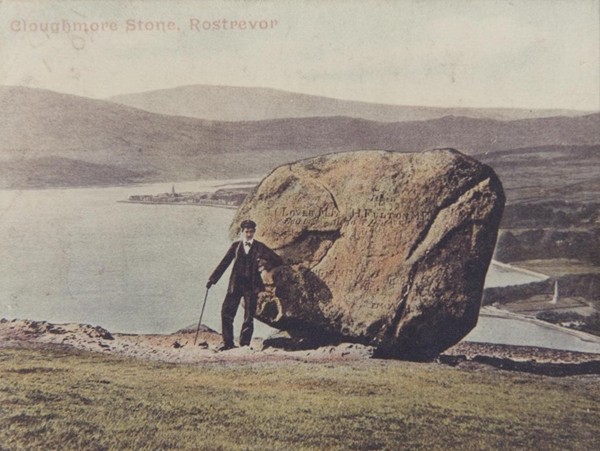
Carlingford Lough, Warrenpoint and the Ross Monument. Newry & Mourne Museum
Collection
Forestry sites too, have become playgrounds for visitors. Tollymore demesne, long famous for its plantations and scenic views was purchased by the Ministry of Agriculture from the Roden family in 1941, as land for forestry. It was designated as Northern Ireland’s first state forest park in 1955. In 1931 the Forestry Service established Rostrevor Forest, but it wasn’t until 1977 that Newry and Mourne District Council purchased the section of the Bowes-Lyon estate that became known as Kilbroney Park. The most recent area of woodland to explore is the ancient forest at Mourne Park, opened to the public for the first time in 500 years by the Woodland Trust in 2022.
Whatever the weather this summer, take some time to enjoy the splendour of this Area of Outstanding Natural Beauty on our doorstep.
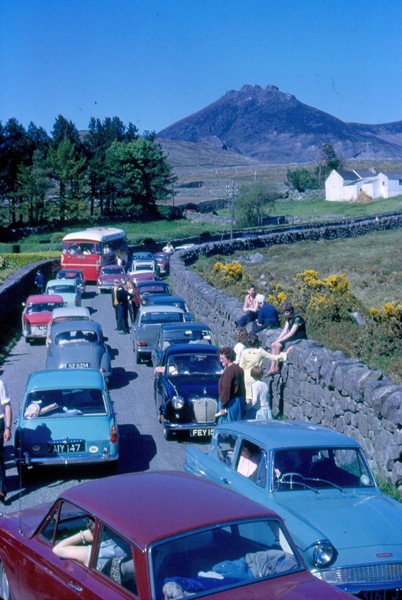
cars outside the entrance to the Silent Valley in the
Mourne Mountains. Newry & Mourne Museum,
Newman Collection
The Museum is currently offering free tours of the main exhibition galleries on Wednesdays at 2.00 pm. These must be booked in advance by calling our Education Officer at 0330 137 4422.
Newry and Mourne Museum is open Tuesday to Saturday 10.00 am to 4.30 pm. For further information visit our website: www.visitmournegullionstrangford.com/museums/newry-and-mourne-museum, call 0330 137 4422 or email museums@nmandd.org.