

















 Write a comment
Newry historian John McCabe during recent research for his Facebook Group came across a long forgotten Crannog which he believes the foundations and other parts of the structure could be in reasonably good condition below the water level at Camlough Lake.

He revealed that last week when trawling through the Newry Telegraph from March 1866 he came across a reference about the Crannog which read - 'At the northern extremity of Camlough Lough may be seen during the summer months when the water is low, an excellent specimen of the remains of a Crannog or Irish Lake Dwelling, such as were often constructed in the shallow margins of lakes like this.
The driving of stakes of young oak trees into the muddy bottom, in a circle of twenty yards diameter, and filling up the centre with clay and stones till an Island arose, and a foundation above the reeds of winter floods formed on which they erected their simple huts.'
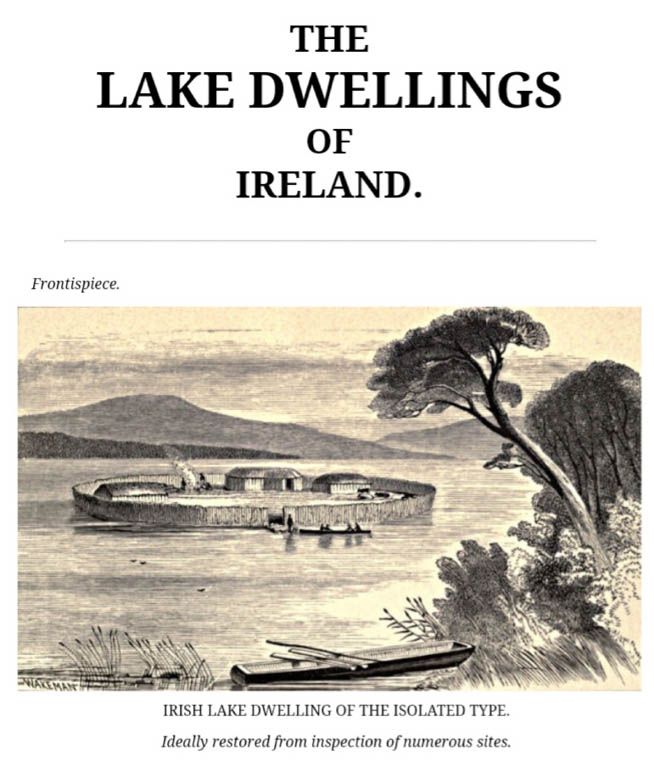
Mr McCabe stated "looking further into the existence and location of this Camlough Crannog I found another brief mention about it in a publication from 1886 'The Lake Dwellings of Ireland' and I went on to ask a local man who lives beside Camlough lake had he any knowledge about such a structure. He said he hadn't and during 1995 when the lake was almost empty there was no sign of a Crannog or any remains which would indicate that such a structure existed."
John started having reservations about there being any remains of the Crannog left when in the 1886 newspaper article it stated it was sited at the northern extremity of the lough and perhaps it may have been completely destroyed by modern development and the road which skirts along this stretch of the lough.
He continued "My attention turned to the N.I. Sites and Monuments Records and old Maps and there was mention of the Camlough Crannog with reference to another newspaper report from the Ulster Gazette of 1866. However more importantly my fears of the structure or what's left of it being completely destroyed was to be shortlived.
In the old maps it clearly showed that the Crannog was less northerly as suggested with notes that the lough having been dammed and the water level is now much higher that the Crannog has been permanently submerged.
Mr McCabe concluded "Its important to bring the once existence of this Crannog back into the public domaine and its tantalising to believe that below the waters of Camlough Lake there are foundation remains including oak stakes preserved by the clay and mud which only future dives might reveal."