 Write a comment
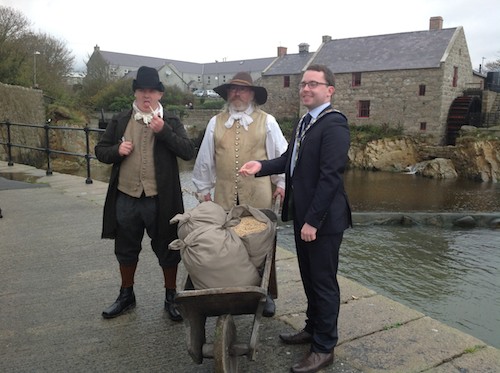
Over the past few months Annalong Cornmill has undergone structural refurbishment and is now home to an interesting new exhibition which will help the visitor and the local community enjoy and engage in the story of the Cornmill and Mourne Granite


Visitors and the local community in Mourne will now have an opportunity to experience and learn more about Mourne Granite and the important contribution it made for generations to the community here in Mourne.

The restoration and interpretative project was funded by Southern Organisation for Action in Rural Areas (SOAR) through the NI Rural Development Programme, which is part financed by the European Agricultural Fund for Rural Development (EAFRD) and is managed by the Department of Agriculture and Rural Development (DARD). Other funders include the Mourne Mountain Landscape Partnership (MMLP) through Heritage Lottery Fund (HLF), NIEA, managed by Newry & Mourne District Council who own and manage the Cornmill
The Cornmill dates back to the 1800s and was powered by the Annalong River. The locals came to have their corn ground for over 100 years. Annalong Cornmill is one of the very few Cornmills here in Northern Ireland to be still workable under a live water supply and from a landscape viewpoint, it is very picturesque and enhances the character of the adjacent harbour.
Through an engaging range of interpretative methods including audio, video, interactive artefacts and graphic displays, the restored cornmill will engage all ages through telling the story in a series of facts and events which are woven into a story which will appeal to all ages
To help engage all ages and particularly the new era of technology and the opportunity it presents to engage a wider audience, a smart phone app entitled ‘Mourne Granite Story’ has been developed. To help explore the story of Mourne Granite 5 tours have been created including Annalong Harbour, Bloody Bridge, The Granite Trail at Newcastle, Trassey Track and inside Annalong Cornmill. These working tours tell the story of the ‘stonemen’ of Mourne. Hardy, strong and skilful, they shaped tough granite into the stones which built the city of Belfast and beyond. Along the way you’ll also encounter smugglers, sailors, and learn a little more about this amazing landscape.
Mayor Daire Hughes said ‘Congratulations and well done to all involved in this restoration project, Annalong Cornmill will be available for many future years to learn from and to experience. Mayor Hughes acknowledged the important role of the funders in making this important heritage project a reality’.
Speaking at the opening of the restored Cornmill SOAR JCC Vice Chair Cllr Declan McAteer said “we have invested £128,000 in this project supporting the development of the Cornmill as an Interpretation and Exhibition facility in order to bring back to life an important part of our rural heritage. Projects such as this also provide the essential foundation for drawing an increasing number of much needed visitors to this region, supporting rural businesses and ultimately improving the quality of life for all rural dwellers”.
Martin McDonald, Interim Chair of the Northern Ireland Committee of the Heritage Lottery Fund, said “it is wonderful to see new life injected into this building which has been so important to the community for so long. The interpretation is an important element of the Mourne Mountains Landscape Partnership Scheme and the tours will help visitors to experience this beautiful landscape in an informed and unique way.”
Welcoming the restoration of Annalong Cornmill, Environment Minister Mark H Durkan said: “I would also like to congratulate all involved in restoring the Cornmill. This is a great historic asset for the local community and will be of interest to the many tourists in this area. It is a very good example of my department taking a lead role in community led regeneration, of a valuable local heritage asset for economic and tourist development while working in partnership with key people locally.
Moving forward it is hoped to further develop Annalong Cornmill and to establish a network of volunteers who will be able to relate the history of granite extraction and how it links the local community to the landscape.