
 Write a comment
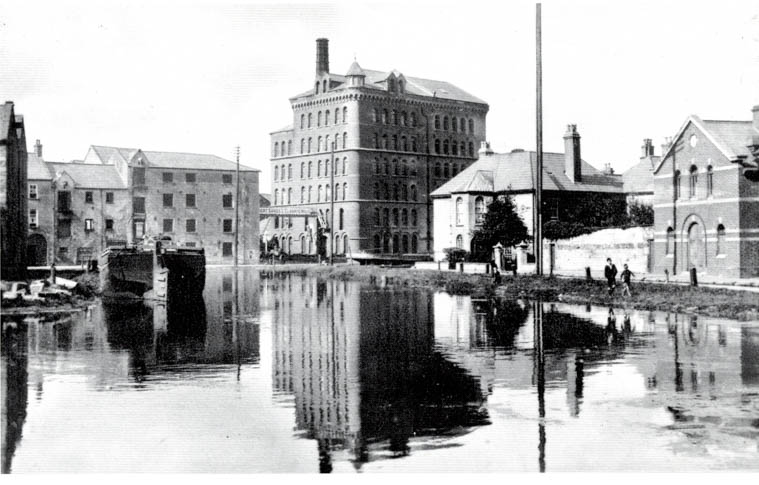
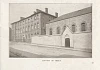
Local people all know the elegant Clanrye Mill that sits on the corner of Canal Quay and New Street. It is now a Fane Valley animal feed depot but much is unknown of its proud milling history and Robert Sands, who owned the Mill from the late 1880s until his death in 1915. He was a described as a man who liked to roll up his sleeves and keep them rolled up. From a simple grain store opened in 1884 Robert Sands’ milling business in Newry rapidly grew in a tough climate.

The Businessman
Robert Sands was born in Clare, near Tandragee in 1854. He came to Newry in 1878 to work for R Walker and Sons and then, subsequently, for Abraham Sinclair and Son, both well-known milling firms. In 1884 Sands opened a small store on Merchants Quay with one employee; it held 30 tonnes of grain. The business expanded rapidly and within three years he had purchased the nearby Sinclair mill. This is the 4-6 storey Venetian style building designed by James Watson, known as Clanrye Mill. On the site a large store was built capable of holding 2000 tonnes of grain.

Sands bought maize (Indian corn) from as far away as the River Plate in South America and ground this into maize (yellow or Indian) meal. He also made a finer grind of Plate maize known as ‘Golden Gem’ or ‘Snowdrift’ which was used for baking bread.
He had started out buying and selling corn meal but Sands saw that providing a diverse range of grain products would help weather the tide of changing food habits. This eventually included oat and corn meal and imported flour. These were sold to Irish and English markets.
In 1906 the Newry Reporter wrote that the town was surrounded by mills in various stages of decay. Irish wheat flour and oatmeal production were declining partly because of cheaper imports of American flour. This was good for consumers but wounded the local grain industry.
However, this economic climate did not deter Robert Sands from opening an oat and wheat mill in Hill Street in Newry in 1909 where grain was dried for manufacture into oat meal. This was achieved by the famous eclipse kiln designed by an employee for drying the cleaned grain. This was known as Duncan’s Patent Eclipse Kiln which was manufactured in England and was sold world wide.
Human consumption of maize grew after the potato famine of 1845-9. Corn was made into stirabout and could be baked as griddle cakes. By the 1920s it had reduced in popularity and was instead being used for animal feed, particularly poultry and cattle. Sand’s mill was later one of the main producers in Ulster of provender (animal feed).

In addition to milling, Robert Sands had several other business interests in Newry. In his early days in the town he had also been a coal merchant. When his mill in Hill Street was destroyed by fire in 1910, he purchased the Newry Reporter and its printing works, which had been destroyed in the same fire, and re-established this business at Clanrye.
Newry Port
The location of Clanrye Mills was important, being close to the port allowing easy transport of imported flour and maize to the mill. The River Plate maize from South America would arrive on ships in Carlingford Lough. From there it was transported by lighters (barges) and shipped via the Canal to Clanrye Mills.
When Robert Sands died in 1915 his wife eventually sold the milling business to four senior staff members, Messers Breakey, Corkey, Craig and Lyons. They formed it into a limited company, Robert Sands Ltd. It was then sold in 1985 to Fane Valley Foods.
Newry and Mourne Museum is temporarily closed.
by Anna Diaz
Anna Diaz is a Volunteer at Newry and Mourne Museum and is studying for an MA in Museum Practice and Management at the University of Ulster.