










 Write a comment
Now connected by the Greenway, the Albert Basin and Victoria Lock are a key part of Newry and Mourne’s maritime heritage. Named after Queen Victoria’s husband, the Albert Basin was built between 1842 – 1850 at the same time as the extension of the ship canal to Upper Fathom. Previously, Newry Canal entered the tidal river at Lower Fathom but as the river channel was prone to silting, large boats could not reach Newry, so the Canal was extended to enter a deeper section of the river.


Built at the same time as the Albert Basin, the Victoria Lock is the final junction linking the natural and man-made waterway between Carlingford Lough and Lough Neagh. Designed by Sir John Rennie and built by celebrated railway builder and engineer, William Dargan, it was a complex piece of engineering. It was built with Carlingford limestone and granite and was 220ft in length and 50ft wide. The total cost of the operation was £40,000. The first vessels which passed through the Victoria Lock into the Albert Basin, when it opened in April 1850, included three steamers of over 500 tonnes burden.

In 1855 the railway line was extended from Edward Street to a siding along the west perimeter of the Albert Basin. The Basin became a bustling maritime port full of ships and lined with gantries. Timber coal, wine and sugar were the main imports and cattle, Mourne granite and manufactured goods such as linen were the main exports. This maritime trade and the emergence of local shipping firms, such as Joseph Fisher & Sons Ltd, gave many local men jobs and the chance to see the world.
In 1928 the collapse of a culvert led to water levels in the Canal being substantially reduced by five feet. This left the Canal useless for navigation purposes and all sailings into the port were held up, with some having to anchor in Carlingford Lough. It took 200 men working day and night to lessen the damage.
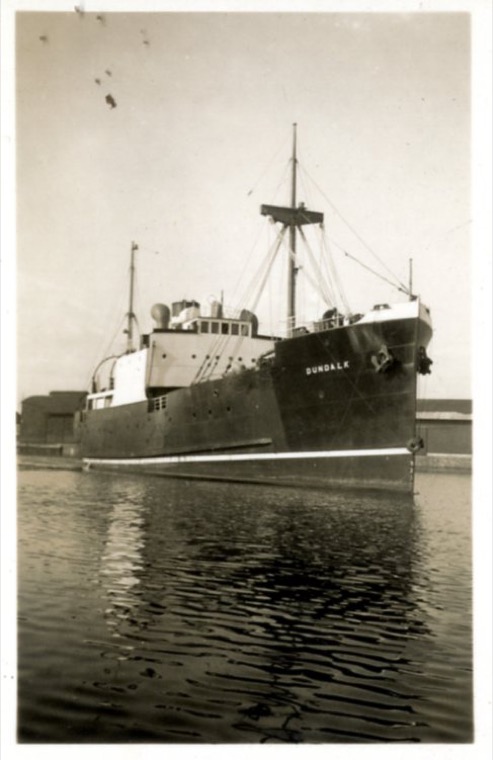
Up until the 1950s the Albert Basin was a very busy place. Where the Quays shopping centre now stands, coal boats, known as ‘colliers’, owned by Joseph Fisher and Sons were discharged. On the ‘colliers’ gangs of dockers literally dug out the coal into wooden tubs, which were hoisted by the ships’ derricks into waiting railway wagons. On the other side of the Basin ships like MV Dundalk loaded livestock for export to Liverpool.
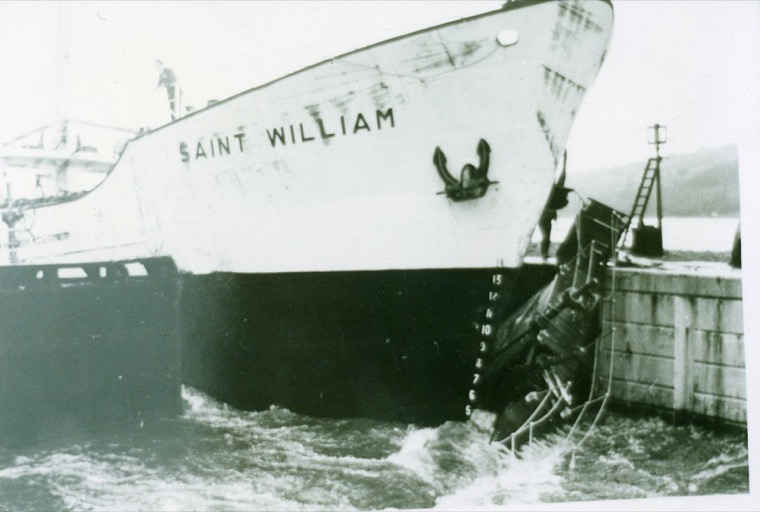
In 1968 a number of vessels were trapped in the Albert Basin for several weeks after MV Saint William, a Glasgow collier, wrecked the seaward gates of the Victoria Lock, jeopardising Newry’s future as a port. By the late 1960s restrictions imposed by the ship canal system meant that many ships were too large for the port to accommodate and a decision was made to move ship handling facilities to Warrenpoint.
The Newry Ship Canal ceased business on Tuesday 26th March 1974. The last ship, the Anna Broere, sailed as far as the Burma Oil Depot on the Fathom Line to discharge a cargo of 650 tonnes of acetone and, on the following day, it exited the Victoria Lock bringing the career of the Albert Basin as an international port to an end.
Newry and Mourne Museum is temporarily closed.
by Noelle Murtagh