

 2 Comments
Situated on a promontory in the estuary of the Clanrye River, Narrow Water Castle (also known locally as Narrow Water Keep) is one of the most picturesque and well-known historic monuments in the Newry area. For over two hundred years it has attracted the talents of both professional and amateur artists and, in more recent decades, images of the Castle have been rarely absent from tourism brochures promoting the Newry and Mourne area to visitors. Narrow Water Castle was also once a familiar sight to those travelling to and from Warrenpoint by train. This brief article looks at the early history of Narrow Water Castle and provides some explanation as to why it was built.
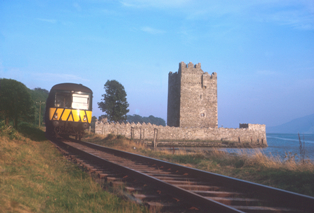
The strategic importance of the Newry and Carlingford area became increasingly significant in the mid-16th century as the English government began to re-establish itself in Ulster, particularly after the death of Shane O’Neill in 1567. The grant of the former estates of the medieval Cistercian abbey at Newry to Sir Nicholas Bagenal, a settler from Staffordshire, in 1552 was part of this expansion. Research by Dr James Sheridan for Newry and Mourne Museum on the Bagenals suggests that this expansion also lies behind Captain John Sankey being established in the area south of Newry around Narrow Water in the 1560s. This was probably an attempt to limit the power of Sir Hugh Magennis of Iveagh along the west coastal area of Carlingford Lough. Sankey was paid £361 4s 2d for the construction of Narrow Water Castle and was granted the building in 1570. He was also granted the old district of Legan which comprised the townlands of Narrow Water, Dromore, Ringmackilroy, Aghnamoira, Burren, Carrogs, Carrickmacstay, Ballydesland, Donaghaguy, Ballymaconaghy, Ballyrussell and Tamnaharry.
The castle which Sankey built at Narrow Water is a typical example of a tower-house, the favoured type of residence of the lesser aristocracy and gentry in late medieval and early 16th century Ireland. The tower-house at Narrow Water has three floors, the first floor having a barrel vault. Like many medieval tower-houses in the northern Pale and east Down, the ground floor entrance is protected by a murder hole and box machicolation (a bottomless stone box projecting from roof level through which objects could be dropped on assailants below). The tower-house was surrounded by a bawn, which was described in 1570, as containing a stable and nine cottages. On the outside of the bawn wall, on the east side, was a landing place for boats.

Although John Sankey played an important role in guarding the approach to Newry, his grant was nevertheless cancelled in 1575 as part of an attempt by the government to placate Sir Hugh Magennis. Magennis was is possession of Narrow Water Castle by 1580 and the Magennises continued to hold the Castle until it, and the surrounding lands, were confiscated during the Cromwellian period and given to Joseph Deane, an English adventurer. In 1670 Deane sold Narrow Water Castle and its lands to Francis Hall of Glassdrummond in county Armagh and the Hall family subsequently developed the Narrow Water estate and the town of Warrenpoint.
By this time Narrow Water Castle had ceased to have any military function and was used for industrial purposes in the 18th century. Some restoration to the building, including the repair of the bawn wall, was carried out in the 19th century. The Castle became a State Care Monument in 1956.
The Museum is currently offering free tours of the exhibition galleries on Wednesdays and Thursdays at 11.00 am. These must be booked in advance by calling our Education Officer at 0330 137 4422.
Newry and Mourne Museum is open Tuesday – Saturday 10.00 am – 4.30 pm. Please call 0330 137 4422 or email museum@nmandd.org for further information.
Write a comment
Newry and Mourne Museum’s Reside Collection holds many architectural drawings and plans by Major Gerald Reside from his work as an architect. The son of Samuel Wilson Reside, who set up an architectural and engineering practice in Newry in the early 20th century, Major Gerald Reside attended Campbell College and Queen’s University Belfast. After graduating with a degree in civil engineering, he immediately joined the family architectural and engineering practice, remaining there for his entire career. The Collection includes plans for homes in the area which give a fascinating insight into how people lived at the time.

A 1948 architectural drawing by Major Reside shows a proposed dwelling house at Corgary in county Down. This plan shows the type of rural housing which was being erected in south Down in years after World War II. The absence of a bathroom and indoor lavatory indicates that a mains water supply was still absent from the majority of rural areas at the time. The bungalow consisted of an entrance porch, hallway, two bedrooms, sitting room and a kitchen with a separate larder. All of the rooms had a tiled fireplace, which would have been used to heat the property. The plan also shows a roof space area. The roof was tiled with Bangor Blue slates.
A plan for a three-bedroom, two-storey detached house in Mullaghbawn from 1948 by Major Reside, indicates a different way of living. Like the Corgary house, the roof was tiled in Bangor Blue slates, there was a fireplace in every room and off the kitchen was a walk-in larder. However, this house had both a main bathroom upstairs and a downstairs WC. This would indicate that the property was very close to a water source that allowed for the house to be plumbed. The property was also rendered with cement.

Major Reside’s work was quite varied as he designed many different types of homes in area, that reflected the owner’s needs. A plan for a house at Gransha, near Rathfriland from the 1940s shows a dwelling with different features. Featuring a statement bay window, this property was roofed with Redhill tiles. As well as being fully plumbed, with a WC and bathroom, the home had a kitchen with separate scullery and larder. Interesting, the hallway in the house had a dedicated pram space to suit the needs of a young family.

Also included in the Reside Collection are plans of works by Samuel Reside. Of note is an architectural drawing of the gate lodge to Moore Lodge on the outskirts of Newry. Moore Lodge and its gate lodge were designed by Samuel Wilson Reside c.1912 for John Hunter Moore, a solicitor in Newry and Land Agent to the Earl of Kilmorey. The three-bedroom house has a walled yard and coal shed. Like Moore Lodge, the pebble dashed house has been influenced by the Arts and Crafts Movement with a distinctive veranda and a wooden seat.
The Reside Collection is one of the most important local history archives in the country and this short article gives a brief insight into one of the fascinating aspects of local social history reflected in the Collection. The house plans drawn by the Resides not only indicate the ambitions and requirements of the occupants but the skills, the range of building materials and architectural and engineering practices prevalent in the first half of the last century.
The Museum is currently offering free tours of the exhibition galleries on Wednesdays and Thursdays at 11.00 am. These must be booked in advance by calling our Education Officer at 0330 137 4422.

Newry and Mourne Museum is open Tuesday – Saturday 10.00 am – 4.30 pm. Please call 0330 137 4422 or email museum@nmandd.org for further information.
Please visit Newry and Mourne Museum’s new website at newry-and-mourne-museum
Write a comment
Born in 1832, Thomas D’Arcy Hoey is considered one of the most prominent and influential businessmen in 19th century Newry. He owned the principle share of the local spirit wholesalers, Matt. D’Arcy & Co. Ltd. and was a major shareholder in the Newry Navigation Company. He was made a Magistrate in 1869 and served as a Justice of the Peace.
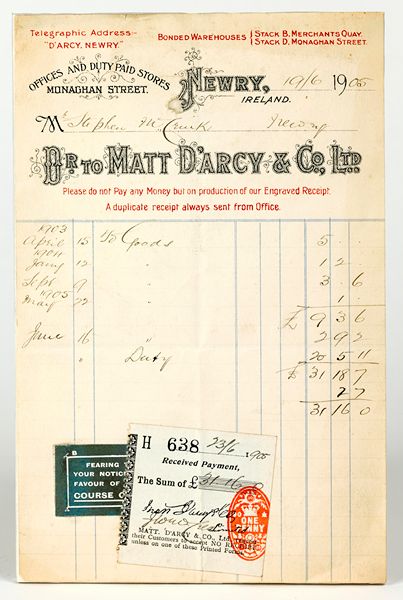
Thomas D’Arcy’s uncle, Matt D’Arcy, made him apprentice in his distillery, at the age of twenty-one. After the death of Matt D’Arcy, Thomas took over the management of the company at the age of twenty-four. Under the management of D’Arcy Hoey, the company went through several changes to improve working conditions and sales. During his twenty-nine years of working in the business, Thomas had the large chimney that was built by Samuel Hanna demolished and built a two-story warehouse that spanned twenty thousand square feet. He also hired local architect William J. Barre (of notable fame for his work on the Ulster Hall and Albert Clock in Belfast as well as the Riverside Presbyterian Church in Newry) to build a fascia for the building. Hoey’s competitor, Henry Thompson who was the nephew of Matt D’Arcy’s former business partner Robert Thomson, also employed Barre to create a façade for his buildings at Trevor Hill. Despite the business rivalry, both men would collaborate on occasion. Both D’Arcy Hoey and Thomson owned shareholdings in the Newry Navigation Company, which saw them working alongside one another in their attempts to extend their businesses in the proposals for a sixty-one-mile tramway spanning from Rathfriland to county Tyrone.
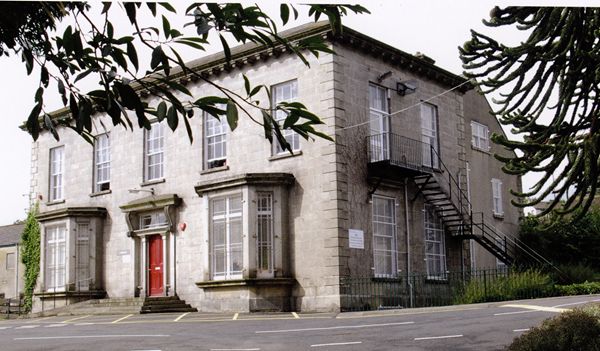
D’Arcy Hoey owned pure bred hunting horses at his home at Dromalane House which had been built by Hill Irvine, the owner of Dromalane Mill. He experienced notable success in the owning and breeding of racehorses and Edward, Prince of Wales, bought his horse ‘Coquette’ for £1500. He also owned a kennel of greyhounds and beagles for hunting. As a sportsman, D’Arcy Hoey was Master of the Newry Harriers and served as President of Newry Rowing Club, Newry Cycling Club and the Newry Regatta and Athletics Club.
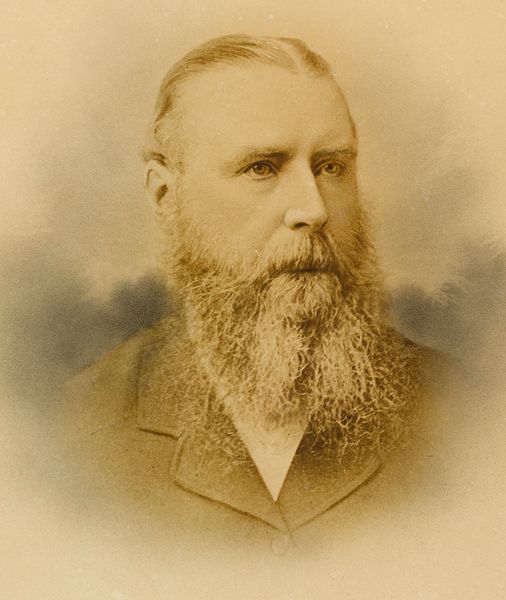
As well as his own business, Thomas D’Arcy Hoey also supported other local businessmen. After hiring him to work on the gardens at Dromalane House, D’Arcy Hoey offered funding to Thomas Smith which allowed Smith to buy the six acres that eventually became the renowned Daisy Hill Nursery.
D’Arcy Hoey died in 1886 at the age of fifty-three due to heart failure after suffering from pneumonia beforehand. His work and legacy continued through his business with his best friend and business partner Thomas O’Hagan’s operation at Matt D’Arcy and Co.
The Museum is currently offering free tours of the exhibition galleries on Wednesdays and Thursdays at 11.00 am. These must be booked in advance by calling our Education Officer at 0330 137 4422.
Newry and Mourne Museum is open Tuesday – Saturday 10.00 am – 4.30 pm. Please call 0330 137 4422 or email museum@nmandd.org for further information.
Please visit our new website at www.visitmournemountains.co.uk
1 Comment
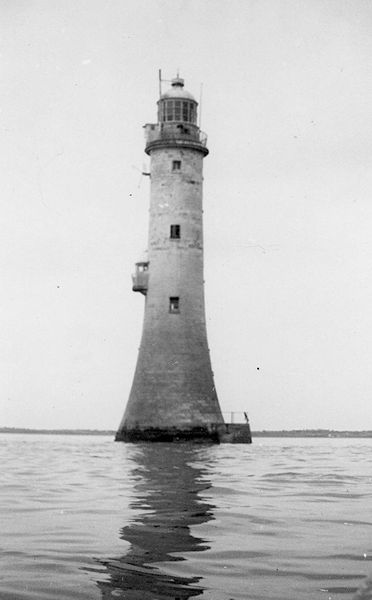
The Hugh Irvine Collection which is held by Newry and Mourne Museum contains material relating to many aspects of local history in the Kilkeel area. Born in Belfast in 1930, the son of a Presbyterian minister, Hugh Irvine came to Kilkeel in 1953 when he was appointed as a history teacher at the newly-opened Kilkeel High School. He became Vice-Principal of the school in 1962 and was Principal from 1987 until his retirement in 1993. After settling in Kilkeel, he developed a keen interest in the history, archaeology, architecture, genealogy and folklore of the area around Kilkeel, the Mourne Mountains and Rostrevor. This short article is based on Irvine’s notes on the townland of Cranfield, near Kilkeel.
The name Cranfield (Creamhchoill – ‘Wood of wild garlic’) suggests that at least part of the townland was once wooded. In 1157 Cranfield, Benagh and Ballynahatten were granted to the Cistercian Abbey, Newry by Muirchertach MacLochlainn. The Cistercians had a church in Cranfield which had a graveyard adjacent. The monks formed the townland of Grange which would appear to have been then part of Cranfield Road. The graveyard appears to have remained in use long after the closure of the church.

One of the most iconic features of Cranfield is the Haulbowline lighthouse. Completed in 1824, the light house was built to replace the 1803 Cranfield Point lighthouse which was deemed inadequate due to its poor positioning for guiding vessels along the west end of the Lough and inability to warn of the treacherous rocks at the entrance at Carlingford Lough. In the 1860s, the Cranfield Point lighthouse became a casualty to coastal erosion and collapsed. The keeper’s cottages survived and were used by the staff and families of the Haulbowline lighthouse until 1922 when modern accommodation was built in nearby Greencastle. The new lighthouse was serviced with food, water and other supplies from Cranfield Point. The boat was kept on the grass and was pulled down to the fish yard when needed. There it was loaded then rowed across the Lough to the lighthouse.
Before World War II many homes in Cranfield were virtually self-sufficient. Every farm fattened a pig and salted it. They also put down a mease of herring which totaled about 630 fish.. Wheat and oats were also grown and every farm had its own milk and butter. There seemed to be a practice of combining farm ownership with activity at sea.
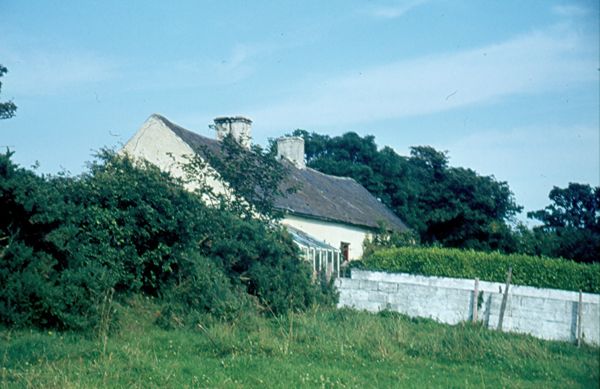
During World War II, twenty-six new airfields were constructed by Churchill’s War Cabinet to strengthen air defences. One of these airfields was sited near Kilkeel, on the Cranfield Peninsula. Land began to be requisitioned towards the end of 1941 and construction began in the early spring of 1942. The airfield was 350 acres in size and had four T2 hangers. The main runway ran NE-SW parallel to the sea and was about 1.5miles in length and 150ft wide. By 1943, the aerodrome provided two functions: the serving, maintenance and repair of aircraft and the training of airmen arriving from America in navigation, bombardment and ground to air gunnery.
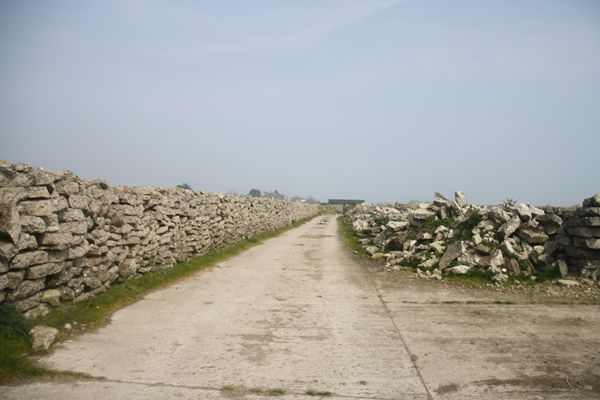
In the build-up to the D-Day Landings, the airfield was visited by General George Patten, Commanding General of the 3rd US Army. This visit led to a massive display of men, aircraft and vehicles and has passed into local folklore. Also, on 17th May 1944 General Eisenhower (the future president of the United States) flew in for an inspection of the airfield in Greencastle. The airfield was returned to the RAF in 1945 and closed shortly after. In the 1960s, most of Greencastle Airfield’s runways were broken up, and the concrete slabs were used to construct boundary walls by local landowners.
In the 1920s, the newly-formed Kilkeel Golf Club established a golf course at Cranfield on land owned by the Earl of Kilmorey. Shortly after World War II the Golf Club moved to Mourne Park with the former course becoming a caravan park. Today Cranfield and its beach is a highly popular destination for caravan holidays, attracting visitors from all over Northern Ireland and farther afield.
The Museum is currently offering free tours of the exhibition galleries on Wednesdays and Thursdays at 11.00 am. These must be booked in advance by calling our Education Officer at 0330 137 4422.
Newry and Mourne Museum is open Tuesday – Saturday 10.00 am – 4.30 pm. Please call 0330 137 4422 or email museum@nmandd.org for further information.
Please visit our new website at www.visitmournemountains.co.u
Write a comment
When the Anglo-Irish Treaty was signed on 6 December 1921 it made provision for a boundary commission to be set up should Northern Ireland opt out of joining the Irish Free State. This commission was to determine the border according to the wishes of the inhabitants of the border areas. Northern Ireland opted out of the Free State in December 1922 and the Boundary Commission convened in December 1924 and sat until the following July.
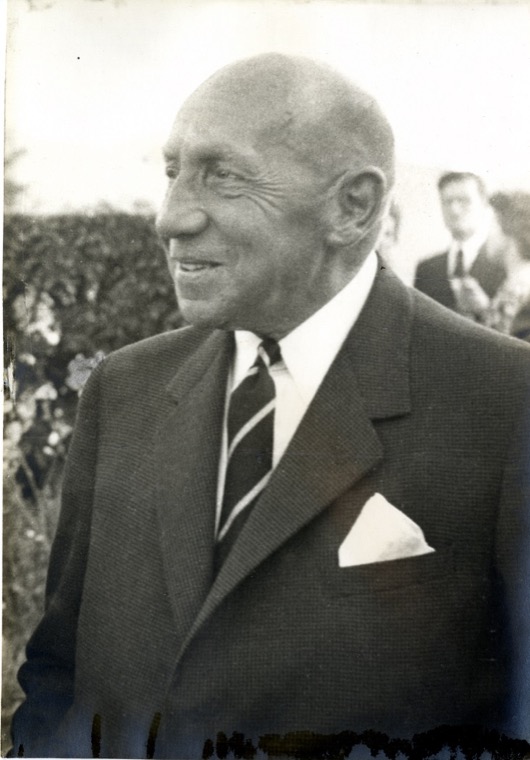
South Armagh and south Down were areas in which the border was highly contested and a quite a number of local Nationalists and Unionists made submissions to the Commission. These included businessmen, church men, farmers, professionals and public servants. The submissions are now kept in the National Archives of the United Kingdom at Kew but a number of submissions in draft form are included in the Reside Collection at Newry and Mourne Museum.
The following quotations from submissions made on behalf of local organisations by six leading people from the area illustrate the varying opinions about Partition and the location of the border at the time.
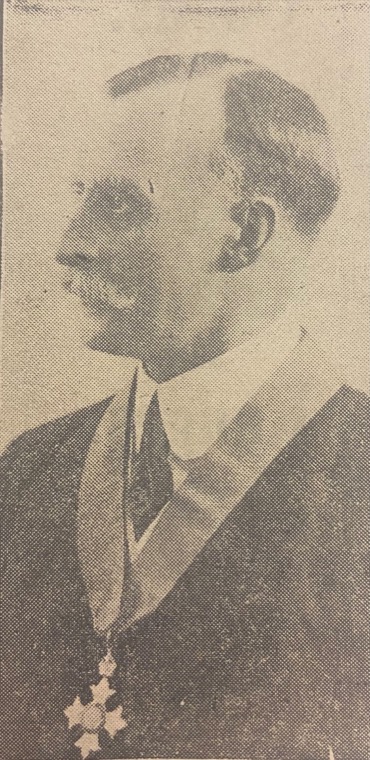
William M. Cronin, Town Clerk of Newry, Newry Urban District Council,
Secretary of the Newry Port Sanitary Authority and Representative for Newry Urban District Council on Down County Council
‘Not only would it be highly detrimental to the commercial interests of Newry if in the fixing of the boundary the town was deprived of any portion of its natural commercial hinterland but it would be also injurious to the best interests of the portion cut off. I therefore support the claim that the entire area comprised Poor Law Union of Newry and Kilkeel should be retained in the Irish Free State as desired by the majority of the inhabitants of the said Unions … ‘
Matthew H. McCann, Director of Bakery firm ‘Arthur McCann Limited’,
Newry Union (Armagh)
‘Since the establishment of the Customs Barrier on the present temporary Boundary the out-put from my bakeries has been considerably reduced owing to the fact that the confectionery made by my firm cannot now be carried by my carts over the Customs barrier. The reason for this is that a protective duty of three pence and three-fifths per pound weight has been imposed on confectionery in the Free State, with the result that my firm cannot possibly compete with the Free State bakeries’.
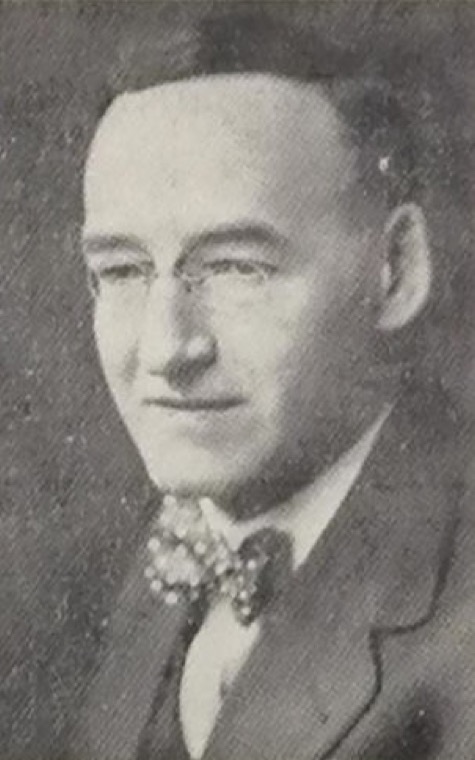
William Johnson, Solicitor,
Principal Property Owners, Traders, Lodging house-Keepers and Residents, Urban District of Warrenpoint
‘if I thought it would be to the economic interest of Warrenpoint, as a seaside resort, to be transferred to the Irish Free State, believe me, I would say so; but so long as we have in Ireland two States, the North of Ireland State and the Irish Free State, I am firmly convinced – much as I would like to see a united Ireland; but that is an ideal that will take years to bring about – but until that comes about, Warrenpoint’s economic interests, in my opinion, are as a part of Northern Ireland’.
Frank Fisher, Justice of the Peace, Coal Importer and Ship Owner
Newry Chamber of Commerce
‘So far as the linen trade is concerned, I do not believe one of them would touch us… These linen people are very bigoted people. They would not touch the Free State – in fact they have told us that’.
‘If Newry goes Free State I believe we will immediately lose the Linen Mills and I believe the result will be that one half of the Newry Coal trade will be destroyed’.
John Foster, Vice President Newry Chamber of Commerce, Draper
Newry Chamber of Commerce
‘If Newry and the portion of South Armagh lying south of the town were transferred to the Free State, Newry would be ruined, as practically the whole of the town, villages and country districts from which Newry at present draws 95% of the 60% of its retail trade would be cut off from it, and the towns of Banbridge, Portadown and Armagh would benefit at its expense …’.
Reverend Felix Canon McNally, Parish Priest Upper Kilevey [Killeavy], Catholic Chaplain to the Newry Union Workhouse
Newry Union (Armagh)
‘no objection whatever to give an Oath of Allegiance to His Majesty, but he had the strongest objection to prejudice himself by taking an Oath of Allegiance to the said Northern Parliament which had only temporary control over him as Official Chaplain to the Workhouse…Witness refused to make the Declaration of Allegiance to that Parliament, and in consequence he has been deprived of his Salary from the date that the said Law came into Operation’.
These quotations give a flavour of opinions about the border and how it was interpreted and experienced in the day-to-day lives of those who live in south Armagh and south Down.
Documents from the Reside Collection relating to the work of the Boundary Commission in the Newry and Mourne area are on display in the Newry and Mourne Museum’s temporary exhibition, The Legacy: Newry 1920 – 1930, which explores the impact of Partition on the Newry and Mourne area.
The Museum is currently offering free tours of the exhibition galleries on Wednesdays and Thursdays at 2.00 pm. These must be booked in advance by calling our Education Officer at 0330 137 4422.
Newry and Mourne Museum is open Tuesday – Saturday 10.00 am – 4.30 pm. Please call 0330 137 4422 or email museum@nmandd.org for further information.
Please visit our new website at www.visitmournemountains.co.uk
Write a comment
Patrick Carey was born in Kilkeel on the 28th August 1913. His father, Allen Sausmarez Carey had established Mourne Grange Preparatory School in 1901 and both he and his wife, Florence, had a love of music and literature that was to have a lasting influence on both the school and their son.
Following in his father’s academic footsteps, Patrick attended Shrewsbury School and then Oriel College, Oxford. At this time he worked with the Oxford University Dramatic Society and in 1933 become a stage director for the famous theatre director Max Reinhardt, for an Oxford production of ‘A Midsummer Night’s Dream’.
Throughout his college years, Patrick spent much of his vacation time helping at Mourne Grange, joining the staff in 1933. Known as ‘Mr. Patrick’ he inspired the beginning of a great tradition of school plays, such as ‘As You Like It’, ‘Midsummer Night’s Dream’, ‘Philaster’, ‘Henry V’ and ‘Twelfth Night’
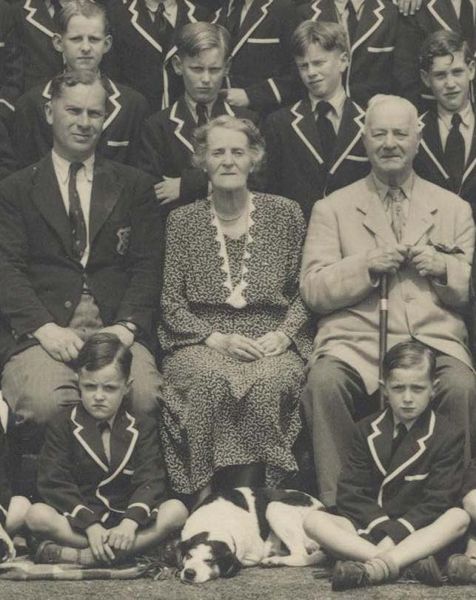
During the Second World War Patrick Carey served as a captain in the Royal Army Service Corps and took part in the invasion of Normandy. On his return to Mourne Grange he became Headmaster and connections with the school and the Newpoint Players in Newry were developed.
Patrick Carey soon began to produce some of the Newpoint plays and his first production, ‘A Midsummer’s Night Dream’ with Mourne Grange acting talent, won the premier award at the first ever Newry Drama Festival in 1949. His second production ‘Hamlet’ (also in 1949) was the first to use a cyclorama (a device used to give the illusion of a sky) on Newry Town Hall stage. Patrick would become their main producer when Livy Armstrong, their founding member left the Newry area in 1950. Over the next fifteen years, he produced many notable productions including ‘The Merchant of Venice’, which featured a singing gondolier - had telephones, water buses and even a cocktail bar, George Bernard Shaw’s ‘The Devil’s Disciple’ and, in 1961 he jointly produced ‘Many Young Men of Twenty’ alongside Seamus Mallon (a future Deputy First Minister of the Northern Ireland Assembly).
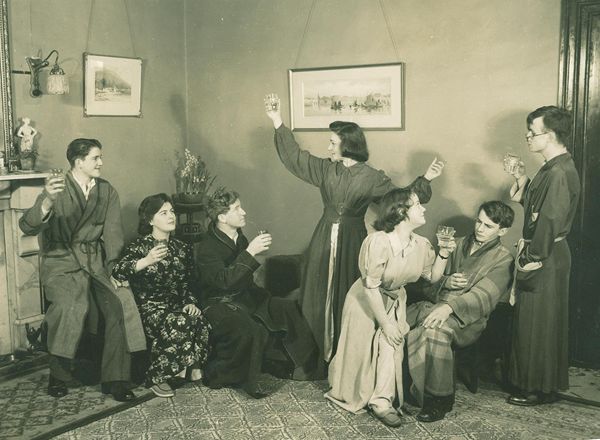
Patrick was also involved in Newry Musical & Orchestral Society for many years. In 1952 he accepted the post of producer for their production of 'Rose Marie' when Tommy Kelly left the post at short notice. In 1956 he produced Franz Schubert’s Viennese opera 'Lilac Time' and in 1960 he produced Franz Lehár’s operetta, 'The Merry Widow'.
In 1965, Patrick Carey gave up teaching and went to England. He suffered from ill health in his final years and died on 18th February 1976. He was buried in Kilkeel beside his parents.
The Museum is currently offering free tours of the exhibition galleries on Wednesdays and Thursdays at 2.00 pm. These must be booked in advance by calling our Education Officer at 0330 137 4422.
Newry and Mourne Museum is open Tuesday – Saturday 10.00 am – 4.30 pm. Please call 0330 137 4422 or email museum@nmandd.org for further information.
Please visit our new website at www.visitmournemountains.co.uk
2 Comments
Newry and Mourne Museum today occupies the site of the former McCann’s Bakery in Castle Street, Newry. We reach the final article in our series of occasional articles on the history of the Bakery by briefly looking at the business from the 1960s until its closure in the mid-1990s.

The 1960s was a period of redevelopment of the premises owned by the Victoria Bakery, with the installation of new machinery including ovens and new mixing equipment. Part of the impetus for this redevelopment was the demolition of much of Castle Street and North Street, to facilitate the construction of a dual-carriageway in front to the bakery building.

This meant that bread vans could not be loaded in front of the building and a new dispatch and loading bay had to be built at the rear of the premises. An extension to the bakery of 7,000 square feet was planned and carried out by local companies, O’Hagan and Sons, architects and Higgins and Murdock, builders. A new range of water, power and drainage services as well as state of the art bakery equipment including ovens, mixing equipment, prover, conveyor and new flour silos were installed.
The new extension was officially opened in February 1969 by M.V. Hogg, President of Newry Chamber of Commerce and a close friend of the McCann family, followed by a lunch in the Ardmore hotel.

With the opening of the new extension McCann’s Bakery entered the 1970s on a good footing. However, the 1970s was a relatively difficult decade, exacerbated locally by The Troubles, but the Bakery was able to respond to many challenges and opportunities of the period. As the Bakery had its own generator, the business was able to cope with the many power cuts which occurred at this time.
With the accession of the UK and Ireland to the EEC (later EU) in 1973, the Bakery was also able to build up trade for its products in the Cooley Peninsula, which it had not done since the 1930s due to tariffs and quotas. Always perceived as a good employer with a loyal workforce, a pension scheme was introduced for all staff in 1974.
In 1984, Christopher McCann became the managing director and the fifth generation of the family to take charge of the Victoria Bakery. The business continued to flourish and expand into the European market.

Like so many other small bakeries, however, McCann’s came under intense pressure from competition with larger firms. The bakery market was changing, with the supermarkets becoming dominant, there was an abundance of choice of bakery products and brand loyalty was harder to maintain. There was also new health and safety regulation and legislation and this also applied to the packaging and labelling of the bakery products.
McCann’s had over thirty bread vans delivering bread around the countryside in the 1980s, and this was an important service for the rural population, but wholesale trade started to overtake door to door sales in this decade.
Although new equipment had been installed in the 1980s, with the old ovens which had been in use since 1894 finally being removed, McCann’s Bakery, like many other small firms, came under intense pressure from competition with larger firms in the 1990s. McCann’s eventually ceased operating in Newry in 1996 after being taken over by Irwin’s Bakery in Portadown.
Inspection of the Bakery building at the time of its closure led to the rediscovery of Bagenal’s Castle, built by Sir Nicholas Bagenal in the mid-16th century, which had survived enveloped by the Bakery premises. The then Newry and Mourne District Council purchased the site and restored the Castle with the adjoining warehouse as a new home for Newry and Mourne Museum. The Museum opened in the restored building in March 2007.
The Museum is currently offering free tours of the exhibition galleries on Wednesdays and Thursdays at 2.00 pm. These must be booked in advance by calling our Education Officer at 0330 137 4422.
Newry and Mourne Museum is open Tuesday – Saturday 10.00 am – 4.30 pm. Please call 0330 137 4422 or email museum@nmandd.org for further information.
Please visit our new website at www.visitmournemountains.co.uk
Write a comment
Among the many unique documents on display in Newry and Mourne Museum’s temporary exhibition, The Legacy: Newry 1920 – 1930, is a schedule of excursions to Warrenpoint in the summer of 1924. Compiled by the Great Northern Railway (Ireland) (GNRI), the document provides details of excursion traffic from April 27 until September 28 of that year and includes the date of each excursion, name of party, the station from which they travelled and the number in each party. A total of 39,145 persons travelled to Warrenpoint on the GNRI line in organized excursions during this period.

The document was presented to the Boundary Commission in 1925 to support the argument that the seaside resort should remain in Northern Ireland as it showed that the majority of passengers had travelled to Warrenpoint from Northern Ireland. It was sent by the Superintendent of the Line to William Johnson, the Newry solicitor who was acting for the pro-Partition argument in the Newry and Mourne area.

As well as demonstrating the evident popularity of Warrenpoint as an excursion destination for annual outings or trips, this document enables us to make a number of observations about excursion traffic to Warrenpoint in the mid-1920s. The bulk of excursion traffic travelling to Warrenpoint came from railway stations in counties Armagh and Down. As well as Belfast, groups made the trip from south county Antrim and county Tyrone and from as far afield as Derry and Dublin.
‘Excursion Sundays’ were always popular during the days of the railway in Warrenpoint and this was no less true in 1924. Excursions to Warrenpoint were particularly popular with Sunday Schools. On Sunday 27 June 1,952 children from Lurgan with Shankill Parish Church Sunday School. Older people in Lurgan recall how the children would parade through the town led by a band on their way to the railway station. Other large Sunday School groups included St Mark’s, Portadown (1.796), Thomas Street Presbyterian Sunday School (1,605), also in Portadown, Poyntzpass, Scarva and groups from churches in Dungannon. It was common for larger parish churches to invite smaller Sunday School groups from other churches to join them.
Lots of other organizations and groups took part in the excursions. On Sunday, June 22, 1,400 members of AOH Division 45 made the trip from Belfast. On the following Sunday groups from St. Vincent de Paul (Armagh and Lisburn), St. Matthew’s Confraternities (Belfast) visited the town with a combined total of 2,213. The St. Vincent de Paul in Armagh made further trips in July, August and September.
Many employees from businesses and factories traveled by train to Warrenpoint in the summer months for their annual day out. These included Newforth Weaving Company, York Street Flax Spinning Company and the Royal Hippodrome Theatre, all from Belfast and Irish Life and General Insurance Company from Dublin.

Historically, the most important day in the season was the annual 15th August celebration in Warrenpoint. In 1924 the largest group to travel that day was 2,424, which departed from the Dublin Bridge station in Newry.
The almost 40,000 travellers noted on the document were probably only a small percentage of those who visited the resort, illustrating huge popularity of Warrenpoint as a destination for a day out, especially on a Sunday. This has not diminished over the years.
Documents from the Reside Collection relating to the work of the Boundary Commission in the Newry and Mourne area are on display in the Newry and Mourne Museum’s temporary exhibition, The Legacy: Newry 1920 – 1930, which explores the impact of Partition on the Newry and Mourne area.
The Museum is currently offering free tours of the exhibition galleries on Wednesdays and Thursdays at 2.00 pm. These must be booked in advance by calling our Education Officer at 0330 137 4422.
Newry and Mourne Museum is open Tuesday – Saturday 10.00 am – 4.30 pm. Please call 0330 137 4422 or email museum@nmandd.org for further information.
Please visit our new website at www.visitmournemountains.co.uk
Write a comment
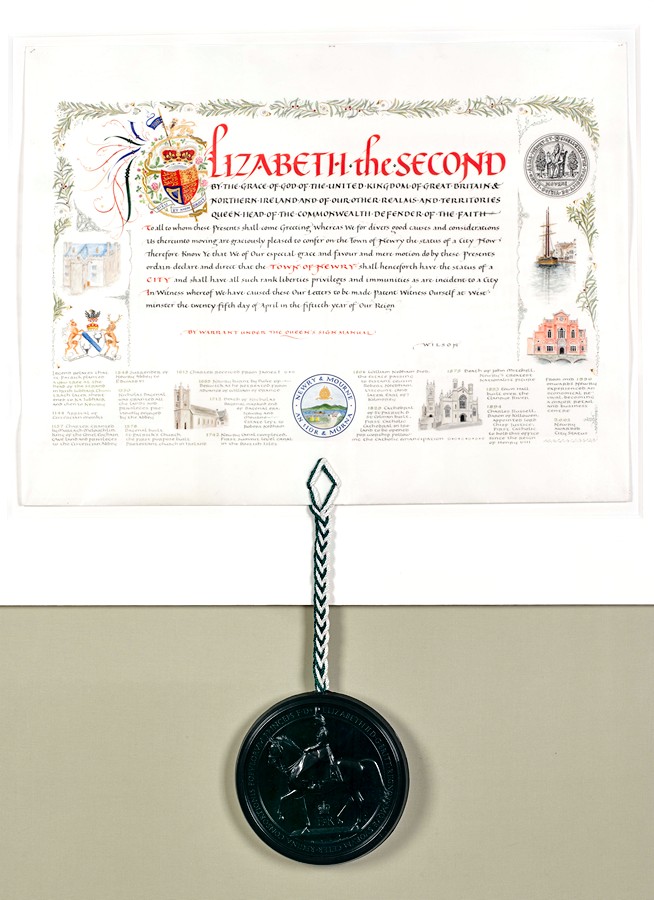
In this, the first two articles to mark the Platinum Jubilee of Her Majesty Queen Elizabeth II, we look at material in the Museum Collection which show how Royal Jubilees were marked in the area from the reign of Queen Victoria up to the present Queen. Next week’s article will explore how a number of local organizations have commemorated their own jubilees over the years.
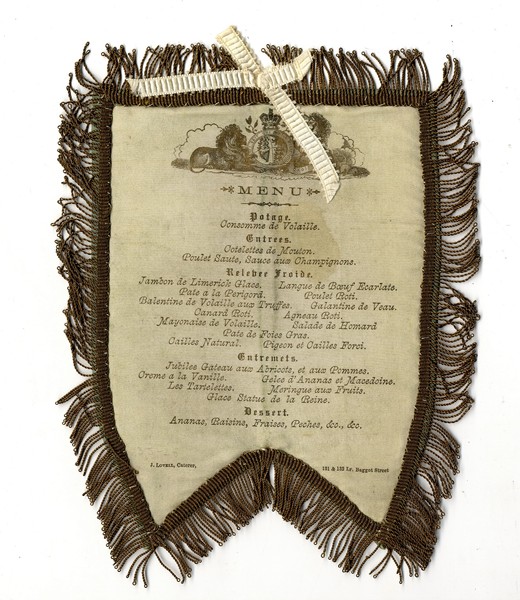
The Reside Collection contains a number of interesting items relating to the Golden Jubilee of Queen Victoria in 1887. These include menus and programmes from dinners and concerts held in celebration of the event in Dublin and at Buckingham Palace and Windsor Castle. One of these artefacts is the service booklet from the Thanksgiving Service held in Westminister Abbey on 20th June 1887. There is a menu from a dinner held in the King’s Inn in Dublin and a silk menu from a dinner which may have been held in Dublin Castle. This memorabilia may have been originally owned by a local dignitary who attend Golden Jubilee events in both London and Dublin.

Material from the Newry Reporter in the Museum Collection gives some insight into local celebrations held to mark the Silver Jubilee of King George V in May 1935. Events were held in Newry, Bessbrook, Kilkeel and Warrenpoint and a number of local people were presented with Jubilee medals for public service. On Jubilee Day in Newry, the children of ex-servicemen were given a special matinee in the newly-opened Savoy Cinema. There is also a report of timber taken to the top of Slieve Martin by the Scouts for a Jubilee Beacon, being burned prematurely by ‘some person or persons unknown’ in the early hours of Jubilee Day!
Fancy dress parades are perennially popular with children and a Fancy Dress Parade was one of the events held in Newry to celebrate Queen Elizabeth II’s Silver Jubilee in 1977. Another event was the releasing of balloons by the 1st Newry Earl of Kilmorey Cub Scouts at Windsor Hill Primary School.
The Golden Jubilee in 2002 was very significant for Newry as it was one of two towns in Northern Ireland, Lisburn being the other one, to achieve City Status. A charter granting City Status to Newry was presented by the Queen to Cllr. Frank Feely, then Deputy Chairperson of the former Newry and Mourne District Council at Hillsborough Castle. Other events in Newry included a sports day at Windsor Hill Primary School, a parade through Newry and a church service at St. Mary’s Parish Church. A Golden Jubilee exhibition was also held at Newry and Mourne Museum, which was then in the Sean Holywood Arts Centre.

The Queen’s Diamond Jubilee in 2002 was marked by a Fun Day at Shandon Park in Newry and sports day at Windsor Hill Primary School. A dinner was also organized for sixty local pensioners by the 1st Newry Earl of Kilmorey Scout Group.
The Museum is currently offering free tours of the exhibition galleries on Wednesdays and Thursdays at 2.00 pm. These must be booked in advance by calling our Education Officer at 0330 137 4422.
Newry and Mourne Museum is open Tuesday – Saturday 10.00 am – 4.30 pm. Please call 0330 137 4422 or email museum@nmandd.org for further information.
Please visit our new website at www.visitmournemountains.co.uk


 |
 |
 |