

 Write a comment
Long before community nurses became a familiar part of modern healthcare, nursing care in Newry was often delivered at the doors of local homes. From the late nineteenth century onwards, dedicated women travelled across the town and surrounding countryside to care for the sick, the elderly, mothers, children and families who might otherwise have had little access to professional medical help. Their work formed part of a wider story: the development of nursing as a profession, the growing public role of women, and the importance of community support in shaping local healthcare.
The Newry and Mourne Museum collection includes many items that record the contribution of local women to community life. Among these stories is the growth of district nursing, which began to develop through charitable organisations, religious orders and “provident schemes”. In Belfast, one early organisation was established in 1874 to provide trained nurses to “visit the industrious poor in their own homes and supply such ministrations as their care may require”.
These initiatives were influenced by William Rathbone, a wealthy Liverpool merchant who, from the 1860s, championed the importance of properly trained nurses working within local communities. In 1887, the Queen’s Jubilee Institute was established, providing a framework for the training, supervision and organisation of district nurses. District nursing societies across Ireland, including Newry, affiliated with the Institute, helping to establish professional standards for nurses working beyond the hospital ward.
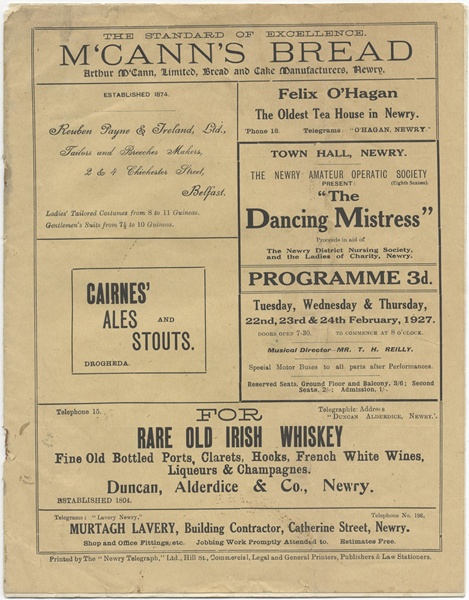
Against this wider background, the Newry District Nursing Society was established in 1898. Managed by a Board of Governors, with Lady Constance, Countess of Kilmorey, as its first president, the society depended heavily on local generosity. Funding came through patronage, voluntary subscriptions and public fundraising events, making the service a true community undertaking, supported by the people of Newry and the surrounding district.
By 1906, a dedicated nurses’ home had been secured at Hyde Terrace. By 1913, the service was listed at 17 Kilmorey Street, providing both accommodation and a clinical base for the nurses whose work took them daily into homes across the area.
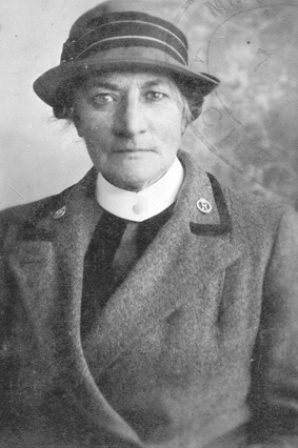
Miss Hicks was the first “Queen’s Nurse” appointed to the Newry District Nursing Society. The title was given to highly trained district nurses associated with the Queen’s Nursing Institute, sometimes known as “Jubilee” nurses. Local records note that in 1900 - 1901 the society held a formal presentation for Miss Hicks “on the occasion of her marriage”, marking the end of her pioneering service in the town. She was succeeded by Miss Hogg, a district nurse who transferred to Newry from Derry. Their work was demanding and often solitary: they travelled from house to house, sometimes across difficult rural terrain, providing professional care to patients who might otherwise have had little access to medical assistance.
The scale of need was considerable. The Newry Reporter of 10 March 1910 recorded that “no less than 507 cases were nursed during the past year, as compared to 393 in the previous year”, with 11,479 home visits made during that period. These figures give a vivid sense of the pressure on the service, and of the reliance placed on district nurses by local families.
District nurses also supported other local services when required. An excerpt from the Downpatrick Recorder of 6 May 1916 noted that “the district nurses at Banbridge, Newry… continue to render satisfactory service at the tuberculosis dispensaries in their districts”. Their role, therefore, extended beyond routine home visits and into wider public health work.
Behind the statistics were thousands of individual acts of care: elderly people treated in their own homes, mothers and children receiving nursing attention, patients recovering from illness, and families who relied on the district nurse when hospital care was unavailable, unaffordable or difficult to reach. For many households, the district nurse was the most accessible face of professional healthcare.
The demands on nurses increased considerably during the two World Wars. Women from the wider Newry and Mourne area served in military nursing roles, local emergency hospitals and community settings. Records show the growing demand for institutional healthcare, with admissions at nearby Newry General Hospital rising from 231 patients in 1919 to 813 by 1942. For district nurses, this meant heavier caseloads and greater calls on their time. They continued to travel from home to home, caring for vulnerable and poorer residents who might otherwise have struggled to obtain treatment. Resources and personnel were also affected by the war effort, while the traditional “marriage bar” further restricted the number of married women able to remain in professional nursing employment.
Among those remembered for their community service in the 1940s was Nurse Sarah Best, who served as a highly respected district nurse for twenty-five years in the Poyntzpass and upper Newry area before retiring in the late 1940s. Nurse Brigid Daly, later Nurse Longridge, worked as a district nurse in Forkhill during the wartime years. Living locally in the old barracks, she provided rural home care to families across the surrounding district. Nurse Margaret Anderson from Kilkeel, a highly decorated military nursing sister, was also an important organisational figure in the coordination of nursing care across the wider Newry and Mourne area.
The creation of the National Health Service from 1948 onwards transformed healthcare. District and community nursing increasingly came under statutory local authority control, with many nurses initially working from local hubs such as Daisy Hill Hospital. The Newry District Nursing Society, which had begun with modest resources, a small number of nurses, local fundraising and community generosity, was gradually incorporated into a more organised public health system. Its legacy, however, remains rooted in the dedication of the women who carried care into local homes, one visit at a time.
The Museum is currently offering free tours of the main exhibition galleries on Wednesdays at 2.00 pm. These must be booked in advance by calling the Education Officer at 0330 137 4422.
Newry and Mourne Museum is open Tuesday – Saturday 10.00 am – 4.30 pm. Please call 0330 137 4422 or email museums@nmandd.org for further information.
Visit the Museum's website at www.visitmournegullionstrangford.com
Write a comment
Oil lamps, used to light the way in ancient Rome, could be considered an early example of street lighting. Designed to guide the way and ward off danger, street lighting has gone through many changes as a result of urban development and improving energy efficiency. This week, Newry and Mourne Museum looks at the history of streetlights.
William Murdoch is credited with the concept of using coal gas to light streetlamps. This led to the first public street lighting with gas, being demonstrated in Pall Mall, London, on the 4th of June 1807 by Frederick Albert Winsor.
The Belfast Gasworks was established on Ormeau Road in 1821. Prior to this, Belfast's streets were lit with glass bowls filled with whale oil and rush wicks, managed by the Belfast Charitable Society. The following year, the Newry Gas Light Company was established and by 1823 streetlights operating via public gas was available within the town, however these were only lit during the winter months. Notable individuals involved in the company included Trevor Corry and John Boyd.
On the 26th of March 1828, the Act for the "lighting, watching, and cleansing of cities, towns corporate, and market towns in Ireland" was formally approved thanks to the work of Councillor O'Hanlon and his barrister son. Due to this act, Newry became a model for municipal administration throughout Ireland. In addition to the election of twenty-one Commissioners of Police, eleven officers were also given the title of the Town Watch and had their salaries paid from local taxes. Their duties involved the lighting of streetlights. By 1830, Newry had a total of seventy-eight streetlights, the first one located outside the gates of the gasworks. Other lights were placed alongside the main streets. Oil lamps were also still being used as streetlights during this time. By 1857 there were two hundred gas lamps in operation throughout the town, and oil lamps were no longer be in use. The Newry Gas Light Company was dissolved, and the Newry Gas Consumers Company Limited created its place.
In 1950, Lisburn saw the first installation of fluorescent street lighting in Northern Ireland. It was also the largest fluorescent street lighting scheme in the British Isles. It became the first town in the UK to completely illuminate all its main roads with fluorescent lamps which offered a brighter and more energy efficient method of lighting compared to gaslighting (gas prices had also increased as a result of the Second World War). In 1952, Newry became one of the first towns in Ireland to be fully lit with electric fluorescent lights, with the installation being carried out by P.J. Murray, a local electrical contracting business established in the 1930s.

In 2015, another advance in technology saw the Department for Infrastructure rolling out a scheme to replace yellow sodium streetlights with LED alternatives. The scheme began in Banbridge and Armagh before being rolled out throughout the rest of Northern Ireland in the hopes of creating long-term savings in terms of electricity usage, maintenance costs and limiting light pollution.
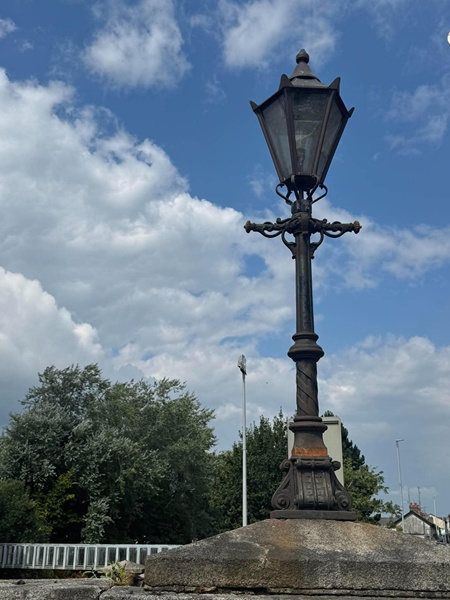
In 2017, the Newry Maritime Association restored one of the last two gaslights left in Newry to commemorate the history of the gaslights. The light was located at Dublin Bridge with the other holding place on the O'Hagan Bridge.
Newry and Mourne Museum is open Tuesday to Saturday 10.00 am to 4.30 pm and is free to visit. For further information visit our website at www.visitmournegullionstrangford.com/museums/newry-and-mourne-museum, call 0330 137 4422 or email museums@nmandd.org
Write a comment
Recent visitors will have noticed a new display at the entrance of Newry and Mourne Museum. One of the artefacts, a granite stone, tells the story of Lupton’s Mill and its builder, Joseph Lupton.
Joseph Lupton, born in 1801 in the Lancashire town of Preston, came to Ireland aged sixteen. Venturing into the corn and milling trade he built a successful business. In the 1840s he took on the lease of Mount Mills, near Newry. Increasing demand necessitated a move to larger premises at the old distillery on Bridge Street. Employing 20 workmen and producing between forty thousand and fifty thousand bags of flour a year, Lupton’s milling and corn trade remained at the site for 17 years.
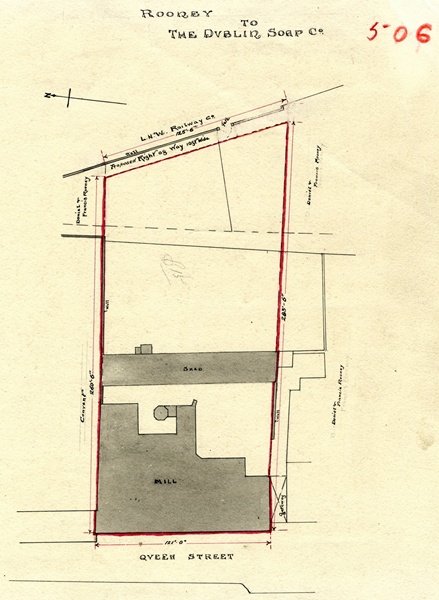
In 1862, at a cost of £7,000, Lupton built a five-storey grain store in Queen Street (now Dominic Street). Five years later it was converted into a mill for the manufacture of flour and Indian Meal. Local contractor Mr. John O’Hare erected the 120-foot-high chimney, while the machinery, including a 25 horse-power engine running eight pairs of stones was manufactured at the Newry Foundry. After ten years in operation, the milling of flour became unsustainable, due to competition from imported flour. The building returned to its original use, providing storage for flax and grain.
Jospeh Lupton died at the age of 88 in October 1889. His obituary in the local papers refer to him as a pioneer of the Indian Corn trade in Newry. Lupton, “imported the first direct cargo of Indian Corn to the port of Newry by the new ship canal, the vessel entering free of dues and with flying colours” (Newry Telegraph of 19th October).
He was also involved on many levels with numerous businesses in Newry, among them the Warrenpoint and Rostrevor Railway, Newry and Armagh Railway, Newry Gas Company, Dundalk and Newry Steampacket Company and the Newry Savings Bank. A member of the old town board prior to the passing of the Towns’ Improvement Act in 1865, he afterwards represented the West Ward on the Board of Town Commissioners for many years.
Following Joseph Lupton’s death, the Rooney family purchased the mill and many of the surrounding buildings. In 1907 the mill machinery was removed and bought by Mr. E. Curran. The Dublin Soap Company acquired the mill in 1909 for the manufacture of their products but was quietly closed a short time later. This was followed by an embroidery business, which was established in part of the building, but it too faltered after a few years.
During the Second World War the building was used by the Ministry of Supply for storing flax and jute. One hundred tonnes were stored in the building when, in the early hours of the 11th of November 1941, the building caught fire. The fire brigade and auxiliary fire service both attended. Four engines pumped water from the canal, but the burning contents and wooden floors fed the flames. Within an hour the roof had collapsed, sending debris crashing down to the ground. The fire threatened nearby houses and local residents had to be evacuated. Such was its intensity, the fire, which could be seen for miles around, had burned itself out in two hours.

The building sat derelict for a number of years, the question of property rights largely responsible for the delay. In the mid-1950s, the Rooney family gifted the site to Newry Urban District Council, who intended to demolish the building to make way for housing. In February 1958, the go-ahead for demolition was given. However, inadequate sewerage facilities meant that the inhabitants of the town would have to wait yet again for new housing.
Additional buildings in the area were vested and finally, after a wait of 27 years, a meeting was held in November 1968 to allocate new tenants to the nine four-apartment houses and 48 old persons dwellings. Each councillor put forward nominations for the houses and applicants receiving the most votes were awarded the tenancies. The development was named Cleary Crescent, in memory of the Very Rev. Dr. Cleary, of the Dominican Order.
In 1985 when workmen were carrying out work on the site in Dominic Street, the stone was unearthed. It was recovered and placed in safe keeping, when this year it found its new home at the Museum.
Newry and Mourne Museum is open Tuesday to Saturday, from 10.00 am to 4.30 pm. For further information, visit our website at www.visitmournegullionstrangford.com, call 0330 137 4422 or email museums@nmandd.org



 |
 |
 |