

 Write a comment
The Fourmile House at Donaghmore was one of the many inns on the turnpike road between Dublin to Belfast in the mid-1700s. Coaches began using the route in the 1740s and resting places were essential for the comfort of travellers and horses. In the late 1700s, the Fourmile House was kept by Alexander Stewart and his wife and was an important stopping point for travellers and locals, with United Irishmen and militia frequenting the inn.
In 1807 presentments were made at the Down Assizes for improving and altering the coach road. This included a new line of road between Newry and Frankfort, by the Sheepbridge, west of the original road.
With the new section of the road built, the old Fourmile House became redundant, and a new one was established. This included a shop, post office and public house, with a Session Room to cater for large parties. A new hotel was opened by the proprietor, David Woods, shortly after he took over the business in 1840. The post office is mentioned several times in the diaries of James Harshaw. It was an important means of conducting business and keeping in touch with friends and family, especially those who had emigrated to America.

During the Famine, a depot was established there by the Board of Guardians of the Newry Union, to distribute Yellow Indian Meal, which was delivered weekly. Meetings of the subscribers to the Donaghmore Dispensary, located in a building on Woods’ farm, were also held there. Presentment Sessions, for the Barony of Upper Iveagh (Upper Half), made up of local magistrates and cess-payers took place half yearly.
The Fourmile House was a focal point for the local community and gatherings and events were held at the venue, such as ploughing matches and the annual Donaghmore Farming Society Cattle Show. Auctions were held on the last Wednesday of every month for the sale of livestock and agricultural stock.
The site was a meeting place for Orange Order processions. The Morning Herald (London) edition of 15 July 1848 notes that 30 or40 Orange lodges from Warrenpoint, Newry and Loughbrickland assembled at the Fourmile House, “the multitude computed at several thousands”. The lodges marched to a nearby field on the Donaghmore Road for their demonstration.

After 70 years in the Woods family, by 1910, the pub had closed and there were plans to close the shop and post office. The McClean family, whose farm was across the road, agreed to take over the business and built a new shop and post office to accommodate it. The family already ran a blacksmith shop at the site, mainly engaged in repairing farm machinery. The two business had run side by side since the early 1800s, with an early Ordnance Survey map from 1832 showing a smithy on the site. A weighbridge across the road weighed coal, animals and carts taking hay, straw, turnips and potatoes to Newry market.
As well as sending and receiving post, the introduction of a square wooden telephone box, enabled locals to make phone calls. Mrs McClean contacted the operator and gave the required number. At the end of the call, she would ask for the cost of the call, which the customer paid, and recorded it in the phone call book.
The shop and post office continued to be the hub of the local community for around half a century, before its closure. Further upgrades to the A1 in 2005 saw a new section of dual-carriageway built to the west, bypassing the Fourmile once again.
The Museum is currently offering free tours of the main exhibition galleries on Wednesdays at 2.00 pm. These must be booked in advance by calling our Education Officer at 0330 137 4422.
Newry and Mourne Museum is open Tuesday – Saturday 10.00 am – 4.30 pm. Please call 0330 137 4422 or email museums@nmandd.org for further information.
Please visit our website at www.visitmournemountains.co.uk
Write a comment
To celebrate the bank holiday, Newry and Mourne Museum are looking back at the origins of bank holidays and how they were celebrated in the local area. The first official bank holidays were listed in the Bank Holiday Act of 1871 which was introduced by Sir John Lubbock, a politician and banker. The Act recognised four days in England, Wales, and Ireland, which were Easter Monday, Whit Monday, the first Monday in August and December 26th if that day fell on a weekday. Good Friday and Christmas Day were already seen as holidays in England, Wales and Ireland and therefore were not included in the Act. The Act was repealed in 1971 which paved the way for the Banking and Financial Dealings Act 1971, which is still used to this day as a guide to bank holidays.
Additional bank holidays may also be created in line with royal events. For example, in 2002, there was a special holiday on Monday 3 June to celebrate the Golden Jubilee of Elizabeth II. The Spring bank holiday was moved from 27 May to 4 June to create a four-day weekend. The Golden Jubilee was also extremely significant for Newry as it was one of two towns in Northern Ireland, Lisburn being the other, to be given City Status. A charter granting City Status to Newry was presented by the Queen to Cllr. Frank Feely, then Deputy Chairperson of the former Newry and Mourne District Council at Hillsborough Castle. Other events in Newry included a sports day at Windsor Hill Primary School, a parade through Newry and a church service at St. Mary’s Parish Church. A Golden Jubilee exhibition was also held at Newry and Mourne Museum, which was then located in the Sean Holywood Arts Centre.
Many local industries saw the benefit of the bank holidays particularly the transport and retail industry. The Newry and Armagh Railway joined the Great Northern Railway (Ireland), known as the GNRI in 1879, and the Newry and Warrenpoint network in 1886. This connection helped promote Warrenpoint as a seaside town and make it popular for those on holiday and single day excursions. The 1924 excursion schedule to Warrenpoint recorded 39,145 passengers visiting during the summer holiday period. Although not officially recognised as a bank holiday until 1926, one of these excursions was for the Twelfth Demonstration, which appears to have been held in Warrenpoint that year. Orange lodges from the Leitrim, Ballyward, Ballyroney and Katesbridge areas, a total of 1,178 people, are recorded as travelling to the seaside town.
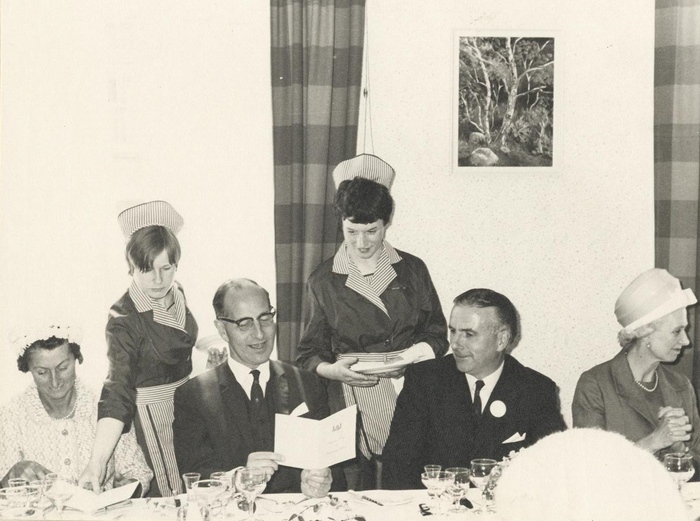
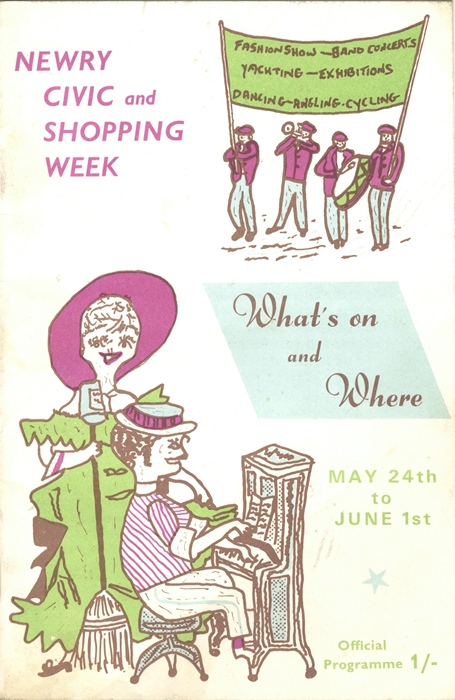
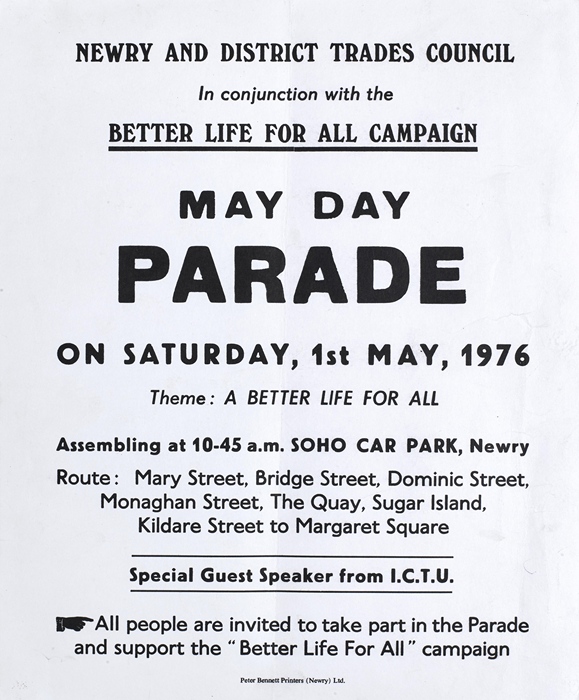
Created in July 1928 and revived in the 1960s, Newry Shopping Week was designed to promote goods manufactured in Newry and to advertise the town’s shopping facilities. During this time, streets in the town were decorated with bunting, flags, and banners. Events included an industrial parade which comprised floats from local businesses. In 1968 Newry held its Shopping Week during the May bank holiday which hosted several events such as concerts, fashion shows, and exhibitions. Other notable bank holiday events include the May Day Parade hosted on Saturday 1st May 1976.
Christmas and New Year bank holidays also provided a great opportunity for local talent to showcase their acting abilities and were typically celebrated with a pantomime performance to help foster the holiday cheer. Dating back from the early 1900s, Newry has hosted many pantomimes produced by P. J. McKay, Frank Hanna, Liz Boyle, Arthur Burns and Charlie Smyth. They continue to be performed annually.
The Museum is currently offering free tours of the main exhibition galleries on Wednesdays at 2.00 pm. These must be booked in advance by calling our Education Officer at 0330 137 4422.
Newry and Mourne Museum is open Tuesday – Saturday 10.00 am – 4.30 pm. Please call 0330 137 4422 or email museums@nmandd.org for further information.
Visit their website at www.visitmournemountains.co.uk
Write a comment
Among the rich assortment of reading material at Newry and Mourne Museum, is a fascinating collection of cookery books, ranging from the early nineteenth century to the 1980s. These books offer a captivating glimpse into the past, each recipe echoing the era's culture and lifestyle. It is possible to see how our tastes have changed over time, particularly in relation to desserts, cakes and sweet treats.
A hand-written recipe book from a student at Newry Technical School in 1904 illustrates dishes made from scratch using seasonal produce: fresh fruit in the summer, and dried and preserved fruits in the winter. There would have been no shortage of rhubarb for the delicious-sounding rhubarb pie recipe, written-up by student Mary Scott in May 1905. Also popular at this time were steamed puddings and custards.
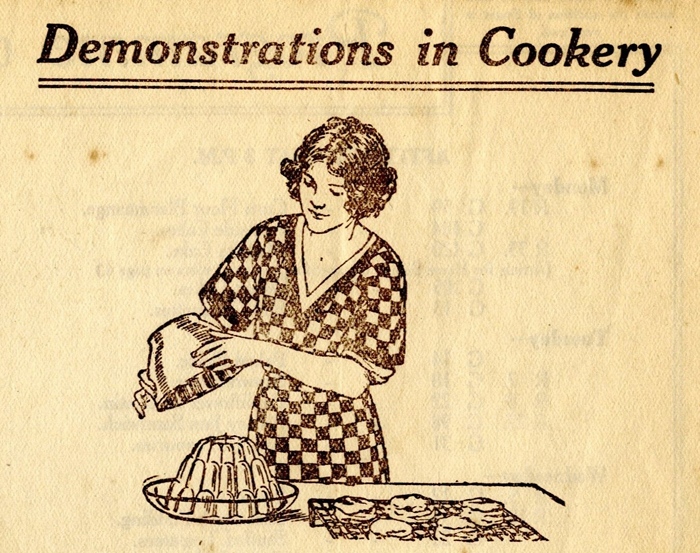
Great Grandmother’s Recipe Book, from the early 20th century, contains “over 200 practical and useful recipes”. Produced in order to raise money for the Newry Hospital, which required over £800 to run annually, fundraising was an important source of income. The book is prefaced with a note from Miss von Stieglitz, who was lady superintendent of the hospital and a member of the Joint Committee of Management, as were several of the contributors, such as the Countess of Kilmorey. A notable recipe was a type of lemon sponge, called Jenny Lind cake, named after the famous Swedish opera singer of the mid-1800s.
A recipe book compiled to raise money for Sandys Street Presbyterian Church in 1934-35 contains recipes contributed by women connected with the church. The recipes reflect the period's seasonal shopping preferences and prescribe that everything be cooked from scratch with no shortcuts. A plain chocolate cake contributed by Miss Gilmour of Canal Street, Newry, stood out, being devoid of icing or buttercream, so different from modern indulgent cakes.
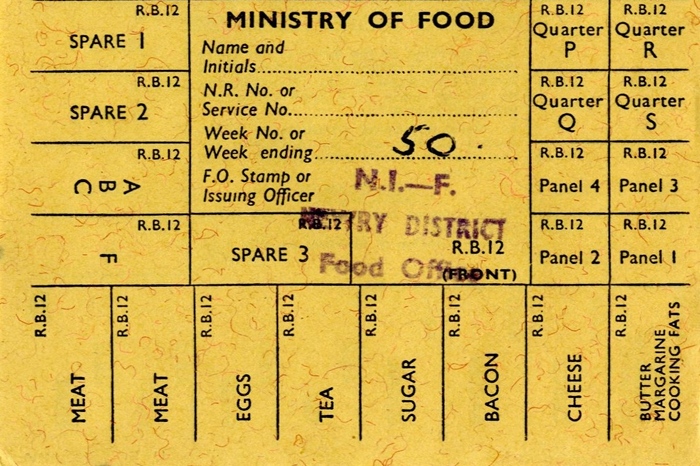
With recipes generously contributed by the community, A Souvenir Cookery Book from 1936 was written to raise money for the Christian Brothers’ School Building Fund. It includes an Easter Cake recipe from S. Gibbons of Market Street, Newry, a fruit-based cake which is a refreshing change from all the chocolate now consumed at Easter. The money raised from the sale of the book helped to build a new, modern school, which opened in June 1938, providing accommodation for over 700 pupils.
Jumping to 1968, a publication from the National Dairy Council urges us to drink more milk and use more dairy products in our cooking. Nowadays consumers can choose from an array of plant-based milks and dairy alternatives. It was interesting to find a recipe for 'Semolina Snow,' as products such as semolina, and similarly sago and tapioca, which were very common and seen as wholesome treats in this era, are becoming much harder to find today.
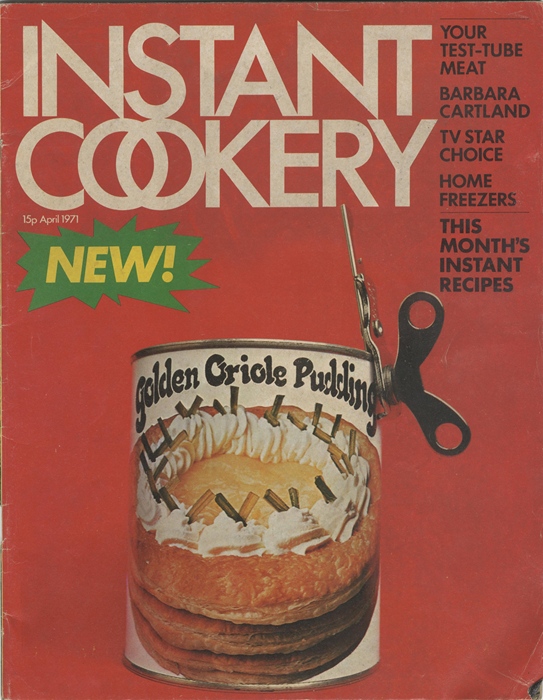
The seventies introduced new ideas which were all about convenience, including instant mashed potato, packet cake mixes, tinned pie fillings and boil-in-the-bag produce, and the culture of instant food was born. Instant Cookery magazine from 1971 documents this shift and includes a recipe for strawberry mousse, with all the ingredients emerging from tins and packets, a far cry from the earlier, labour-intensive desserts.
With modern, busy lifestyles, convenience still plays a large part in the foods we eat. However, there is a growing move towards trying to embrace whole foods and seasonal, organic fare. Rediscovering traditional recipes, used for generations, could play a part in reverting to a more authentic way of eating to which many are now striving to return.
The Museum is currently offering free tours of the main exhibition galleries on Wednesdays at 2.00 pm. These must be booked in advance by calling our Education Officer at 0330 137 4422.
Newry and Mourne Museum is open Tuesday – Saturday 10.00 am – 4.30 pm. Please call 0330 137 4422 or email museums@nmandd.org for further information.
Please visit our website at www.visitmournemountains.co.uk
Article: Caroline Wickham
Write a comment
During the 19th century Newry had two bridewells. This article will focus on the bridewell that served the County Down part of the town. The name bridewell comes from the first house of correction, or prison, which was opened at Bridewell Palace in London in 1553. A former residence of Cardinal Thomas Wolsey, gifted to King Henry VIII, it was named after a nearby holy well of St. Bride’s (St. Bridget’s) church. As time went on it became customary to name prisons as bridewells.
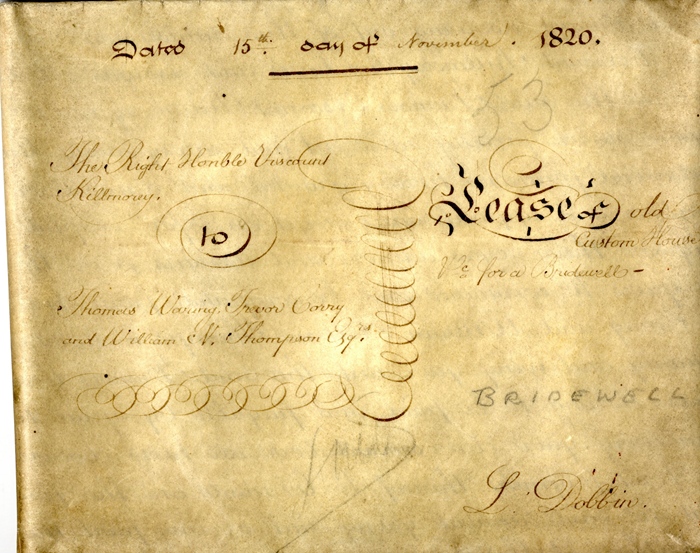
After the opening of the new Custom House on Merchants’ Quay in 1806, the previous Custom House on Kilmorey Street/Boat Street, originally built between 1750-52, was partially converted into a bridewell. A lease in the Museum’s collection, dated the 15th day of November 1820, from Francis, Lord Viscount Kilmorey, to Thomas Waring, Trevor Corry and William Needham Thompson (Trustees of Grand Jury of County Down) declares that the tenement 'formally used as the Custom House and Stores of the Port of Newry' is to be used as a bridewell at a yearly rent of £30 sterling for a period of ninety-nine years.
At the end of the 18th and the beginning of the 19th century, prisons were set up to hold people before and until their trial rather than as places to hold or punish criminals. Prisoners in Newry were confined in the bridewell until they were sent to the County Gaol in Downpatrick for trial in Downpatrick Court House. In 1815 there were two known cells for the confinement of prisoners, located under the Market House in the top of the building. At the County Down Assizes, held at Downpatrick in March 1823, Lord Gerawley called attention to a report of the Inspector General, stating that Newry had the groundwork of a good bridewell, but it had also been much neglected. Major Palmer’s 1832 Report gives us some idea of the composition of the building.
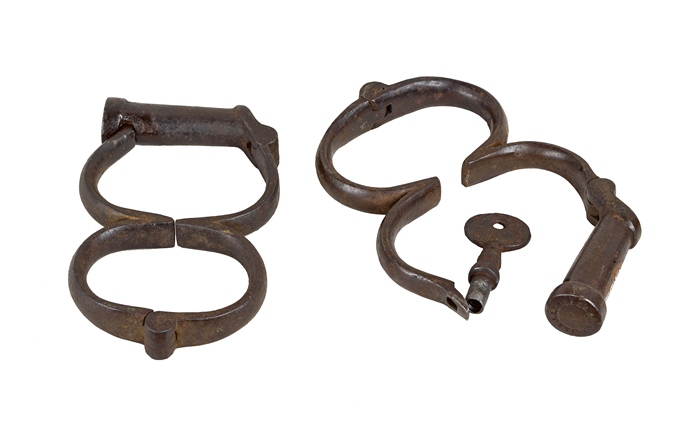
‘It was the Old Custom House, and though sufficiently large, has never had the alterations made necessary to convert it into a prison. There are in it, two dayrooms and four large sleeping rooms, two yards, and Keeper’s apartments. It is not kept as clean as it should, and the yards are used by the Keeper for his own purposes.’
The lack of alterations during the early 19th century probably contributed to the numerous escapes from its walls during this time. James McKeown escaped on the night of the 5th of February 1824, but was apprehended in Tandragee Market by a Mr. Wilson on the 11th of February. John Sinamon, who on having been apprehended in February 1831, on a charge of horse stealing, made his escape the following Monday, the 28th, by breaking a hole through the yard wall, where the prisoners were allowed to be kept in daylight, into the Bridewell Lane. Michael Woods, also committed for horse stealing in 1839, escaped by making a hole in the roof of his cell, and afterwards another in the roof of the prison, and then letting himself down on the inner yard wall, by means of his blankets being twisted into a rope. From the wall, he got down into the yard and scaled the wall in front of the prison, making good his escape.
In the next article, we will look at the repairs made to the bridewell, the conditions of the prisoners and information on the various Keepers of the institution.
The Museum is currently offering free tours of the main exhibition galleries on Wednesdays at 2.00 pm. These must be booked in advance by calling our Education Officer at 0330 137 4422.
Newry and Mourne Museum is open Tuesday – Saturday 10.00 am – 4.30 pm. Please call 0330 137 4422 or email museums@nmandd.org for further information.
Visit their website at www.visitmournemountains.co.uk
Write a comment
Continuing from last week’s article on Kilmorey Street bridewell, this week’s focus will be on improvements made to the building from the 1850s onwards. By 1849 reports regarding the state of the bridewell were not satisfactory. John Fraser, Surveyor for Down stated,
‘I would again beg leave respectfully to state, that the present Newry Bridewell is in a very deficient state of repair. Measures should at once be taken to remedy the evil, either by a thorough repair of the present edifice, or the erection of a new bridewell.’

The reports clearly had some impact, as there was a greater drive to improve the bridewell, as seen from the increasing advertisements for tenders in the local press for supplies. In the 1860’s, there were various advertisements for the painting and repairing of the bridewell, a new entrance door, new granite coping to the entrance gate, and the supplying and fitting of a new kitchen range. An 1867 advertisement appointed £130 for the repairs that were to meet the specifications of the County Surveyor, a considerable sum at the time.
Tenders also give us some idea of conditions of the inmates. They were variously supplied with bread and buttermilk for their diet, yellow soap for their cleanliness, ticken (ticking) cloth and straw was probably used to make bedding, coal was used to heat the building, and carriages were used for their conveyance.
During its existence, Kilmorey Street bridewell had various Keepers or Governors; they include George Thompson, Thomas Guy, John Matthews, Joseph Lawson, Mr. Griffin, George Moore, David Shaw, and Robert McBarron. The Keeper of the Bridewell was an important job as can be seen from the advertisements for tender for their uniforms.
‘the suit consisting of Frock coat, vest, trousers, and cap, all of steel grey cloth, and properly lined; silk stock or Necktie, and pair of boots.’
The Governor’s role involved maintaining the bridewell and the upkeep of the inmates, as well as giving evidence about inmates in court. It was a dangerous job and quite a few were injured in the course of their work and sometimes in public, Joseph Lawson was assaulted in 1886 and Robert McBarron was assaulted in a shop in 1910.
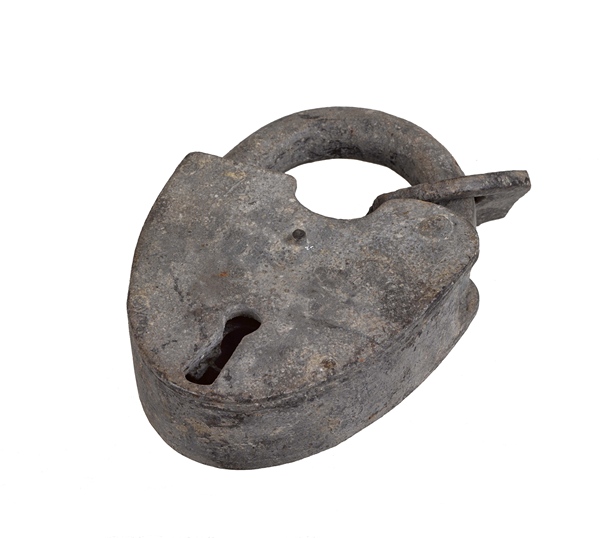
The bridewell remained in place for many years, but by 1922 it was commandeered by the R.I.C. In 1923 it was finally declared officially closed by an order of the Governor of Northern Ireland, who directed that it shall no longer be used as a bridewell or prison. It remained an R.I.C. (latterly) R.U.C. barracks for some time. The Gas Department acquired the site in the late 1940s and used the building to store old cookers. By 1958 it was reported as being a long disused building which is now effectively hidden by gasometers and high walls. It was demolished sometime between 1958 and 1959, with one of the workmen engaged in the demolition finding an Irish halfpenny of the reign of George II dated 1742. A coin that once may have been used when the site was still the Old Custom House.
The Museum is currently offering free tours of the main exhibition galleries on Wednesdays at 2.00 pm. These must be booked in advance by calling our Education Officer at 0330 137 4422.
Newry and Mourne Museum is open Tuesday – Saturday 10.00 am – 4.30 pm. Please call 0330 137 4422 or email museums@nmandd.org for further information.
Visit their website at www.visitmournemountains.co.uk
Write a comment
After the evacuation from Dunkirk in 1940, Allied forces worked towards landing a force in German-occupied north-west Europe for four years. On the 6th June 1944, D-Day, a combined naval, air and land assault, codenamed Operation Overlord began, landing troops on five beaches in Normandy, beginning the process through which victory would be achieved almost a year later.
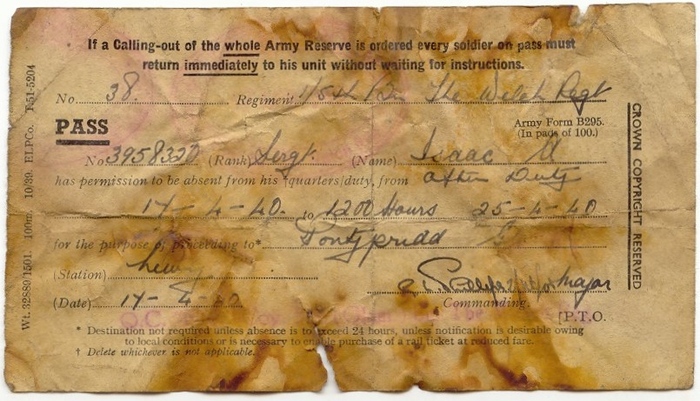
British forces had been stationed in the local area since the beginning of the war to maintain internal security. After the evacuation of Dunkirk their function changed to guarding against German invasion through the south of Ireland. With the Japanese attack on Pearl Harbor in December 1941, the United States of America formally entered the war. By January 1942, American troops had officially arrived in Belfast. Land at Greencastle, near Kilkeel had already been requisitioned on the 9th December 1941 by the British Air Ministry as a site for a new airfield. Around 800 people were employed in the construction of this new aerodrome which opened on the 30th July 1942 as RAF Greencastle. In early August 1942 it was transferred to the United States Army Air Force (USAAF) and was redesignated as AAF Station 237. It would be the largest airfield used by the Americans in Northern Ireland.
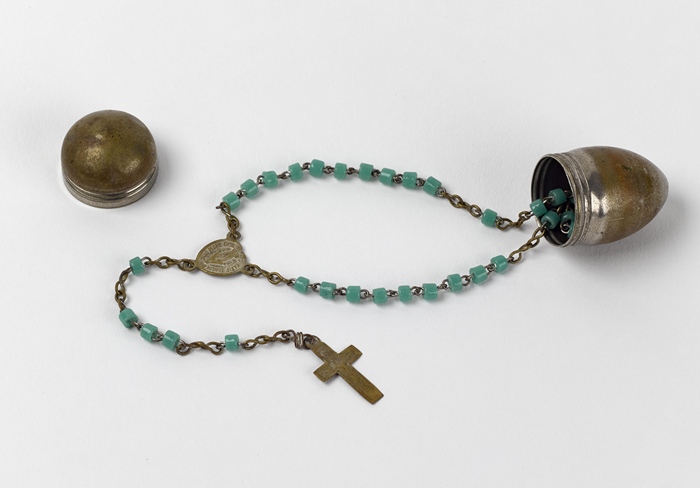
Over the next year the aerodrome proved invaluable as a stopover facility for aircraft and became home to USAAF units engaged in maintenance, training and flying operations. In the immediate months preceding D-Day the airfield was visited by General Patton in March 1944 before he inspected the 5th Infantry Division in the Mournes. Local tradition has it that female nurses were asked to leave the platform, so they would not hear his colourful language. Additionally, in May 1944, Supreme Allied Commander, General Dwight D. Eisenhower was flown to the airfield on a B-17 and inspected the 10th US Infantry Division and their artillery.
Several large houses and estates in the area were requisitioned to accommodate British and American troops. Camps, comprising of Nissen huts, would typically be set up in the grounds of the estate for the troops while the officers resided in the main house. The owners were usually allowed to remain in residence but their movements around their own property were sometimes severely restricted. Requisitioned houses and estates included Mourne Park, near Kilkeel, Narrow Water Castle, Warrenpoint, and Mount Caulfield, near Bessbrook. American soldiers were also stationed at Drumbanagher and Dromantine.
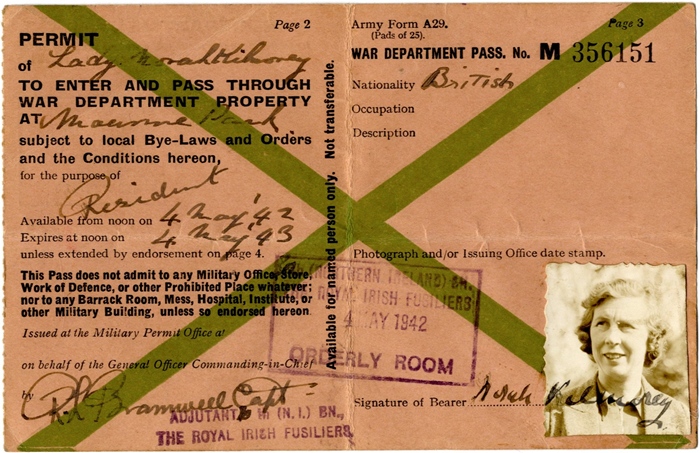
In Newry, soldiers were billeted in Drumalane Mill with another large contingent at Ashgrove. A Red Cross Club canteen catering for American troops was opened in the YMCI at 81 Hill Street. The smartly dressed American soldiers brought excitement and glamour to the town. Their ‘PX’ or army store was like an Aladdin’s cave to local people, who were not allowed access. Tobacco, cigarettes, alcohol, women’s stockings and a host of other items were available to the American soldiers. Families who hosted soldiers in their homes would have received gifts such as sweets and other rationed items. American officers socialised with local people throughout the area and some women became GI brides.
A number of British regiments were stationed locally. Narrow Water Castle was requisitioned for the Cheshire Regiment, followed by the Northumberland Fusiliers and then the US Army, with most of the castle, the farm and land given over to the troops. A battalion of the Welch Regiment were stationed in Newry and Bessbrook and carried out training on Slieve Gullion and the Mourne Mountains. In Newry they would parade to Saint Mary’s Church of Ireland for Sunday service with the regimental goat. Some of these soldiers married local women and settled in the area, like Cyril Wiltshire, originally from Wales, who married and lived in Castle Street in Newry. He was killed on 21st July 1944 when his battalion came under heavy attack from German forces in Normandy.
The withdrawal of American and British soldiers billeted in the local area began in the lead up to D-Day as troops moved to England to begin final preparations. Many were engaged in the Normandy campaign. Remnants of their presence can still be found on the estates that were requisitioned and the relationships formed between soldiers and local families have created links with the area that still endure today.
Uniforms from the Second World War belonging to Private First Class James Quinn of the US Army’s 563rd Motor Ambulance Company and Major Gerald Reside of the 4th (Ulster) Light Anti-Aircraft Regiment, Royal Artillery, who both took part in the Normandy campaign are currently on display in Newry and Mourne Museum.
The Museum is currently offering free tours of the main exhibition galleries on Wednesdays at 2.00 pm. These must be booked in advance by calling their Education Officer at 0330 137 4422.
Newry and Mourne Museum is open Tuesday – Saturday 10.00 am – 4.30 pm. Please call 0330 137 4422 or email museums@nmandd.org for further information.
Visit their website at www.visitmournemountains.co.uk
Write a comment
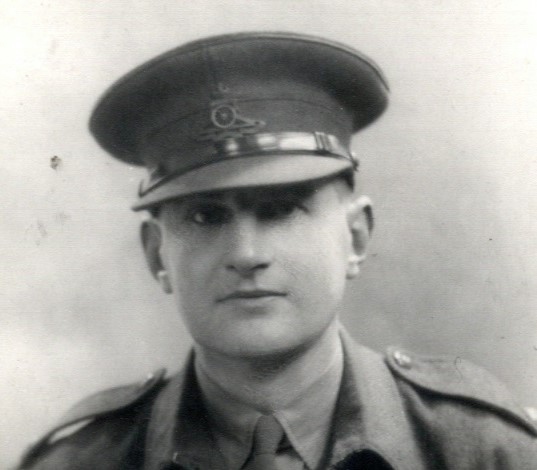
Over 38,000 men and women from Northern Ireland enlisted during the Second World War. Newry and Mourne made a significant contribution to the war effort and many people from the local area were involved in active service. As the 80th anniversary of the D-Day landings is commemorated, we look at two servicemen with local connections who took part in the Normandy campaign.
A few local people, who had emigrated to America, served in the U.S. Army during the Second World War. One of these was James Quinn, originally from Tullyframe, near Kilkeel. He had emigrated to America in May 1927, just over a month before his twentieth birthday, joining his sister Mary in New York, where he settled and opened a grocery business. He became an American citizen in 1936.
He enlisted in October 1943 and served in the 563rd Motor Ambulance Company. Private Quinn began his military career as a basic medic for four months before becoming Private First-Class. He was involved in the Allied advance across Europe into Holland and Germany after the D-Day landings in 1944. Attached to the 96th Evacuation Hospital Unit, he drove an ambulance and carried out maintenance on the vehicle. In 1944 he spent the 23rd of November, Thanksgiving Day, ‘somewhere in Holland’ with the 105th Evacuation Hospital, 508th Collecting Company and the 5th Auxiliary Surgical Group. Christmas 1944 was spent with the 96th Evacuation Hospital in Germany, where, along with medical officers and other staff, Christmas Day was celebrated in the Hospital Mess Hall with a turkey dinner and peach pie.
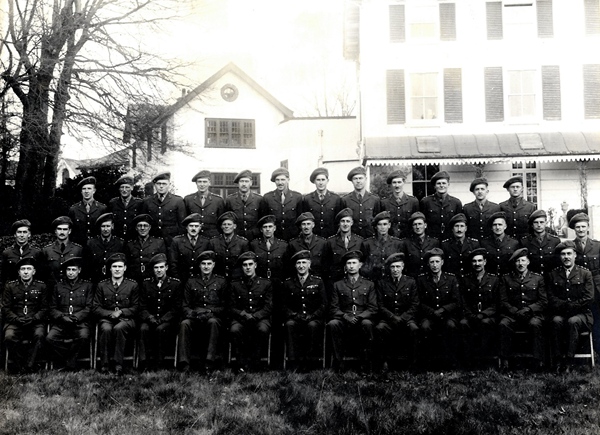
He received an honorable discharge in October 1945, returning home to Kilkeel in 1950, where he married and bought a farm and business. He died in 1975.
After graduating with a degree in civil engineering Gerald Reside joined the family architectural practice in Newry. He enlisted in the British Expeditionary Force at the beginning of the Second World War and was deployed to France. He was rescued from Dunkirk in June 1940. After returning to France with the Royal Artillery 4th (Ulster) Light Anti-Aircraft Regiment at the time of the D-Day landings in 1944, he was commander of an anti-aircraft battery and saw active service in France and Belgium. Like many veterans, he talked very little about his military career, speaking highly of those he served with, but revealing no detail.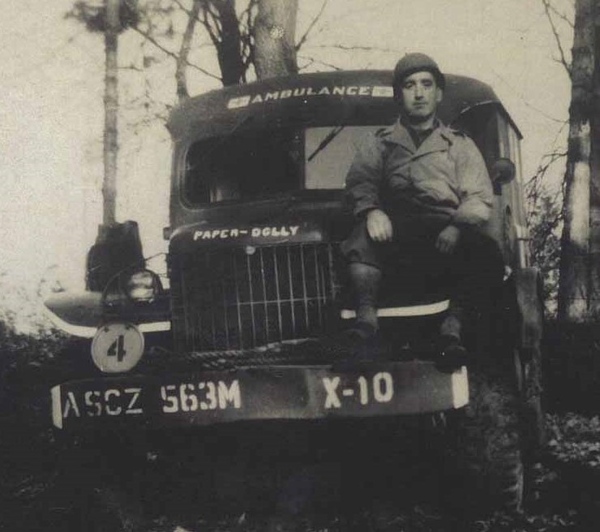
He retained a connection with various ex-servicemen’s organisations and was a member of the British Legion and the Royal Artillery Association. Major Reside also maintained links with the military after the war and was awarded an O.B.E. in 1970 for his services to the Territorial Army. He attended the annual service on Remembrance Sunday, laying a wreath at Newry War Memorial. As an architect, he had designed the memorial in 1938 for fallen soldiers from the First World War. A simple construction of Newry Granite with the words “TO OUR GLORIOUS DEAD” the memorial was ready for the first Armistice Day of the Second World War.
Both servicemen’s uniforms are currently on display in Newry and Mourne Museum.
The Museum is currently offering free tours of the main exhibition galleries on Wednesdays at 2.00 pm. These must be booked in advance by calling our Education Officer at 0330 137 4422.
Newry and Mourne Museum is open Tuesday – Saturday 10.00 am – 4.30 pm. Please call 0330 137 4422 or email museums@nmandd.org for further information.
Please visit our website at www.visitmournemountains.co.uk/museums/newry-and-mourne-museum
Write a comment
In the collection at Newry and Mourne Museum are several programmes and photographs from Newry Civic Weeks that took place in the 1960s. Almost four decades previously, in 1928, a similar type of festival, Newry Shopping Week was organised by the Newry Chamber of Commerce, with a view to reviving local industry. Revived by Newry Rotary Club in 1966, Newry Civic Week was held to encourage local trade and to bring visitors to shop in Newry.
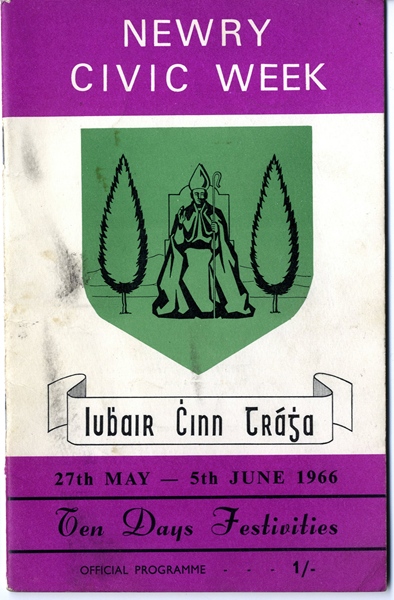
The programmes in the collection give a fascinating insight to the broad events and activities that took place during the festivals. The first revived Civic Week was held in 1966 from the 27th May to the 5th June. In the programme J.A Fitzsimmons, Chairman of the Civic Week Committee described its aim as “to stimulate a greater sense of civic pride and civic responsibility among its people, particularly among its young people – the citizens of tomorrow”.
Each programme lists a broad range of events, from beauty pageants, children’s parades, organised walks, exhibitions and a wide range of sporting events. These events were organised and hosted by various different clubs, schools and community groups in the town.
The first event held each year was a parade of local school children. They would gather at Abbey Yard and then parade to Edward Street car park for an address by the Minister of Education to officially launch Civic Week.
In 1968, the festival was officially launched by the Prime Minister of Northern Ireland, Terence O’Neill. He toured Newry and visited Newry Technical School then attended a lunch at the Ardmore Hotel. One of the highlights of the festival was the Miss Newry competition, with the winning contestant selected at a final dance at the Ardmore Hotel. Traders from Newry would provide the winner with a full range of clothes and cosmetics and there was even an official hair stylist, Kays of Margaret Square.
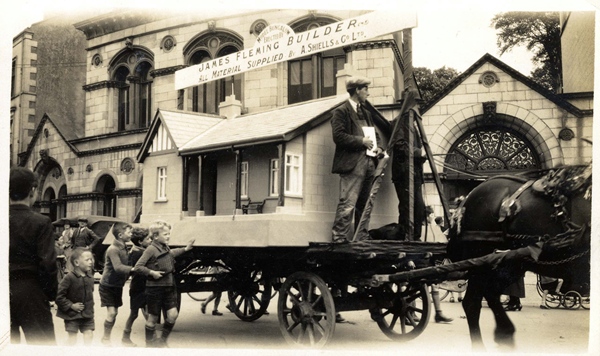
Many sporting competitions were held at the festivals, these included cycling time trials, basketball tournaments, darts, golf, fishing and athletics competitions. Interestingly a ladies soccer match was held at the Show Grounds during Civic Week in 1967.
Throughout the week various premises in Newry decorated their shopfronts and held exhibitions, including art and photography, home industries, schools, public lettering and sculpture. A caravan exhibition was held in Marcus Square and a tie-in with the Ulster Museum was exhibited in the Town Hall. Lectures were also held throughout the festival, in 1968 Newry Credit union hosted a lecture on the benefits of saving at the Boulevard Hotel.
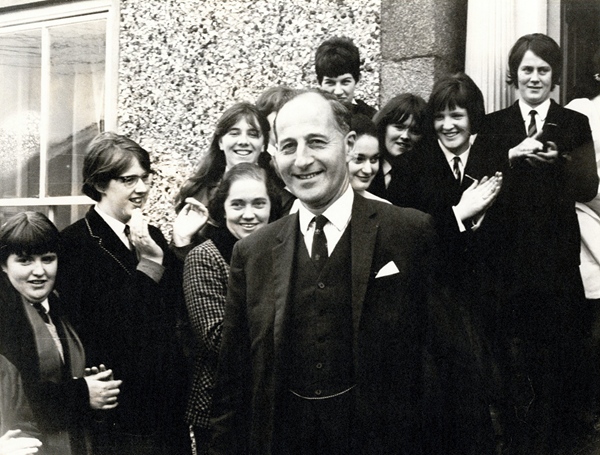
Some of the events were supported by businesses, groups and organisations. In 1967 milk was supplied for the walkers at the Flagstaff Walk event by the N.I. Milk Marketing Board. In 1966 Newry Road Safety Committee and Newry Motor Club hosted the Safe Driving Rally. The wide range of events held was evident by some of the more unusual events that took place. The Newry Unit of the Northern Ireland Fire Service hosted a Fire Fighting Display which involved a man being rescued from burning building. The Daisy Hill and General Hospital Units of the Northern Ireland Hospital Service Reserve presented Exercise Squirrel, a simulation dealing with casualties of a nuclear attack, setting up a Forward Medical Aid Unit on the hockey field of Newry High School. The event a reminder of the impact of the Cold War and the fear of a nuclear attack at that time.
The programmes also feature advertising for local businesses which no longer exist, but which many will remember, such as the Florentine Café, the Boulevard Hotel and Central Laundry.
Although it only ran for a few years, Newry Civic Week was a highly successful festival which left many great memories for the people of Newry.
The Museum is currently offering free tours of the main exhibition galleries on Wednesdays at 2.00 pm. These must be booked in advance by calling our Education Officer at 0330 137 4422.
Newry and Mourne Museum is open Tuesday – Saturday 10.00 am – 4.30 pm. Please call 0330 137 4422 or email museums@nmandd.org for further information.
Visit their website at www.visitmournemountains.co.uk
Write a comment
As part of a series of occasional articles profiling some of the contemporary artists featured in Newry and Mourne Museum’s temporary exhibition, Newry Artists Past and Present, the series continues with Greag Mac a’ tSaoir discussing his work.
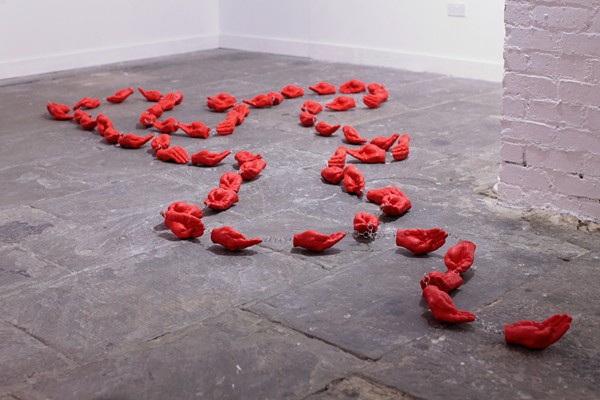
I was born in Newry in the early 1960s, living at what was the edge of the town at that stage, I went to school in the Abbey, where art wasn’t high on the list of priorities, but I was taught by Kevin Reynolds who had high standards and a slightly renegade approach, which was a clear influence on my later development. As a teenager my family moved to North Street flats which I loved. After leaving school I worked in Mournecraft as a screen printer but left when a chance came up to study in Dublin. That was really the last time I lived in Newry, which meant that the mental picture I carried around of the town (I still can’t think of it as a city) is of a particular remembered point in time. The notion of loss and its flipside, memory, are at the heart of most of my work.
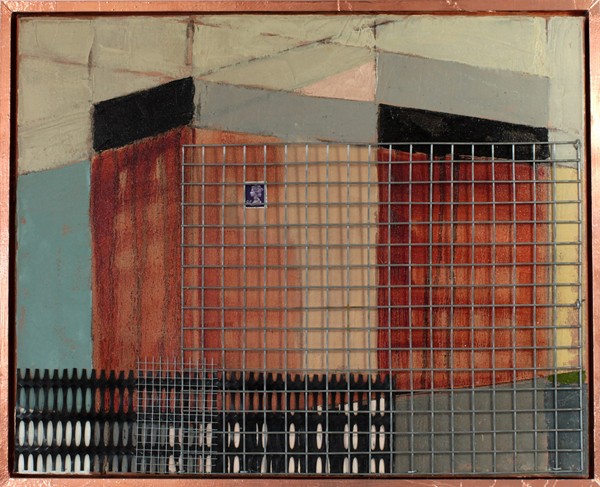
I’ve moved around a lot but about a decade ago I moved to Scotland, and I started to make work again. For the first time I realised that my strength as an artist lay in assembling things. My father was a school caretaker and an incredibly practical man who could make things from what lay around. My work is often made of the physical remains of experience, the junk we leave behind and for that reason it tends to be domestic in scale rather than epic. Even my largest work to date is constructed from multiples of a human hand. This human scale encourages a viewer approaching the work to build their own web of meaning based on personal associations rather than having a fully formed narrative imposed.
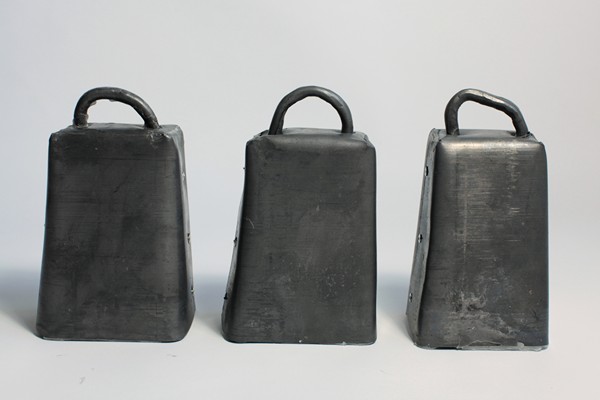
A key breakthrough came when I read an article about Irish monastic bells. In the early Irish poem Buile Suibhne, Sweeney silences Saint Ronan Finn’s bell by throwing it into a lake. I began working with the image of a silenced bell when Noah Donohue was killed in Belfast. I subsequently produced further sets of memorial bells made from lead and filled with wax. One of these sets, marking the fiftieth anniversary of Bloody Sunday is in the collection of the Museum of Free Derry while another, made to mark the anniversary of the killings on Hill Street of Robert Anderson, Sean Ruddy and Thomas McLaughlin is in the collection of Newry and Mourne Museum.
by Greag Mac a’ tSaoir
‘Newry Artists Past and Present’ is on show at Newry and Mourne Museum until the end of October 2024.
To view more of Greag Mac a’ tSaoir’s work please visit www.greagpaints.com or @greagmacatsaoir on Instagram.
The Museum is currently offering free tours of the main exhibition galleries on Wednesdays at 2.00 pm. These must be booked in advance by calling our Education Officer at 0330 137 4422.
Newry and Mourne Museum is open Tuesday – Saturday 10.00 am – 4.30 pm. Please call 0330 137 4422 or email museums@nmandd.org for further information.
Visit their website at www.visitmournemountains.co.uk/museums/newry-and-mourne-museum



 |
 |
 |