

 Write a comment
A plaque commemorating the lives of the female orphans of Newry Workhouse is to be placed near the main entrance of Daisy Hill Hospital this weekend and all are welcome.

 Write a comment
In Ireland, Halloween has been celebrated for centuries. The occasion comes from the ancient Celtic festival of Samhain, which marked the end of the summer and the harvest season and the beginning of the winter months. It was also a time to honour the dead. When All Hallows’ Day (typically known as All Saints’ Day) was officially moved to the 1st of November by Pope Gregory IV, the day before became known as All Hallows’ Eve, or Halloween. Over the years Newry and Mourne Museum has hosted many events to celebrate the Halloween season. This article will look back on some of our events and how they tie into our Halloween traditions.
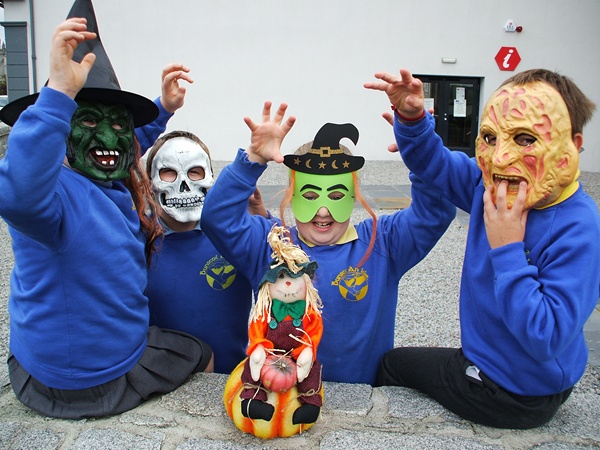
Arts and crafts play a big role in the Museum’s activities, including making masks or false faces, a popular symbol of the spooky season. The Celts believed that during Samhain the dead could visit the human world and walk the earth. The wearing of false faces confused any evil spirits and meant they couldn’t recognise you, should you be unlucky enough to encounter one. The wearing of costumes to resemble evil spirits also comes from the Celtic tradition, again as a means of disguise and confusion. Large bonfires were also lit to ward off evil spirits.
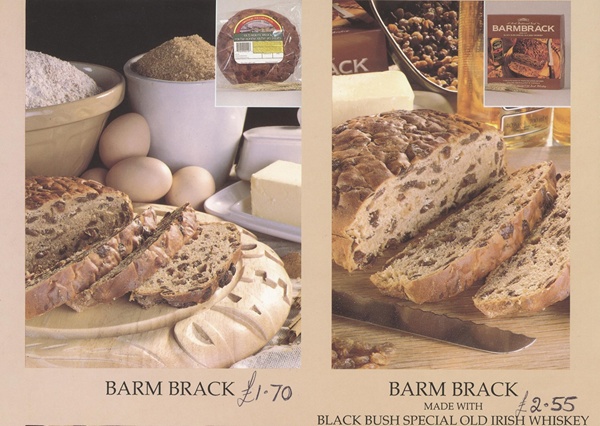
Food also plays an important part in Halloween traditions. In our current temporary exhibition, ‘Slices of History: Memories of McCann’s Bakery’, visitors will find reference to barmbrack, a popular fruit bread at Halloween, which was used as way of telling the fortunes of those eating it. Traditionally, the bread was baked with several items in it, and whichever one you found would foretell your future. A ring symbolised an upcoming marriage, a pea meant no marriage, a coin indicated wealth and fortune, a piece of cloth brought bad fortune or poverty. Apples from the harvest were used to play games, such as bobbing or ducking for apples, where participants dunked their head in a basin of water in an effort to retrieve an apple. In Snap Apple, an apple was hung on a piece of string and the players had to take a bit from it, blindfolded and without using their hands. Nowadays, no Halloween would be complete without a slice of apple tart.
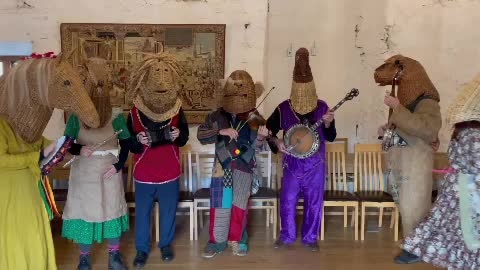
Storytelling is one the Museum’s most popular Halloween events. While ghost stories were traditionally told at Christmas time (the most famous being A Christmas Carol) they are now more associated with Halloween and help generate the right atmosphere for the day. The Museum has hosted the Armagh Rhymers, famous for their stories as well as the masks they wear. The masks are made from flax, willow and straw and are based on the characters of their stories, such as the bull mask for the Taín bulls. The Rhymers performance involves mumming (also known as guising) which is the art of masked individuals travelling from house to house to perform for food or money. This may have inspired the American tradition of Trick-or-Treating. Whilst America can be credited with carving out pumpkins for Jack-o-Lanterns, the tradition originated in Ireland, where turnips or swedes were used, and was taken to America by Irish immigrants.
The Museum also indulges in a Halloween hunt around the castle, emphasising the history of the building using markers such cauldrons, skeletons and ghosts to guide the young (and young at heart) around the galleries in search of clues to answer questions about this spooky season.
Newry and Mourne Museum is open Tuesday – Saturday 10.00 am – 4.30 pm. Please call 0330 137 4422 or email museums@nmandd.org for further information. If you would like to attend family storytelling in the Museum, there are spaces available at 1.30pm on the 31st October. These must be booked in advance by calling our Education Officer at 0330 137 4422.
Visit their website at www.visitmournemountains.co.uk
Write a comment
At the eleventh hour on the eleventh day of the eleventh month in 1918, the Armistice, an agreement to end the fighting of the First World War, came into effect. It is still commemorated today and takes many different forms, from personal to public. However, on Remembrance Sunday the focus shifts towards public observance at the war memorials in the district and further afield.
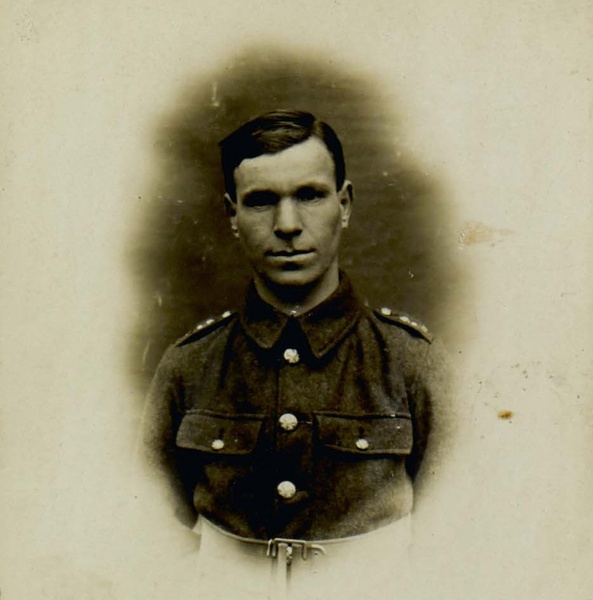
Newry War Memorial was designed by Major Gerald Wilson Reside, a simple granite cenotaph inscribed “To Our Glorious Dead”. It was not erected until 1938, the year before the outbreak of the Second World War. Originally located at Trevor Hill it was later moved to its present site by the Crimean cannon on Bank Parade. A decision influenced by financial constraints and concerns about omissions meant that no names were included on the memorial. Newry Urban District Council began work on a Roll of Honour for Newry in 1914. The RIC were despatched around the town, going from street to street to gather information. The intention was to add further names during the course of the war. However, the initial list, presented in April 1915 at an event in the Town Hall remained unfinished. It is now part of Newry & Mourne Museum’s collection.

Bessbrook War Memorial is located in the middle of the village. An obelisk constructed of marble and granite was unveiled in 1934 by the Earl of Kilmory. It is inscribed with the names of 84 men from the First World War. A stark testimony to the impact of war on this small community. In the grounds of Mourne Presbyterian Church, Kilkeel War Memorial was unveiled in 1923. It consists of a large plinth base surmounted by the figure of a soldier and the front and sides are inscribed with the congregational roll of honour.
The fallen are commemorated in various cemeteries around the world. In an effort to ensure that everyone was treated equally, the Commonwealth War Graves Commission (CWGC) marked their final resting places with uniform headstones made of Portland Stone, with no distinction made on account of rank, race or creed. Personal inscriptions were paid for by family. The names of those who died and were never recovered are included in various memorials, such a Thomas Lundy, of the Royal Dublin Fusiliers, who was killed on 29 June 1915 and whose name is carved on the memorial at Twelve-Tree Copse Cemetery in Gallipoli.
Local CWGC headstones can also be found in graveyards around the district, including those in St. Mary's Old Chapel Cemetery and St. Patrick's Church of Ireland, Newry, where the grave of an unknown soldier, believed to have been recovered from the wreck of the SS Conamara in November 1916, can be found. It is simply inscribed “A Soldier of the Great War, Known unto God”.
Churches, schools, businesses and other organisations commemorate members, former pupils and colleagues. St. Mary’s Church of Ireland features stained glass windows dedicated to those who served, while Newry Intermediate School, now Newry High School, erected a memorial tablet. The Post Office, the Great Northern Railway Company and various sports clubs also remembered their employees and members in this way.
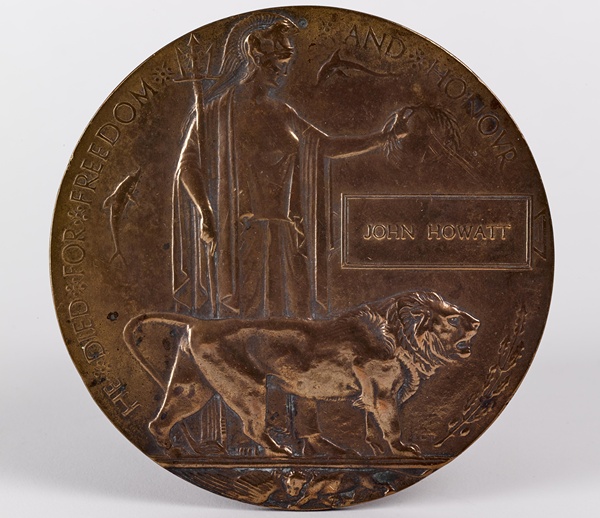
The personal loss felt by bereaved families was encapsulated in the small bronze memorial plaques, also known as the "Dead Man's Penny" which were issued to the families of the deceased. These were presented along with a commemorative scroll. On display in Newry and Mourne Museum is death penny awarded to Sapper John Howatt from Meigh, who died on 14 October 1918 and is buried in Dadizeele, Belgium.
While services on Remembrance Sunday mainly focus on public memorials, many smaller tributes can be found throughout the local area.
A Guide to Commonwealth War Graves and Newry’s Roll of Honour can be found online at www.issuu.com/visitmourne
The Museum is currently offering free tours of the main exhibition galleries on Wednesdays at 2.00 pm. These must be booked in advance by calling our Education Officer at 0330 137 4422.
Newry and Mourne Museum is open Tuesday – Saturday 10.00 am – 4.30 pm. Please call 0330 137 4422 or email museums@nmandd.org for further information.
Visit their website at www.visitmournemountains.co.uk
Write a comment
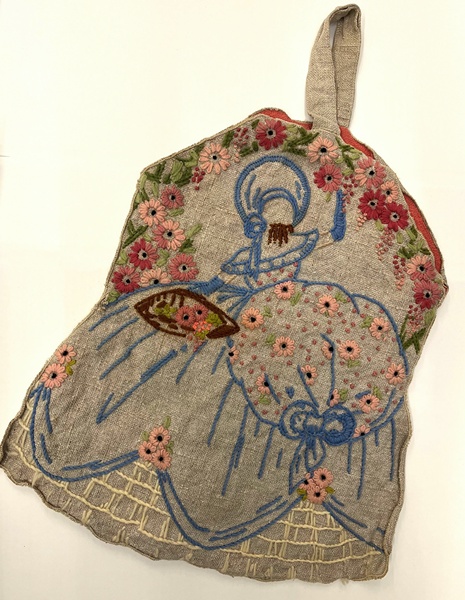
Newry and Mourne Museum recently received a donation from local lady, Rose McKevitt, of an old flour bag from the 1930s that had been repurposed as a pillowcase and a bed sheet made from meal bags, along with some interesting information on how they were made.
The 1930s was a time of economic depression, with high rates of unemployment. With household incomes stretched, alternative means of making clothes and household ‘linens’ were used. Before the advent of bulk deliveries, local bakeries purchased flour in bags. In McCann’s Bakery, these were hoisted up to the top floor of the building, to the ingredients store, which is now a gallery in the Museum. Empty flour bags, from brands including Globe, Early Riser and Mortons could be purchased for a shilling. Some households purchased bags of flour for making bread at home, often keeping it near the open fire to keep the flour dry.
Flour came in bags weighing 56 or 112 pounds and were typically made of cotton. It took four 112-pound bags to make one double sheet, with a lot of work needed to prepare them. Different methods were used to try and remove the writing, one involved rubbing the bags in paraffin oil and soap and boiling them in washing soda, another involved boiling them with copper coins. Some of the flour bags were fine and washed up like linen. As well as sheets and pillowcases, undergarments, frocks, aprons, tablecloths and tea-towels were all made using the material. The garments were carefully hand-sewn, and if they became threadbare, were darned or patched.
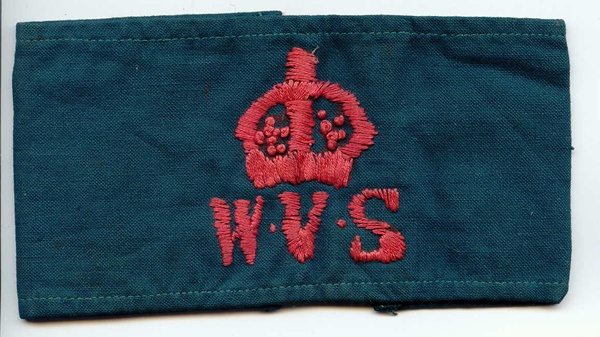
The Second World War caused a shortage in fabric and clothing. On the 1st of June 1941, rationing of clothing and footwear was introduced by the Board of Trade, lasting until 1949. It allowed a fair distribution of clothing and ensured that there was enough material for uniforms, parachutes and even wing fabric for fighter and bomber planes. As well as the armed forces there were numerous uniformed voluntary services and organisations in need of uniforms. By necessity, the Army modified its ‘battledress’ to make it more efficient to produce.
In the first year of rationing, 66 coupons were allocated to each person. This was reduced to 48 coupons the following year and by 1945-46 had been reduced to 24. Each garment was assigned a number of coupons, based on how much fabric and labour were needed to produce it. Eleven coupons were needed for a dress and eight for a man’s shirt. Provisions were made for manual workers, civilian uniform wearers and new mothers were given 50 coupons. Children’s clothes had a lower coupon value, and from 1942, all children were given an extra ten coupons, to account for their continued growth and school uniforms.
Knitting wool was also rationed, which encouraged people to unpick and knit again. In 1942 and 1943, further regulations restricted the number of buttons, pockets and pleats that could be used on a garment, abolishing trouser turn-ups and limiting the size of lapels. Money was still needed to buy clothing, which became more expensive with prices rising during the war.
A Make Do and Mend campaign was run by the Ministry of Information. Shortages encouraged home sewers to be imaginative and creative in their choice of fabrics. Handmade and repaired clothing became an essential part of life during wartime. Adverts in the papers from Mrs. Sew and Sew would provide ideas and information in ways to make clothes last longer, with free leaflets available by writing to the Board of Trade. Sewing classes and mending groups were formed and the Women’s Voluntary Service (W.V.S.) held talks and set up clothing exchanges.
As part of the Museum’s Living History education programme, school children meet to local characters, Mr. King, the Air Raid Precaution Warden and Mrs. Agnew, from the W.V.S. Through them they learn what it was like to live in Newry during the Second World War. If you would like to find out more about Living History at the Museum, please contact the Education Officer on 0330 137 4308.
The Museum is currently offering free tours of the main exhibition galleries on Wednesdays at 2.00 pm. These must be booked in advance by calling our Education Officer at 0330 137 4422.
Newry and Mourne Museum is open Tuesday – Saturday 10.00 am – 4.30 pm. Please call 0330 137 4422 or email museums@nmandd.org for further information.
Visit their website at www.visitmournemountains.co.uk
Write a comment
The 19th century saw the building of many new river bridges in Newry, as well as the replacement and modification of older 18th century ones. The first we come to, is Needham Bridge, which was designed by architects Thomas Duff and Thomas Jackson. Its construction was contracted in April 1831 to mason James Clarke and merchant Samuel Boyd, by the town's Bridge Committee and was completed in the summer of 1831. The Ordnance Survey Memoirs note that it was, "Built by private subscription ... remains as yet comparatively useless." This was because the Armagh side of the town was cut off by the canal, except for a few foot passengers, who could cross by barge for a halfpenny. The bridge was likely named after Francis Needham, the Earl of Kilmorey, who died in 1832. "Needham Bridge" is engraved on the side facing Ballybot Bridge, with the construction year "1831" on the opposite side.

The Stone/Sugar Island Bridge underwent several 19th-century modifications. An 1829 print by artist Thomas Mann Baynes, shows that it consisted of four arches crossing the river with a fifth, smaller arch crossing a mill race. By 1846, only four arches remained, likely due to road-widening efforts in 1838-1839, which covered part of the mill race. By 1849, the bridge had footpaths on both sides, and for a time, a cattle-rubbing post, which was removed in 1878. The bridge also had battlements, though these may have been erected in the 18th century for defence against potential attacks.

Ballybot Bridge, then consisting of five arches, was found to be in poor condition by the 1840s. In 1844, county surveyor Mr. Frazer found that its foundation was set on loose stones, with cracks and a hole, and deemed it unsafe. The bridge was demolished in 1846 and replaced with a temporary wooden structure. It was finally completed in July 1847 at an estimated cost of £700. This granite bridge was similar in appearance to the Needham Bridge and spanned 90 feet with a single arch.
In 1874, town surveyor Mr. Meares presented plans for the O’Hagan Bridge to Newry Town Commissioners. This bridge connected the Mall to Mary Street and Mill Street, previously separated by the mill race, and was named after former Board Chairman, John James O’Hagan. It features a single parapet where the race meets the Newry River, topped by a cast-iron lamp and inscribed "O’Hagan Bridge / Built A.D. 1874" on the street-facing side. A new street over the race appeared around this time, although it wasn’t formally called O’Hagan Street until 1895, the year of O’Hagan's death.

The last major 19th century bridge, the Armagh-Down Bridge, was completed by contractor David Mahood by 1891, coinciding with plans for a new Town Hall. Initially intended as an extension to Bank Parade, Councillor Arthur McCann later proposed a new building over the bridge to symbolise unity between Armagh and Down. The bridge has three shallow segmental arches, with ornate cast-iron lamps at each end. Between the lamps is a canon known as the “Russian trophy”. It was given to Newry as a trophy of the Crimean War by the Principal Military Storekeeper of the Royal Arsenal. It was originally located at the Stone Bridge. A future article will explore the development of the canal bridges in the town.
The Museum is currently offering free tours of the main exhibition galleries on Wednesdays at 2.00 pm. These must be booked in advance by calling our Education Officer at 0330 137 4422.
Newry and Mourne Museum is open Tuesday – Saturday 10.00 am – 4.30 pm. Please call 0330 137 4422 or email museums@nmandd.org for further information.
Visit their website at www.visitmournemountains.co.uk
Write a comment
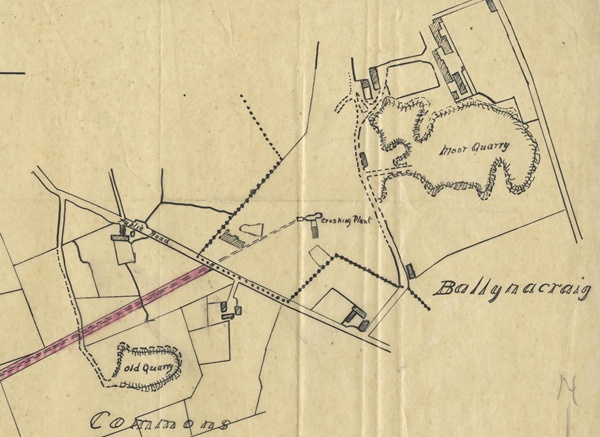
Granite found in the hills around Newry was once one of its chief exports. Variations of townlands with craig, carrick or carraig in the name would indicate a rocky area, giving a clue to where these quarries existed. A large granite deposit forms part of the hills in the Ballynacraig area, while Carrickbracken and Carrickcloughan were also places where quarrying was carried out. Used in many of Newry’s 19th century buildings, Newry granite is generally greyish-blue, with considerable variation in mineral constitution, and a variety of tints. Pinkish-grey Newry granite was used for structural work throughout Ireland and provided setts for the streets of Belfast.

At the end of the 1800s, the granite quarrying industry had been greatly developed and by 1901 there were ten different quarries operating in the Newry area. A number of new quarries had opened, and a large quantity of valuable steam-powered equipment purchased to increase productivity.

Mr. W.J. Sturgeon opened a quarry in Ballynacraig in 1891. Within ten years he employed seventy men, raising stones for building work, polishing, kerbing and paving setts. Granite from Ballynacraig retained a rough surface under traffic, while at the same time, was tough, wore well and made a very fine carriageway pavement, which didn’t become dangerously slippery under traffic, like some of the hard granites.
Other quarries had been in existence for a considerable time, such as Moor Quarry, which had been worked by Messrs. Hugh Campbell & Sons from the 1840s. In 1867, around 200 tons of granite a week were sent to builders in Ireland and various parts of England and Scotland. They also manufactured granite into monuments, building stones, and other artistic work. In the mid-1870s they built a large steam-polishing works, to produce polished granite. In 1876 a polished granite vase carved with shamrocks won a medal diploma at the Philadelphia Centennial Exhibition. A bronze medal was also awarded at the 1878 Paris Exhibition.
The Goraghwood quarries, belonging to Newry Quarries Ltd., were the oldest in the district and were mainly worked for the production of building and monumental stones. They also owned the Corrin Quarry, about three miles from Newry. Building and monumental stones were the principal products of this quarry, with kerbing and granite setts being only of secondary consideration. The company also carried on a granite manufacturing trade in Newry, cutting and carving ornamental stones for large buildings, such as Newry Post Office, the façade of which was beautifully ornamented with artistic work in granite.
The United Newry Granite Company had two quarries, one at Ballynacraig and another at Altnaveigh, which provided polished granite stones, up to 21 feet in length for Manchester Town Hall, completed in 1877. Taking on a brilliant polish, it was well adapted for all kinds of monumental and embellished work.
Messrs. Charles Ewen & Sons, quarrying and monumental contractors, were long associated with the industry in Newry, employing about twenty men in the quarry and thirteen in their monumental works in the town. They also carried out quarry operations at Crowhill, three miles from Newry, where they employed a further fifteen men.
At the turn of the 20th century, the granite industry in the Newry district give employment to about 850 men and boys, besides others who were indirectly employed in connection with the trade. Paving setts formed the principal export trade from the Newry quarries, with 26,000 tons despatched in the year ending May 1900.
The Museum is currently offering free tours of the main exhibition galleries on Wednesdays at 2.00 pm. These must be booked in advance by calling our Education Officer at 0330 137 4422.
Newry and Mourne Museum is open Tuesday – Saturday 10.00 am – 4.30 pm. Please call 0330 137 4422 or email museums@nmandd.org for further information.
You can visit their website at www.visitmournemountains.co.uk
Write a comment
Christmas is a time of feasting and celebrating with family today. This was no different back in the 16th century in the home of Sir Nicholas Bagenal. Traditions of the time give an insight of how the season would have been celebrated and while many seem unfamiliar, some have continued through the centuries.
Celebrations began on Christmas Eve, when the Hall and Great Chamber would have been decorated with evergreens. Holly to represent everlasting life; ivy to keep disease away; rosemary to protect against evil, and mistletoe to bring good luck. A ‘kissing bough’ would have been prepared with mistletoe and when a couple kissed under the bough, the gentleman removed a berry. When all the berries had been removed there were no more kisses!
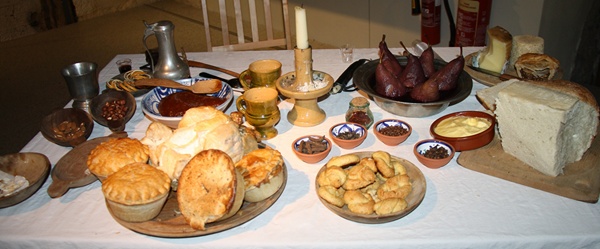
A yule log, a large ash log, would be decorated with hazel twigs and burned in the Hall all over the Christmas period. It was considered good luck to keep a piece to light next year’s log. All decorations were taken down and burnt on the 6th of January, except holly as this was considered ill fortune.
The twelve days of Christmas were a time of feasting. From Christmas Day to the Feast of Epiphany there was much celebration. All work stopped and would not commence again until Plough Monday, the first Monday after the Twelfth Night. The household abstained from eating meat for the last month before Christmas and on Christmas Eve, did not eat fish, meat or cheese. The cooks made two types of bread for the household, manchet bread for the Bagenal family and their guests and cheat bread, a type of wholemeal bread for the servants.
The usual meat served over Christmas was goose, venison, beef, mutton and fish. The head of a wild boar could be used as an elaborate table decoration. Mince pies in the 16th century consisted of raisins, currants, prunes and spices as well as mutton to represent the shepherds. For twelve happy months ahead, a mince pie would have been eaten on each of the twelve days of Christmas.
The spices included cloves, cinnamon, nutmeg and peppercorn. Pomanders were made from oranges and cloves and given as gifts. The spices were also used to make mulled cider which was used to ‘wassail’ the apple trees. A magnificent orchard adjoined the castle and wassailing occurred to encourage the spirits into ensuring a good harvest the following season. Singing, dancing and general merrymaking took place, and the biggest and best tree was selected, and the cider poured over its roots.
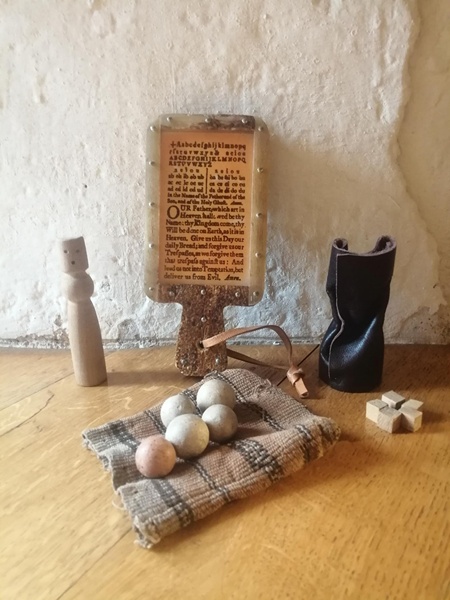
After Christmas Day, the next celebration was 1st January. The new year and new beginnings would be celebrated along with the giving of gifts. There were nine children in the Bagenal family, and they might receive gifts like Five Stones for the young boys and a small doll or poppet for the young girls. Blind Man’s Bluff was also a popular game for children within the household to play.
The Twelfth Night was governed by the Lord of Misrule, also known as the Master of Revels, typically a servant, who became the master of ceremonies overseeing the revelry. There was plenty of feasting and refreshments and mummers provided entertainment. For those who overindulged, remedies were prepared containing mint and rosemary to soothe stomach pains and headaches.
The final celebration was the Feast of Epiphany on 6th January, which indicated the arrival of the three kings to visit baby Jesus.
The Museum is currently offering free tours of the main exhibition galleries on Wednesdays at 2.00 pm. These must be booked in advance by calling our Education Officer at 0330 137 4422.
Newry and Mourne Museum is open Tuesday – Saturday 10.00 am – 4.30 pm. Please call 0330 137 4422 or email museums@nmandd.org for further information.
Please visit our website at www.visitmournemountains.co.uk
Write a comment
During the festive season, there are many traditions that we all love to indulge in and a core staple for many of us is tied to the food we share at Christmas. This year, Newry and Mourne Museum will be looking through some recipe books in the collection to highlight the history of some of our Christmas treats.
Many Christmas recipes use dried fruits and spices, the origins of which date back hundreds of years. As these ingredients were expensive, it was a luxury to use them at Christmas time. A1904 Newry Technical School Cooking Class book contains a recipe for mince pies which is remarkably like the recipe used today, unlike in Tudor times, when they contained mutton. It was also the fashion at that time for mince pies to be shaped like a crib, a tradition that endedin the mid-seventeenth century.
Christmas puddings or plum puddings originated in the 14th century and were originally a savoury dish known as frumenty, which included meat, onions, dried fruit and spices. With the addition of eggs, breadcrumbs and alcohol, it began to evolve so that by the Victorian era they were very similar to today’s puddings. Creating the pudding was considered especially important in the Victorian era as it required a helping hand from the whole family.
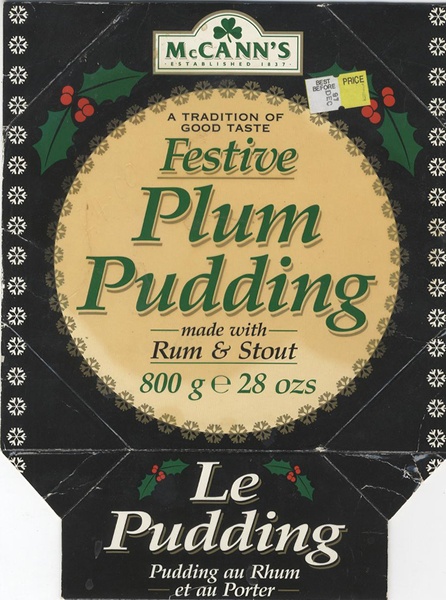
On ‘Stir-Up’Sunday at the beginning of Advent, each family member participated in making the pudding, which was made up of suet, breadcrumbs, dried fruit and spices. They would each make a wish and stir clockwise for good luck. Then a ring (for marriage), coin (for wealth), or thimble (for a happy, but single life) was tossed into the batter, to tell the fortunes of those who found themin their portion. Until Christmas Day the pudding hung from a sack, then it was boiled in beef broth for eight hours. After dinner it was turned out on a platter, topped with a sprig of holly, and set alight. The head of the household sliced and served it, asking for a blessing on all who prepared it.
A book, written by fifteen-year-old Mary Ann Scott, contained many popular Christmas recipes,including one for plum pudding. Although the puddings did not contain plums, at the time, plum was a by-word for any type of dried fruit. Other recipe books in the collection have variations on the recipe and method. The 1936 souvenir cookbook from the Christian Brothers’ Bazaarfeatures Miss Nannie Treanor’s recipe for cottage plum pudding which only required the pudding to be steam for two hours before serving. Another recipe book entitled ‘Great Grandmother’s Recipe Book’ offers an alternative recipe without the use of eggs.
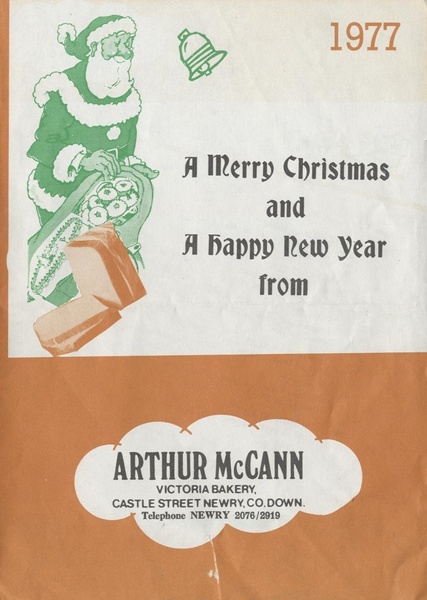
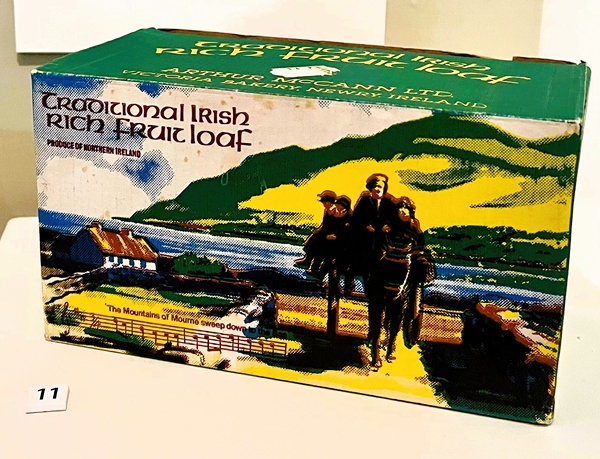
One local business that took great pride in celebrating festive food was McCann’s Bakery. The bakery added a festive touch to their goods. In the 1970s, as part of their “Snowtime” range, plum cake became the “Christmas Rose”, madeira cake was nicknamed the “Robin”, and their mixed fruit cake was christened the “Santa Claus”. McCanns were aware of the popularity of their baked goods and presented them in gift boxes for posting inland and internationally, so people could send their friends a taste of home. A Christmas card that accompanied their Rich Fruit Loaf suggested several ways to enjoy it; by slicing it thinly and spreading liberally with butter or honey; topped with cheese and toasted or fried.
The Christmas Puddings and Rich Fruit Loaves they advertised during this time were made from the recipes that they had developed sixty years previously and were also gifted to the landlord as part of their rental agreement.
For further information about Newry and Mourne Museum, visit our website at www.visitmournemountains.co.uk
By Noelle Frew and Joanne Glymond
Write a comment
Many children will have received toys as Christmas gifts over the festive period. Many of today’s toys have a long history and children have been playing with different types of toys for thousands of years.
Dolls are one of the earliest known toys, found in different cultures around the world. Early examples from Ancient Egypt, Greece and Rome were made from available natural materials such as clay, stone, wood, bone, leather or rags. Dolls had many purposes, as well as playthings, some were used in rituals and religious ceremonies or for educational purposes. China and porcelain dolls became popular in the 19th century. Initially they were made to look like adults, but their popularity increased in the 1850s when they were modelled on children.
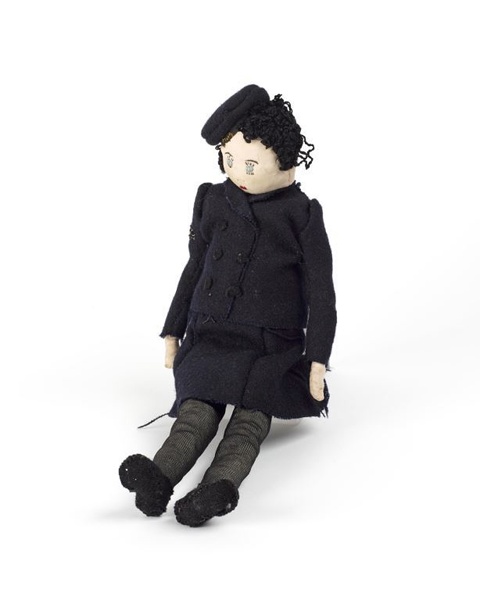
Moulded plastic dolls with socket joints and moveable eyes became popular in the 20th century. Fashion dolls made from plastic first appeared in the 1950s, with the launch of Barbie in 1959, followed four years later by Sindy, who was the first UK toy ever to be advertised on television. Inspired by fashion at the time, clothes reflected current trends, and her first fashions were designed by London fashion designers Foale and Tuffin.
Other toys with a long history include marbles, which have been found in archaeological sites around the world. Over the centuries they have been made from clay, stone, nuts, bone, china and glass, which became popular in the 1840s. Yoyos made from terracotta, metal or wood were found in Ancient Greece. In modern times the first yoyo craze swept through Britain in the 1930s when a yoyo championship was held in London and was won by a 13-year-old boy. Another yoyo craze swept the county in the 1960s and again in the 1990s, with modern versions made of plastic, often with flashing lights.
Toy bears originated in Germany in the late 19th century. In 1902 the teddy bear got its name from Theodore (Teddy) Roosevelt, the 26th President of the U.S.A. After an unsuccessful hunting trip, fellow hunters, not wishing to disappoint their important guest, captured a young bear for the President to shoot. He refused and the bear was released. The event became a big story in local and national newspapers and a New York novelty shop owner asked his wife to make up some jointed bears, which were called Teddy’s Bears.
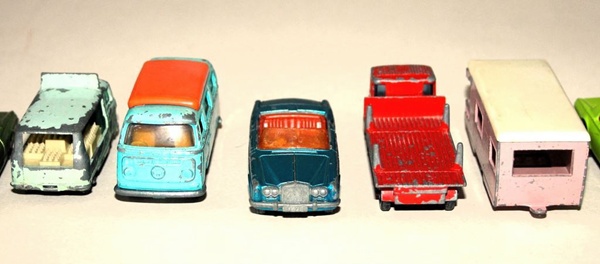
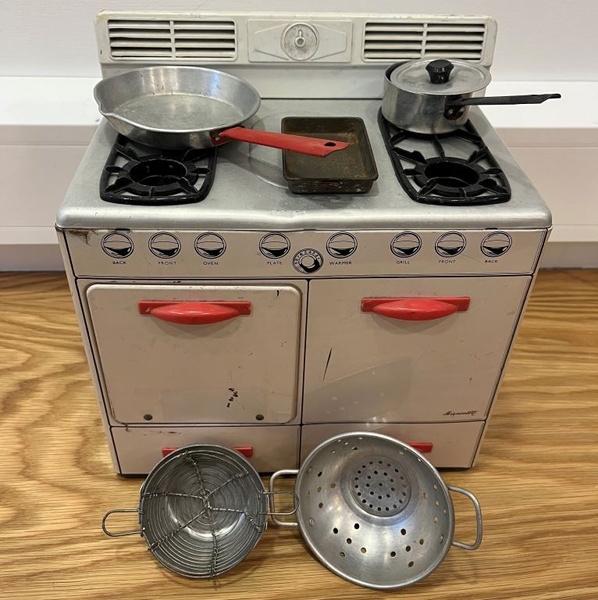
Toys were often modelled on versions of domestic and household objects or based on professions, such as doctor and nurse sets, which originated in America in the 1930s. Building and construction toys could inspire a career in engineering, science and technology. Meccano, believed to have come from a blend of “make and know”, was created by Frank Hornby in Liverpool in 1898 and marketed to boys as Mechanics Made Easy in 1901. The company also made other popular toys such as model train sets, which had first been mass produced in Germany in 1891. These grew in demand and popularity peaked in the 1950s. Die-cast model cars date back as far as the 1800s, but new techniques introduced during the First World War created more detailed vehicles. Dinky Toys and Matchbox were popular brands until Corgi Toys began selling model cars with glazed plastic windows.
World events, changes in technology and the entertainment industry provided plenty of inspiration for toys. The Second World War was the inspiration for G.I. Joe, the first action figurine made in 1946. Space themed toys were particularly popular in the late 1950s and 60s, a direct reflection of progress in space exploration and the excitement leading up to the first moon landing in 1969.
Many companies produced toys affiliated with TV programmes in the 1960s, with Thunderbirds and Dr Who merchandise available. Superhero action figures, based on Marvel and DC comic book characters came on the market in 1971.
For more information on the Museum, please visit our website at www.visitmournemountains.co.uk/


 |
 |
 |