

 Write a comment
Newry and Mourne Museum celebrates its 40th anniversary on the 30th of May, the date it was officially opened in 1986. Initially housed in Newry Arts Centre, the early years were focused on building up the collection. Work went on behind the scenes in the year leading up to the opening, by which time the first Museum Officer, Tony Canavan, estimated that there were a thousand objects in the collection.
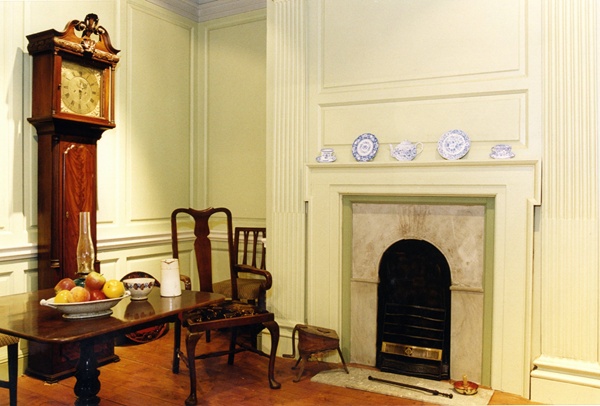
In 1999 with the help of external funding, staff numbers began to grow, alongside a number of volunteers who also made a significant contribution. This led to increased temporary exhibitions and allowed education work with local schools to become a core part of the Museum’s role in the community. Much of the work of the Museum at this time was central to many major local achievements such as Newry gaining city status in 2002.
Perhaps the most significant change the Museum has seen was its move to Bagenal’s Castle, a restored 16th-century fortified house, built by Sir Nicholas Bagenal in the mid-16th century, and an attached 19th-century warehouse. For much of the 20th century both buildings were owned by Arthur McCann and functioned as the Victoria Bakery.
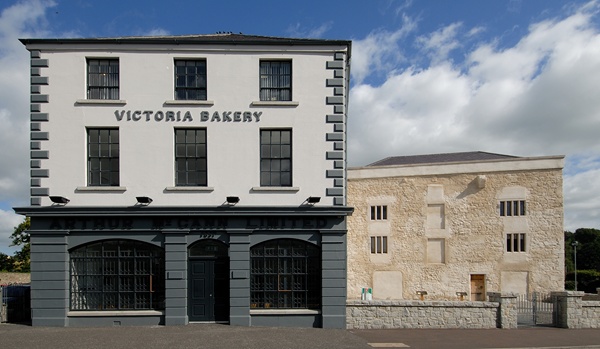
Restoration and fit-out of the buildings began in 2005. The Castle is a protected monument and archaeologists were present throughout the construction period, revealing original features which shaped the restoration process. Features from all periods of the history of the buildings were integrated into the exhibition layout and interpretation.
The larger building increased exhibition space for permanent and temporary exhibitions and provided space for education workshops and events. A major revamp of the galleries took place in 2018, providing new panels and interactives, along with many new objects on display. Visitors can trace the social and political history of the Newry and Mourne area from the pre-historic period up to the early 21st century. Almost all of the artefacts on display in the main exhibitions have been donated by local people or those with links to the area.
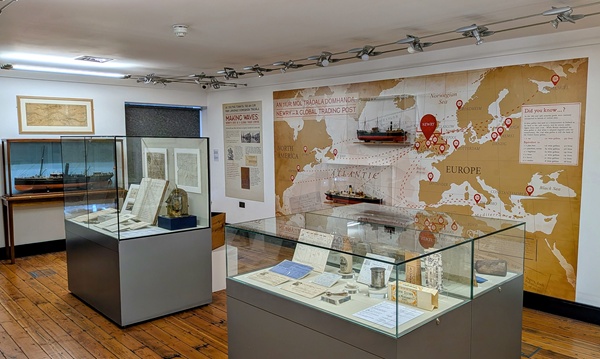
Two temporary exhibitions are held each year that further highlight the rich heritage and culture of the region. These are often accompanied by a publication, available on the NMD Museums website, for anyone curious about different aspects of local history. Since 2007 there have been over forty temporary exhibitions based on the Museum collection, supplemented with loans from the public and other institutions. Thanks to this generosity, the collection has continued to grow, with objects now numbering over 16,000. Another significant development has been the provision of a new NMD Museums website, which provides access to the catalogues of both Newry and Mourne and Down County Museum.
Amongst these are significant archival collections. Newry and Mourne Museum has one of the most outstanding local history archives in a local museum in Northern Ireland, containing sources of local and national importance. The three main archival collections include, the Reside Collection, which consists of around 10,000 documents, dating from 1715 to the 1990s and includes estate records such as rental books, titles deeds, maps and estate surveys.
The collection of Hugh Irvine relates to local social and family history in the Kilkeel area and includes photographs, postcards, receipts from local businesses, books, newspaper cuttings and detailed notes on family history.
The Éamon Donnelly Collection comprises his personal and political papers. Donnelly, whose family lived in Newry, was a prominent Nationalist politician in Ireland during the 1920s and 1930s, and one of the founding members of Fianna Fáil.
Since re-opening in March 2007, the Museum has welcomed visitors from all over the world and continues to engage with the local community through its funded projects, such as Social Housing, Fixing our Broken Planet and the upcoming community curation project funded by the Esmée Fairbairn Foundation. School visits have gone from strength to strength, with local children participating in immersive local history workshops in topics such as the Famine and the Second World War. A vibrant events programme continues to draw people of all ages to a wide variety of lectures and workshops.
Newry and Mourne Museum is open Tuesday to Saturday from 10.00 am to 4.30 pm. For further information call 0330 137 4422, email museums@nmandd.org, or visit out website at www.visitmournegullionstrangford.com/museums/newry-and-mourne-museum
The Museum is currently offering free tours of the main exhibition galleries on Wednesdays at 2.00 pm. These must be booked in advance by calling our Education Officer at 0330 137 4422.
Write a comment
As Eurovision comes to a finale, the Newry and Mourne Museum reflects on the success Newry has had with the contest. Clodagh Rodgers was the UK entrant in 1971 with the song “Jack in the Box.” Clodagh grew up in Warrenpoint and was a pupil at St Mary’s High School, Newry. Also appearing in 1971 concert representing Ireland was 19-year-old chemist’s assistant, Angela Farrell, from Portadown, who sang “One Day Love”. Angela’s singing talent had earlier been recognised in Newry, when she won top Junior Prize at the Killeavy “Spot the Star” Contest held in Cloghogue Parochial Hall in 1967. Clodagh would go on to claim fourth spot while Angela finished in eleventh place.
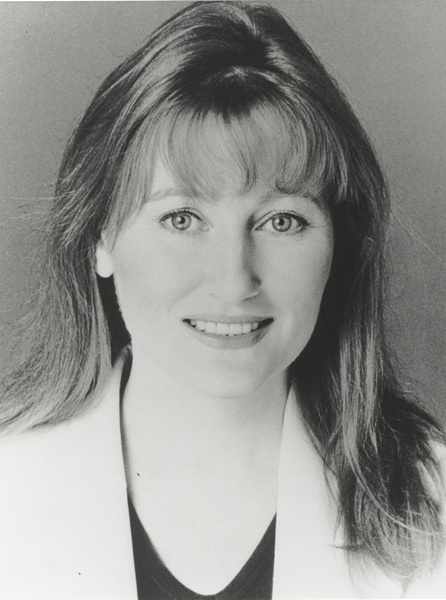
In 1986 Newry band, Luv Bug, became the first Northern group to represent the Republic of Ireland in Eurovision. As with Clodagh, the Luv Bug song, “You Can Count On Me”, ended up in fourth place. Coincidently Sophie Lennon, a young singer from Mayobridge who represented Ireland in the Junior Eurovision Song Contest in 2022, also finished fourth. She is the first singer from Northern Ireland to represent the country in the junior edition of the contest.
Aside from performers, Newry also has several successes with songwriters, in 1998 Gerry Morgan’s “Is Always Over Now?” was sung by Dundalk hairdresser, Dawn Martin, while in 2001 Newry Ulsterbus worker, Pat Sheridan, penned the ballad “Without Your Love” which was performed by Gary O’Shaughnessy.
Aside from the Eurovision, there were other competitions that recognised the talent of the local area. One of Newry’s most famous singers was Rose-Marie Kane who was voted 'Best International Concert Star', 'National Singer Of The Year', and 'Most Popular Singer' at the International Music Awards. Originally from Cloughogue, Rose-Marie’s first hit single "When I Leave The World Behind” entered the charts on three consecutive occasions and had released nineteen albums during her career. She also sold out the London Palladium on multiple occasions as well as performing for Princess Diana. In addition, she had sell-out shows in Las Vegas and appeared in The Royal Variety Show.
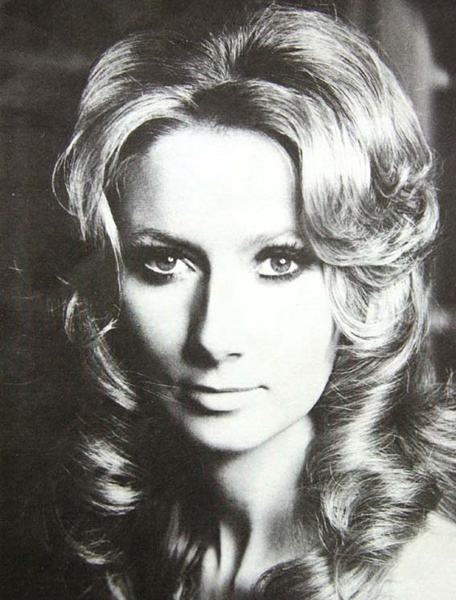
Awarded the European Star Award in 1980, Susan McCann is considered another great talent of the area. Born in Forkhill, Susan is affectionately known as Ireland’s First Lady of Country and Irish Music. Her second release “Big Tom is still the King” took her to number one in the Irish Pop charts in May 1977 and remained in the top 20 for 11 weeks. Susan has also performed for both former US Presidents George H.W. Bush and George W. Bush. She marked her fifty years of singing with a performance at the Grand Opera House in Belfast earlier this year.
Another award-winning singer from the area is Tommy Sands who is credited as the song writer for his solo work and his work as a member of the Sands Family band. In 2004 Sands received the award for 'Best Original Song' at the BBC Radio 2 Folk Awards for his song "There Were Roses." Presently the Sands family has three generations of singers performing all over the world.
The Museum is currently offering free tours of the main exhibition galleries on Wednesdays at 2.00 pm. These must be booked in advance by calling our Education Officer at 0330 137 4422.
Newry and Mourne Museum is open Tuesday – Saturday 10.00 am – 4.30 pm. Please call 0330 137 4422 or email museums@nmandd.org for further information.
Visit their website at www.visitmournegullionstrangford.com
Write a comment
A new display at Newry and Mourne Museum is shining a light on the skilled women whose labour helped shape the region’s world-famous linen industry. Flowering in the Mournes explores the tradition of whitework embroidery in South Down and South Armagh, revealing a story of artistry, endurance, and often overlooked economic contribution.
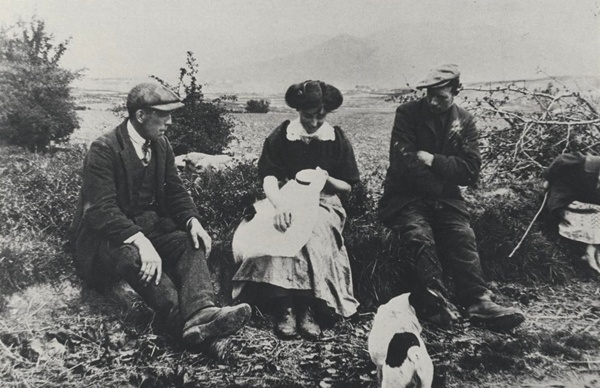
While the industrial might of Ulster’s linen mills is well known, these objects bring into focus a quieter but equally significant form of labour: the intricate embroidery carried out in rural homes. Known locally as “flowering,” this delicate white-on-white needlework became a hallmark of the Mourne region during the 19th and early 20th centuries.
Embroidery sits within a wider story that includes both factory work and domestic industry. Women formed the backbone of the linen trade across County Down and South Armagh. In the mills of Banbridge and Bessbrook, they worked long hours in physically demanding conditions, spinning, winding, and weaving fibres destined for global markets. Yet for many women, particularly in rural communities, employment took place at home. Here, embroidery offered a vital source of income that could be combined with farming, childcare, and household responsibilities. The display invites visitors to imagine the daily routine of a “flowerer” in places such as Hilltown, Mayobridge, or Kilkeel. Starting at dawn, a typical day might involve tending animals and preparing meals before settling at an embroidery frame for hours of concentrated labour. They often filled a bottle with water and set it next to the candle flame to maximise the light but often their eyesight was ruined by the time they were forty years old. Working from patterns stamped onto fine linen, women stitched floral motifs, initials, and decorative borders with extraordinary precision. Finished items such as handkerchiefs, napery, christening robes, and garments were then returned to agents, often after long walks to nearby towns.
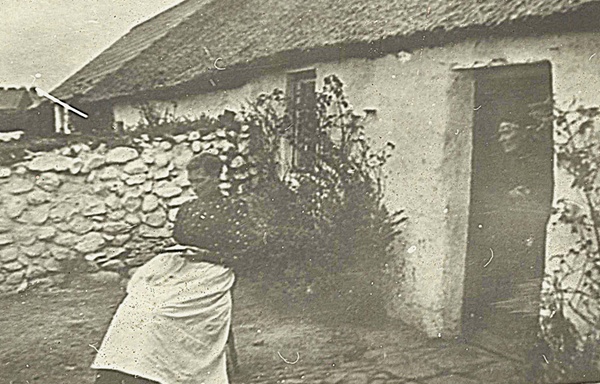
Despite the beauty and commercial success of these goods, the women who produced them were paid only modestly. Many earned just a few shillings per week, with some receiving only pennies a day. The system of distribution, controlled by middlemen, could leave workers reliant on credit and vulnerable to exploitation. Nonetheless, flowerers were highly prized as wives and young men would look out for a flowerer’s characteristic yellowed finger and thumb – hardened over a flame when no thimble was available – because this was the mark of a woman with a marketable skill.
Whitework embroidery was part of an international fashion trend, appearing on garments worn by the wealthy across Britain and beyond. The same techniques used in modest cottages in the Mournes adorned elegant dresses, collars, and household linens in London, New York, and throughout the British Empire. This contrast between global demand and local hardship highlights how the labour of rural women contributed to international markets, even as their own lives were marked by economic uncertainty and long working hours. Skills were passed down through families and communities, with girls learning from as young as six or seven years old. Mothers, daughters, and neighbours formed close networks of knowledge and support, ensuring the survival of techniques that required patience, discipline, and exceptional dexterity.
The new display recognises the hidden labour behind some of the most beautiful objects produced in this region and is an opportunity to reflect on the social history of work, particularly the experiences of women whose contributions were often undervalued or overlooked. Flowering in the Mournes not only celebrates a distinctive regional craft but also honours the resilience and skill of the women behind it. Their work supported families, shaped communities, and left a lasting imprint on the cultural heritage of Newry & Mourne.
The Museum is currently offering free tours of the main exhibition galleries on Wednesdays at 2.00 pm. These must be booked in advance by calling our Education Officer at 0330 137 4422.
Newry and Mourne Museum is open Tuesday – Saturday 10.00 am – 4.30 pm. Please call 0330 137 4422 or email museums@nmandd.org for further information.
Visit their website at www.visitmournegullionstrangford.com
Write a comment
The completion of Newry Canal proved to be a transformative moment for the town, helping to fuel the growth of its textile industry. Within a decade of its completion, Newry was already establishing itself as a player in the Irish linen trade. The Irish Linen Board's notice of 1749, published in the Belfast Newsletter, offers one of the earliest records connecting Newry to the trade. The notice announced a new seal system for lappers whose job it was to inspect linen being brought to market, to measure and refold it, before applying an official seal to certify its quality and dimensions.
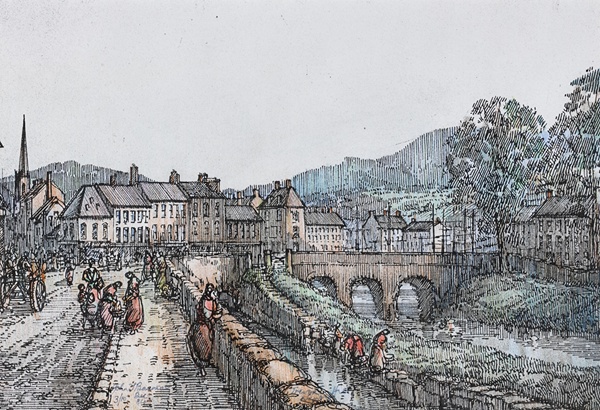
They were essentially quality controllers in the linen trade. Newry was listed alongside Dublin, Derry, Coleraine, Antrim, Armagh and Lurgan as an approved location for a guarantor highlighting the town's growing standing in this trade. The system was not without its problems; persistent fraud and rising complaints from English buyers forced the Irish Linen Board to act. In 1759 lappers were replaced by the more formally appointed Seal Masters. The new title was no guarantee of honest conduct. In 1765, one Cormuck McCawley of Newry was publicly discharged for fraudulently sealing brown linen, his name printed in the Belfast Newsletter alongside others as a caution to all dealers in the trade.
Despite such incidents, Newry’s commerce continued to expand. To accommodate this the foundations of a new Market House were laid in December 1752 on a portion of the Earl of Hillsborough's Liberty that would become Margaret Square. Funded by subscription from the Earl and several local gentlemen, it was built expressly for the better accommodation of the Yarn and Linen Market. The building's connection to the textile trade proved remarkably enduring. As late as 1841, long after its conversion into a Sessions House, a Miss Duff was employing several hundred women in the veining of muslin - an openwork technique using ladder-like stitches to join two pieces of cloth - using the Grand Jury Room to receive and pay for the work
The processing of linen required specialist facilities, with the 1761 Wren map of the town showing bleach mills operating along the Mill Race in the area adjacent to what is now the Downshire Road Orange Hall. A 1767 advertisement in the Belfast Newsletter confirms the scale of this operation, describing a facility capable of bleaching 2,000 pieces of linen per season, equipped with water supplies, furnaces, drying lofts, and workers' quarters. The memory of this industry lingered long in the town. In 1815 an elderly resident, Charles Havern, recalled seeing two bleach greens in the area that is now occupied by Jack Murphy’s jewellers and Santander Bank. These were open areas used for spreading cloth on the ground to be whitened by sunlight.
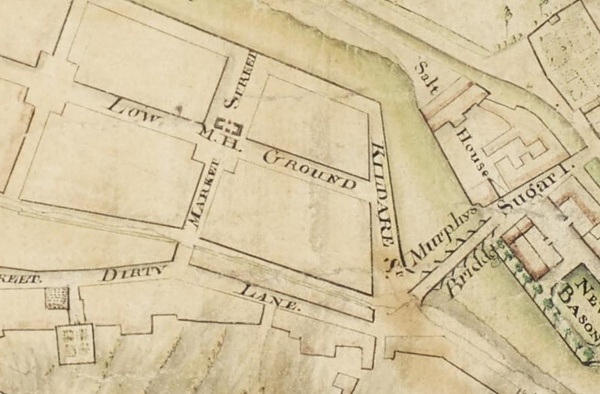
Beetling was another essential stage in linen finishing, a process whereby fabric was wound onto a beam and pounded by wooden hammers for several weeks to produce a characteristically flat cloth with a lustrous sheen. That this specialist trade was active in Newry is confirmed by a 1766 advertisement placed by John Dickinson of Sugar Island, offering imported rock maple beetling beams for sale.
The reach of Newry’s linen industry extended far beyond its hinterland. In March 1757, the Dublin Journal recorded that 107,081 yards of linen from Newry had entered the London Custom House. Its importance is further shown by a 1764 notice delaying the sailing of the Judith at the request of local drapers, and by a 1767 advertisement for the brig Garnett, which offered organised, cost-free shipping arrangements through agent Arthur Hughes. This level of coordination highlights the central role of linen in Newry’s commercial life.
The Museum is currently offering free tours of the main exhibition galleries on Wednesdays at 2.00 pm. These must be booked in advance by calling our Education Officer at 0330 137 4422.
Newry and Mourne Museum is open Tuesday – Saturday 10.00 am – 4.30 pm. Please call 0330 137 4422 or email museums@nmandd.org for further information.
Write a comment
In 1954, Christian Dior famously declared, “Without hats there is no civilisation.” It is a bold claim but one that feels surprisingly fitting when we look back through history. Hats have long been more than mere fashion: they have signalled status, offered protection, defined professions and reflected the societies that wore them.
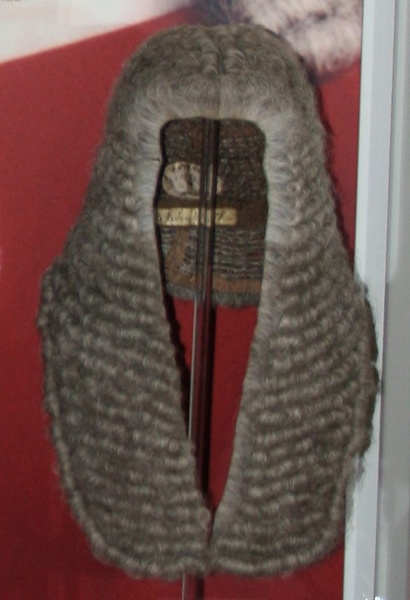
This week, we turn our attention to some of the fascinating stories behind the hats and headwear in Newry & Mourne Museum’s collection, revealing how these everyday items provide a window into the lives of those who came before us.
Among the most enduring styles is the humble cap. Today it may seem casual and commonplace, but its origins are rooted in law and industry. The Cappers Act of 1571 required most men over the age of six to wear woollen caps on Sundays and holidays. The aim was simple: to boost the domestic wool trade. Failure to comply came with a fine - an early reminder that fashion has often been shaped by economics as much as taste. Although the law was repealed in 1597, the cap remained closely associated with working people for centuries.
Over time, the cap evolved beyond its statutory beginnings to become part of official uniforms. One example in the museum’s collection is the peaked cap belonging to Captain John McParland, a merchant navy captain. His headwear reflects a significant change in maritime history. The British Mercantile Marine Uniform Act of 1919 introduced standardised uniforms following the execution of Captain Charles Fryatt during the First World War. Fryatt had attempted to defend his ship from a German U-boat but, lacking official uniform status, was treated as a civilian combatant. The introduction of uniform, including caps, was intended to prevent such tragedies from happening again.
Another hat with practical beginnings is the bowler. Designed in 1849 by London hat-makers Thomas and William Bowler, it was originally commissioned to protect gamekeepers riding through wooded estates. Their previous headgear - tall top hats - were easily knocked off by low branches and quickly damaged. The solution was a close-fitting, hard-wearing design that soon proved its worth. What began as practical country wear soon crossed class boundaries. The bowler hat’s journey did not stop in Britain. By the late 19th and early 20th centuries, it had firmly established itself across the Atlantic, where it was commonly known as the “derby.” In the United States, the bowler became one of the most popular hats of the period, favoured by businessmen, railroad workers, and city officials alike. Its durability made it ideal for the bustling, fast-paced environments of American cities and the expanding frontier. Unlike in Britain, where it was closely associated with the middle class and authority, in America the bowler carried a broader appeal, worn by men across social ranks and professions. Figures such as lawmen, financiers and even outlaws were often depicted wearing bowlers, embedding the hat within the visual identity of the American West and urban life alike.
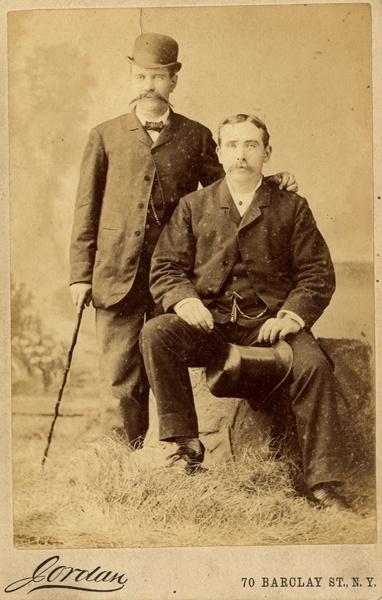
Beyond hats and caps, the museum’s collection also highlights headpieces tied to professional identity. Among these is the judicial wig belonging to the Right Honourable Turlough O’Donnell QC, a former Lord Justice of Appeal. Courts in Britain and Ireland adopted wigs in the late 17th century, with elaborate full-bottomed wigs once the norm in criminal trials. Though such styles fell out of everyday use by the 19th century, they continue to survive today as part of ceremonial dress.
Judicial wigs, meticulously crafted and costly, are rarely discarded. Instead, they are passed from one legal figure to another, carrying with them a quiet legacy. O’Donnell’s wig itself once belonged to Sir Anthony Babington, Attorney General for Northern Ireland from 1925 to 1937, before he too became a Lord Justice of Appeal linking generations of legal history through a single piece of headwear.
From mandated wool caps to protective riding hats and symbols of professional authority, the items in the collection reveal how something as simple as a hat can tell stories of law, conflict, class and tradition. At Newry and Mourne Museum, these stories are brought back into focus inviting visitors to see familiar objects in a whole new light.
If you have information about this incident or can help with the investigation please call police at Ardmore on the non-emergency number 101, quoting reference number:
You can also submit a report online using the non-emergency reporting form via www.psni.police.uk or contact Crimestoppers anonymously on 0800 555 111 or online at crimestoppers-uk.or
The Museum is currently offering free tours of the main exhibition galleries on Wednesdays at 2.00 pm. These must be booked in advance by calling our Education Officer at 0330 137 4422.
Newry and Mourne Museum is open Tuesday – Saturday 10.00 am – 4.30 pm. Please call 0330 137 4422 or email museums@nmandd.org for further information.
Please visit the Museum website at www.visitmournegullionstrangford.com
Write a comment
On a summer’s day, Kilbroney Park can seem simply a place of lawns, woodland walks and family outings. Yet behind one of Rostrevor’s best-loved attractions lies a rich and surprising story stretching back more than three centuries. Though the park as we know it was created in the 1970s, the estate on which it stands has been shaped since the 1700s by remarkable owners, distinguished visitors and dramatic events.

Robert Ross came to Rostrevor and bought the lands that would become the estate in 1700. By 1716, he had constructed the Lodge in the Meadow area of the estate. Although it was likely intended as a hunting lodge, it was later developed into a larger stately home. Ross is also believed to have planted many of the park’s non-native trees during the family’s 150 years of ownership, including the famous Holm Oak. His descendant, Major General Robert Ross, would capture Washington during the War of 1812, burning the Capitol’s government buildings, including the White House, in 1814.
The estate was then bought by James Roxburgh in 1850. The son of the celebrated Scottish surgeon and botanist William Roxburgh, James had served as an officer in the East India Company’s army, rising to the rank of Lieutenant-Colonel. The Old Roxboro House Hotel and Roxborough Place in Rostrevor were later named after him.
In 1863, the estate was purchased from Colonel Roxburgh by A.S.G. Canning, second son of George, 1st Baron Garvagh. A Justice of the Peace, Canning also became a prolific writer on history, religion and Irish politics, as well as literary criticism and fiction. The Spectator would memorably describe him as “an incurable bookmaker of the most terrible sort”. During his time at the estate, he built and owned the pier on Shore Road, held mineral rights to the quarry at the edge of the Oak Forest, and added a small private zoo, an aviary and the arboretum that now houses the park’s Narnia Trail.
A bachelor with no children, Canning left the estate to the Lyon family on his death in 1916. Marianne Lyon inherited the property in 1934 and, in 1937, her second cousin Queen Elizabeth, wife of King George VI, stayed at the Lodge with her two daughters, Princesses Elizabeth and Margaret.
In 1938, a dispute over access to Fairy Glenn, the public walkway beside the estate, led to court hearings between the Lyon family and local residents. The protest and legal battle attracted significant media attention as members of Rostrevor Women’s Institute campaigned to reopen the walkway and famously broke the chains on the gates.
In 1977, Newry and Mourne Council bought the estate grounds with plans to transform them into a public space, and the site was christened Kilbroney Park in 1978. The Lodge was demolished in 1980, and work on the park’s caravan section began in 1983. Two years later, in 1985, the park hosted the first Kilbroney Vintage Car Show, organised by Newry Lions Club, now recognised as Europe’s largest outdoor vintage car rally.
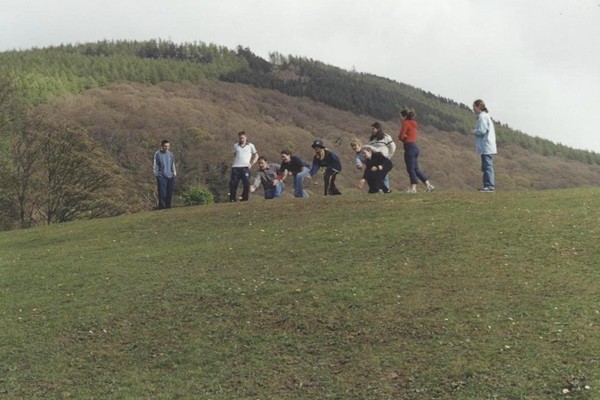
The estate and park have also welcomed a remarkable roll call of literary visitors. William Makepeace Thackeray, author of Vanity Fair, visited as a guest of Roxburgh and wrote: “Were such a bay lying upon English shores, it would be a world’s wonder.” Charles Dickens, a friend of Canning, is also believed to have visited, while C.S. Lewis famously wrote: “That part of Rostrevor which overlooks Carlingford Lough is my idea of Narnia.” Nobel laureate Seamus Heaney, too, visited the estate and park during his lifetime.
Among the most unusual chapters in the estate’s story came during the 1940s. In the Second World War, a military encampment for American and Belgian troops was established there, with Generals Eisenhower and Patton among those who visited the stationed forces. After the Normandy invasion, the camp was used to house German prisoners of war and during the heatwave of 2018, the dried earth revealed the outlines of the Nissen huts that had once formed part of the camp.
Today, visitors come to Kilbroney Park for its beauty, recreation and family traditions, often unaware of the extraordinary past beneath their feet. From stately home to wartime camp, from royal guests to literary admirers, its story is woven deeply into the history of Rostrevor.
The Museum is currently offering free tours of the main exhibition galleries on Wednesdays at 2.00 pm. These must be booked in advance by calling our Education Officer at 0330 137 4422.
Newry and Mourne Museum is open Tuesday – Saturday 10.00 am – 4.30 pm. Please call 0330 137 4422 or email museums@nmandd.org for further information.
Please visit our website at www.visitmournegullionstrangford.com
Write a comment
A fascinating collection of Feis trophies at Newry and Mourne Museum shines a spotlight on the district’s rich cultural heritage and its long-standing contribution to Irish language, music, dance and performance. Displayed across the museum’s galleries, the trophies tell stories of local achievement, national recognition and community pride.
Among the standout items in the temporary exhibition Categorically Celtic in Gallery 1a is the Ashbourne Shield, or Sciath Mhic Giolla Bhríde, which has been awarded annually since 1936 by Comhaltas Uladh, an organisation dedicated to promoting Irish culture and heritage. The shield recognises the best boys’ and girls’ schools in Northern Ireland for excellence in spoken Irish. Its design is as meaningful as its purpose: a central silver boss carries an embossed triskele, surrounded by intricate interlaced Celtic patterns. The triskele, an ancient motif of three spirals, comes from the Greek word meaning “three-legged”, and is often associated with movement, cycles and the number three, including interpretations of life, death and rebirth. Newry schools have enjoyed notable success with the award. Abbey Christian Brothers’ Grammar School claimed the title in 1941, 1942, 1992, 2001, 2004 and 2014, while Our Lady’s Grammar School brought the shield back to Newry in 2018. The example currently on display is on loan from Craobh an Iúir, the Newry branch of Conradh na Gaeilge.
Another important exhibit is the Madame Markievicz Cup, part of the museum’s permanent collection in Gallery 3. First presented at the Feis Shligigh (Sligo Feis) in 1934, the cup recognises excellence in Irish traditional music, dance and drama. It is named after Countess Constance Markievicz, a pioneering figure in Irish history. Born into the Gore-Booth family of Lissadell House in County Sligo, she became a revolutionary nationalist, socialist and campaigner for Irish independence. In December 1918, she made history as the first woman elected to the UK House of Commons, though she did not take her seat in line with Sinn Féin’s abstentionist policy.
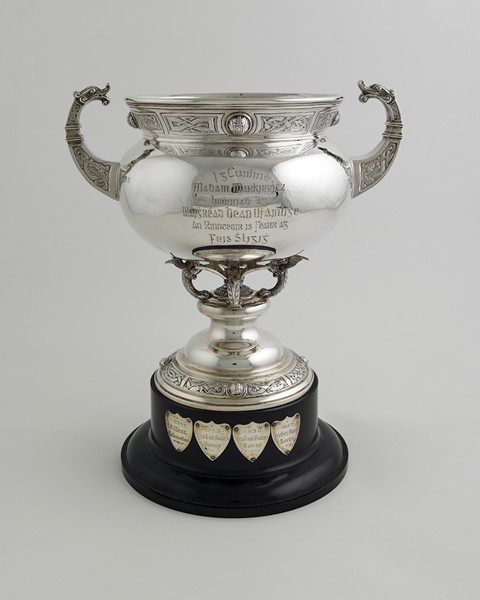
Newry’s connection to the cup is especially strong through Arthur Burns, who won it three years in a row in 1935, 1936 and 1937. Born in Abbey Yard in 1916, Burns was the first prize winner at Newry Feis in 1924, aged just eight. He later became a respected Irish dance teacher, adjudicator, choreographer and innovator, remaining active until his death in 1990. The cup has continued to honour leading performers, including Michael Flatley, who won it in 1975, 1976 and 1977 before achieving international fame.
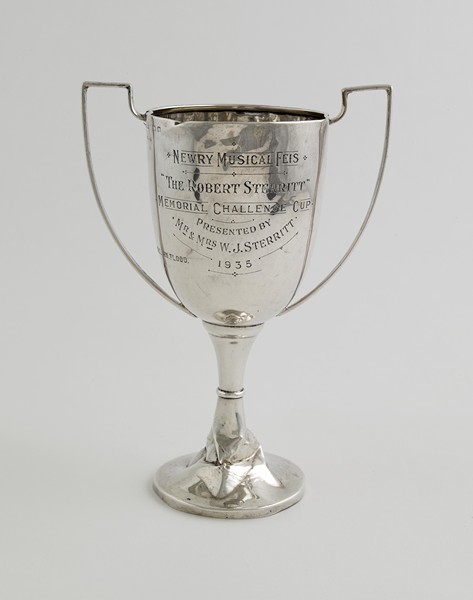
The Robert Sterritt Memorial Perpetual Challenge Cup also has an important place in the story of Newry Musical Feis. One of the earliest competition cups associated with the Feis, it was awarded for vocal solos and commemorates Robert Sterritt, who was born in Newry and educated at Newry Model School before working at Bessbrook Spinning Mill, where he became mill manager.
Sterritt was also a gifted musician, achieving an ARCO diploma from the Royal College of Organists in London. He served as organist at Downshire Road Presbyterian Church in Newry and Scarva Street Presbyterian Church in Banbridge. He also conducted the orchestra on one of the Cunard liners. Sadly, he became ill during the voyage and died in Newry on 25 June 1929.
Also on display in Gallery 3 are two tall Waterford Crystal trophies awarded to Newry Musical and Orchestral Society. Founded in 1945, in the aftermath of the Second World War, the society helped enrich local community life through music and performance at a time when public entertainment was limited. The society’s achievements were recognised at the Waterford International Festival of Music, held at the Theatre Royal in Waterford City from 1959 until 2007. The festival attracted leading musical societies from across Ireland and the United Kingdom, and Newry Musical and Orchestral Society won the festival trophy in 1976 and 1979. Together, the trophies offer a compelling reminder of the talent, dedication and cultural pride that have shaped Newry’s artistic life.
All these remarkable trophies can be viewed at the museum, where they stand as enduring symbols of artistic excellence, community spirit and local achievement.
The Museum is currently offering free tours of the main exhibition galleries on Wednesdays at 2.00 pm. These must be booked in advance by calling our Education Officer at 0330 137 4422.
Newry and Mourne Museum is open Tuesday – Saturday 10.00 am – 4.30 pm. Please call 0330 137 4422 or email museums@nmandd.org for further information.
Please visit our website at www.visitmournegullionstrangford.com
Write a comment
The recent relocation of civil registration services from Newry Town Hall to Newry and Mourne Museum offers a timely opportunity to look back at where the story began. Today, the registration of births, deaths, marriages and civil partnerships is a familiar part of civic life, but in the nineteenth century it marked a major shift in how people’s most important life events were recorded.

In England and Wales, civil registration began in 1837, replacing parish registers that were often incomplete and largely maintained by the Church of England. For non-conformists, including Methodists, Baptists, Presbyterians and Catholics, this meant there were few legally recognised alternatives when proof of identity, age or marriage was required. By the 1830s, a growing modern state also needed reliable information for public health, Poor Law administration and the census, encouraging the creation of a universal, secular system of registration.

In Ireland, however, civil registration developed more slowly and in response to a very particular legal crisis. In 1842, the House of Lords judgment in the bigamy case R v Millis cast doubt on the validity of Irish Presbyterian and other non-conformist marriages, causing alarm across Ulster. The implication that long-established marriages might be invalid, and that children of those unions might be deemed illegitimate, provoked public outcry. Parliament responded with the Marriages (Ireland) Act 1844, which recognised future non-conformist marriages and provided for their legal solemnisation and registration. Civil registration of marriages began on 1 April 1845, but at first it applied only to non-Catholic Christian, Jewish and civil marriages. The Catholic Church concerned that civil registration might lessen the religious character of marriage ceremonies, resisted inclusion at this stage.
The new system brought official record-keeping into communities across Ireland. A General Register Office was established in Dublin, while existing Poor Law Union boundaries were used to define the Registrar’s Districts. There were initially 130 districts across Ireland in 1844–1845, rising to 163 after administrative reforms in 1851. The practical importance of the records was reflected in the care taken to protect them: district registrars were supplied with strong iron boxes, fitted with locks and keys, in which to keep the register books safe.

Newry’s first District Registrar of Marriages was William Henry, whose name appeared in the Newry Telegraph on 22 April 1845 in notices certifying the legal right of local Presbyterian churches to solemnise marriages. Among them were the First Presbyterian Meeting House on High Street, Warrenpoint Remonstrant Meeting House and Sandy Street Presbyterian Meeting House. Henry was also a brewer and acquired Southwark Brewery, previously owned by Arthur Russell, father of Charles Russell, who later became England’s first Catholic Lord Chief Justice since the Protestant Reformation.

The Marriages Act also allowed civil marriages to take place in the District Registrar’s office by declaration. Henry likely conducted his registration business from Southwark Brewery at 13 Queen Street, now Dominic Street, as suggested by street directories from 1858 and 1859. Although uncommon, civil marriages did take place at the registrar’s office, with examples recorded in December 1857 and July 1859. Registrars received fees for solemnising marriages, handling administrative work and providing certified copies of records.
Henry was succeeded by James Burns, who served from around 1865 onwards. Burns was a former apprentice and printer with the Newry Telegraph and went on to found its rival, The Newry Reporter, a newspaper still published today. His experience as a newspaper proprietor, printer and businessman made him well placed for the detailed duties of a registrar. He carried out the role from a number of premises, including 2 Kildare Street and the News Rooms at 63 Hill Street, and continued in the post until his death in 1900.
The Burns family connection continued into the next generation. Arthur R. Burns, James’s son, is recorded as Deputy Registrar of Marriages in 1900 and, like his father, was involved in the management of The Newry Reporter. In May of that year, he appeared before the Petty Sessions Court in Hill Street, giving evidence that he had witnessed Robert McAllister present an altered birth certificate to facilitate his marriage to Alice McAllister. Such episodes remind us that registration was never merely a matter of paperwork. These records affected inheritance, legitimacy, identity and family life, and they remain vital sources for local and family historians today. A future article will examine the registration of births, deaths and Catholic marriages, the merger of separate registrar services and the role of local councils in overseeing registration.
The Museum is currently offering free tours of the main exhibition galleries on Wednesdays at 2.00 pm. These must be booked in advance by calling our Education Officer at 0330 137 4422.
Newry and Mourne Museum is open Tuesday – Saturday 10.00 am – 4.30 pm. Please call 0330 137 4422 or email museums@nmandd.org for further information.
You can visit the Museum website at www.visitmournegullionstrangford.com
Write a comment
Newry & Mourne Museum recently received a significant donation from the Duncan family from Cornwall. The donation included a portrait of Arthur Charles Duncan and an illuminated address presented to Samuel Duncan in 1905, along with certificates of education and correspondence, including a letter from Winston Churchill dated 1903 and a postcard received from William Gladstone in 1887.

Samuel Duncan, from Crobane, Newry, was born in 1852. He served his apprenticeship with Messrs R. McBlain & Co. before setting up the business of Duncan, Alderdice & Co. with George Alderdice in 1879. Mr Duncan was a successful businessman, President of Newry Chamber of Commerce from 1901 to 1902 and one of the original members of the Newry Port and Harbour Trust.
After over a quarter of a century of business in Newry, Samuel Duncan and his family departed from Newry to Dublin, where he had purchased an extensive business in Dawson Street, renamed S. Duncan & Co. Limited, dealing in the wholesale wine and spirit trade and imports of tea and cigars.
An artistically illuminated address was presented to Samuel Duncan in the Boardroom of the Town Hall on the 7th June 1905. In attendance were a large number of Newry’s most influential citizens. Procured by Mr Jospeh Wright, of the Newry Reporter Printing Works, the address featured the arms of Newry and views of the Duncan’s former residence, ‘Braeside’, Newry port and Narrow Water Keep. The address expressed the regret at the loss of “one of our most capable and foremost citizens”, while wishing prosperity and happiness to the Duncan family. The address was accompanied by a silver salver inscribed “Presented to S. Duncan, Esq., by his Newry Friends”. Mrs Duncan also received a gift of a fully equipped silver-mounted lady’s dressing-case.

The address was signed on behalf of the subscribers by amongst others, Henry Loughran, Chairman of Newry Urban District Council, Thomas Irwin, Chairman of Newry Port and Harbour Trust, John J. McAreavey, Chairman of Newry Technical School Committee and Arthur McCann, President of Newry Chamber of Commerce.
Samuel Duncan responded that he would always feel proud of his association with Newry, in terms of his business and the projects he had been involved in for the advancement of the town. Shortly after moving to Dublin, he gave up his business and moved to London, becoming the representative of Messrs. Kirker, Greer & Co., a well-known firm of distillers. He died in London in January 1915, following an operation to amputate an injured leg.

Samuel’s youngest son, Alfred Charles Duncan, was born in Newry in 1886. He left Newry with his family for Dublin in 1905 and emigrated to Winnipeg, Canada, for a time with his brother, Herbert, who died in October 1907 after an operation for appendicitis.
At the outbreak of the First World War he enlisted in the Artists Rifles, the 28th (County of London) Battalion of the London Regiment. Demobilised in 1918, he qualified as a Chartered Accountant in 1922 and joined Odhams Press Ltd. in 1923. At the time Odhams was one of the UK’s major newspaper, magazine and book publishers and printers. He became Chairman of the company in 1949, and in 1952 was appointed by the Duke of Norfolk to the 1952/53 National Coronation Committee. Odhams had the printing and publishing contract for all the 1953 official Elizabeth II coronation material.
He retired in 1961 and was offered a hereditary peerage, which, after consulting with his two sons, he declined. He died in May 1979 in Devon at the age of 92.
The Museum is currently offering free tours of the main exhibition galleries on Wednesdays at 2.00 pm. These must be booked in advance by calling our Education Officer at 0330 137 4422.
Newry and Mourne Museum is open Tuesday – Saturday 10.00 am – 4.30 pm. Please call 0330 137 4422 or email museums@nmandd.org for further information, or visit our website at www.visitmournegullionstrangford.com


 |
 |
 |