

 Write a comment
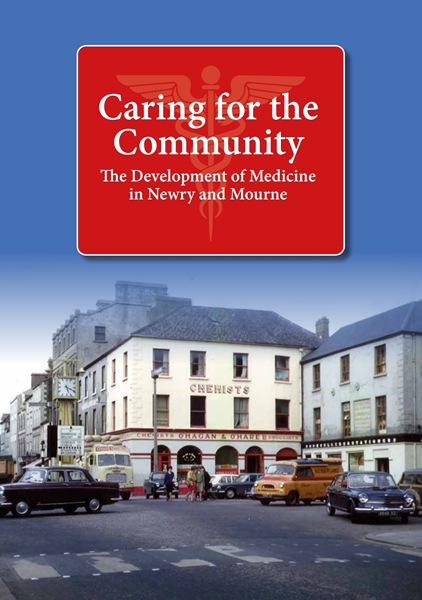
Since opening, the Newry and Mourne Museum has produced numerous publications on various topics. These have included newspaper articles, catalogues and reports. Some of the most popular publications the Museum has written have been the booklets that accompany some of the temporary exhibitions. They offer valuable insights and fascinating detail about specific events, employment and of course the people associated with the district.
The Museum’s three main exhibitions interpret the history of the region from the prehistoric period up to the end of the 20th century but there is also a temporary exhibition programme that produces two new displays annually. These allow the Museum the opportunity to look in greater depth at various aspects of this region’s rich culture and history. Artefacts that are in storage are often exhibited, offering visitors something unique to see. The themes that have been examined include, local politics, sport, religion, drama, transport and art, demonstrating the rich diversity of the Museum’s collection
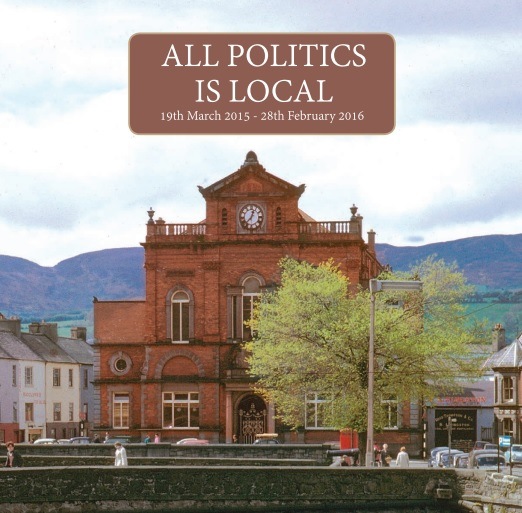
To supplement the exhibition, the Museum usually produces a publication that offers more information and provides greater insight into the subject matter that cannot be included in the main exhibition. The booklets allow the Museum to engage the local community, as many contributors are local historians or have firsthand experience with the topic. Some of the authors have written personal stories about members of their families and the contributions they made to the community.
For example, ex-local Councillors and Council employees wrote about their memories of working for local government for fifty years in the All Politics is Local publication. For the Caring for the Community exhibition, doctors, nurses, and orderlies recorded what life was like working in the different fields of health care, from general practice to training as nurse.
In The Performing Arts in Newry and Mourne booklet several key figures of local music, drama and arts wrote about the vibrancy of culture here. In their articles Charlie Smyth, Gerry McAnulty Mary Goss and Eileen Mooney give informative insights into the groups and personalities who have been instrumental in the growth and development of the performing arts in Newry and Mourne.
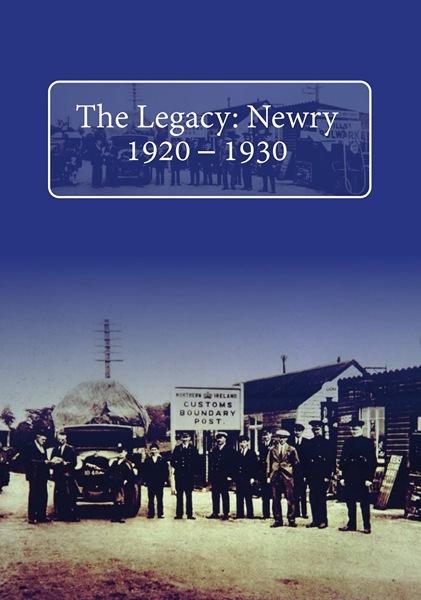
Some of the publications have included well known academics who have also contributed essays. In The Legacy: Newry 1920 - 1930, scholars such as the late Dr Éamon Phoenix and Professor Brian Walker wrote about different aspects of the War of Independence and partition and how it affected this region.
Some of the articles were written based on the oral histories of people whose expertise in certain jobs were closely associated with the area. To accompany the recent exhibition Slices of History - Memories of McCann's Bakery a booklet of edited transcriptions was published. These conversations were recorded by Museum staff during reminiscence evenings with the former employees of McCann’s Bakery, including the manager, office workers, mechanics, and of course, bakers and breadmen. The booklet focused on their memories of what life was like in the bakery.
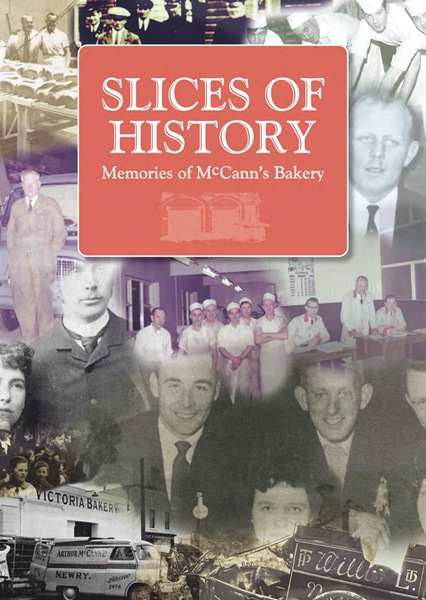
The publications are designed to complement our temporary exhibitions, but they also bring to life the stories of the people, community, and events that have shaped this historic region. Due to their popularity, physical copies are limited. However, you can download many of our publications on our website or contact the Museum for a full list of available PDFs.
Newry and Mourne Museum is open Tuesday – Saturday 10.00 am – 4.30 pm. They currently offer free tours on Wednesdays at 2.00 pm. These must be booked in advance by calling 0330 137 4422 or email museums@nmandd.org for further information.
Visit their website at www.visitmournemountains.co.uk
Write a comment
From Edwardian elegance to wartime resilience, the Newry and Mourne Museum’s Costume Collection offers a rich tapestry of stories stitched into every seam. Spanning over two centuries, the collection continues to grow, with its most recent addition—a donation from Connolly’s shoe shop on Hill Street, Newry—marking the end of an era as the beloved local business closed its doors earlier this year. As the Museum expands its holdings, we take a closer look at some of the standout garments that have captured the imagination of visitors and brought the region’s social history vividly to life.
Among the most evocative pieces are the wedding dresses, each with its own unique tale. One such dress, dating from the Edwardian period, was worn by Lady Hyacinth Gough (née Needham), daughter of the 4th Earl of Kilmorey of Mourne Park, Kilkeel. Though she married Lt. John Gough in 1953, the dress appears to have been made earlier and never used for its intended ceremony. Crafted with tambour embroidery—a delicate technique using a fine hook from the reverse side of the fabric—the gown still holds dried flowers tucked inside as a poignant reminder of its romantic origins.
Another remarkable piece belonged to Margaret Alexis Reside (née Fisher), who wore a dark purple woollen dress with cream lace trim on her wedding day. Made in London by Silhouette de Luxe, the dress bears a World War II economy label, reflecting the frugality of the time. Margaret was a trailblazer, graduating from Queen’s University at just 20 and becoming one of the first women in Northern Ireland called to the bar. She later joined her family’s legal firm, Fisher and Fisher, in Newry. In 1947, she married Major Gerald Reside, an architect and engineer, and together they cultivated a renowned garden at Killowen Cottage, regularly opening it to the public under the National Trust’s Garden Scheme.
The collection also includes a striking Deputy Lieutenant’s uniform worn by Arthur Charles Innes-Cross (1834–1902), a prominent figure who resided at Dromantine House. A Conservative MP for Newry elected in 1865, Innes-Cross was also a Justice of the Peace and a member of the Newry Board of Guardians. His uniform, based on late Victorian military ceremonial dress, includes a red woollen jacket with tails, black trousers, and a beaver bicorne hat adorned with a feather plume—symbols of civic duty and status.

One of the most prestigious garments in the collection is the robe of the Order of St. Patrick, worn by Francis Charles Needham, 3rd Earl of Kilmorey. Established by George III in 1783, the Order was a mark of distinction in Anglo-Irish society. Needham, born in London, served as High Sheriff for County Down and as Conservative MP for Newry before being invested as a Knight of the Order on 24 May 1890. His robes, rich in symbolism and history, are currently on display at the Museum until next year.
For more information on objects in our collections visit our website www.visitmournemountains.co.uk/museums/collections. Newry & Mourne Museum is open from Tuesday to Saturday, 10.00am - 4.30pm. Free tours are available on Wednesdays at 2.00 pm, which must be booked in advance by calling our Education Officer at 0330 137 4422.
Write a comment
In the first part of this article three of the six towns in America named Newry were discussed, those in South Carolina, Pennsylvania and Maine. This second section will take a snapshot look at the remaining Newry’s in America, Canada and Australia. These places can help trace some of the migration paths taken by people from this region, as they settled and renamed areas throughout the world. From the 1600’s onwards Irish emigration occurred in waves with many leaving Ireland to seek social, religious and economic change. Numbers increased dramatically as a result of the Great Famine with over 1.8 million Irish people arriving in America from 1854-55.

Newry can be found in a further three American states; Wisconsin, Indiana and Minnesota. Wisconsin is home to a small unincorporated hamlet located within the town of Christiana in Vernon County. The name of Newry was first attached to the area when the Post Office was established in 1868. This closed in 1907 as the town size dwindled. Newry, Indiana, is described in the ‘History of Jackson County’ as the ‘first town or first point at which the store was kept and goods sold… a little village located on the Vernon branch of the Muscatabuk River’. It was the location of one of the first mills in Vernon Township and a post office that was established in 1846 and closed in 1860. It’s estimated population in 2020 was 84. In contrast Newry Township, Freeborn County, Minnesota, has an estimated population of 451. Initial families arrived from Norway in 1854, followed by Irish settlers in 1856. The town name was agreed by vote having been proposed by the town clerk, Thomas Fitzsimmons as the native home of many of the first settlers.
The hamlet of Newry in Canada is situated in Perth County, Ontario. It is said to be named after the birthplace of Mr. Charles Coulter or Coulton. He was a hotel keeper and the first post-master in 1862. As Newry developed it became part of the local dairy co-operative. Alongside other local factories, Newry’s produce was awarded medals at exhibitions including the World Exhibition, and others in London and Chicago in the late 1800’s. For a time, the village prospered but the development of the neighboring town of Atwood eclipsed that of Newry. Newry remains a mainly dairy agricultural area.
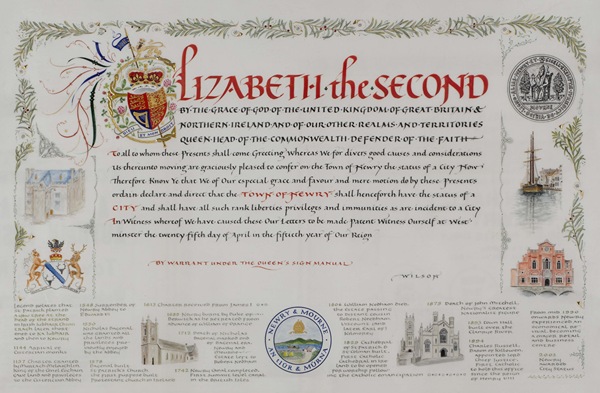
The southern most Newry is found in Victoria, Australia. In the 1860’s an area known as Upper Maffra was opened for settlement. In 1871 the township was officially named Newry which is believed to be chosen by the early settlers. In 1894 the post office, initially called Upper Maffra, was renamed Newry to match the town name. Newry founded as a hub for the local farming community was gradually overshadowed by its proximity to the larger town Maffra. In 2016 the town population was 427. Newry retains many historic structures; the church built in 1885, the Newry Hall (originally the Mechanic’s Institute) along with the hotel and General Store combine to reflect its rural heritage. Melbourne city also has a Newry Street in Carlton.
Newry Islands in North Queensland lies within the Great Barrier Reef Marine Park World Heritage Area. This area has long association with the indigenous people who knew it as rich source of hunting and fishing. The area was given the name the Newry Islands in 1879 by Royal Staff Commander E.P. Bedwell while undertaking coastal surveys. The reasons for the choice of the name are not known, however, it was common practice during naval surveys to name for personal connections from home or that of the officers.
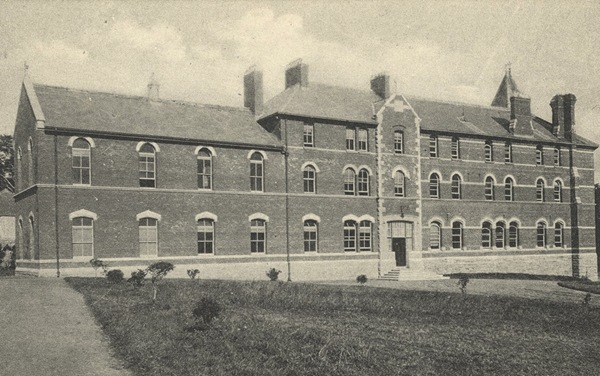
Newry Station in the Northern Territory, 2,500 square kilometers of farmland, is operated as a cattle station. It was named after the birthplace of Denis Doherty (1861-1935) and Francis (Frank) Connor (1857-1916). These two friends both attended school at St. Colman’s College in Newry. They travelled out separately to Australia in the 1880s. After meeting in Wyndham they went into business together as storekeepers and packers. By 1894 the firm Connor and Doherty had expanded into shipping, moving cattle from Wyndham to Perth. Their main supplier was the Durack family. In 1894 the firm acquired the pastoral lease in the Northern Territory and called it Newry Station. They amalgamated the firm into Connor, Doherty and Durack in 1897. Doherty later held the parliamentary seat for Northern Freemantle and Connor served within both Houses of Parliament of Western Australia. Newry Station remained in the Durack family until 1950 and still operates as a large-scale cattle station today.
The Museum is open Tuesday – Saturday 10.00 am – 4.30 pm and offers free tours of the main exhibition galleries on Wednesdays at 2.00 pm. To book a place, call their Education Officer at 0330 137 4422 or email museums@nmandd.org for further information.
See Part One Newrys in America
Visit the Museum's website at www.visitmournemountains.co.uk
Write a comment
Newry and Mourne Museum celebrated its built heritage during European Heritage Open Days in September. The two buildings that house the modern Museum, one a 16th century fortified residence, the other a 19th century warehouse, both tell a different story of the history of Newry. Once part of a residence or business, nowadays they function as museum galleries and function spaces.

Built in the 1560s, the original plan drawings (c.1568) of Bagenal’s Castle are held in the National Archives and give us an idea of what the castle looked like when it was first built. They were also instrumental in helping rediscover the ‘lost’ castle after the closure of McCann’s Bakery in the 1990s.
Appointed as Marshall of the Army in Ireland in 1547, Nicholas Bagenal was granted “The Newry” by the Crown (King Edward VI) in 1552. The castle was primarily built to function as an estate centre and was fortified to defend against local raids. It originally had a projecting stair turret and latrine turret, utilising elements of both a 16th century defended house and a medieval tower house. Each of the four floors of the castle were multifunctional, reflecting the needs of both family and public life.
The ground floor (now Gallery 1) housed the kitchen, which still retains the original draw-bar hole of the entrance doorway along with the bread oven and remnants of the fireplace. A room next to the kitchen with a vaulted ceiling was likely used for storing foodstuffs.
The first floor (Gallery 2) contained the Hall and Parlour, which both provided meeting and dining spaces; the Hall for feeding lesser members of the household, retainers and soldiers, and the Parlour for family members. The fabric of the building still contains the original stonework, ventilation loop, window jambs with glazing bar holes and two fireplaces, which have been reconstructed and adapted over the years.
The Great Chamber on the second floor (Banqueting Room) was the most important room in the castle, providing living space for the Bagenal family. The status of this room is indicated by an additional fourth pane of glass in the window. Celebrations would have taken place here and special guests entertained in this room. A smaller bedroom adjoined the Great Chamber. The location of the attic can be seen by the open joist holes that held the floor. This would probably have been used by children and members of the household as sleeping accommodation.
The Bagenal line ended with Nicholas’s great-grandson, also Nicholas. At the time of his death in 1712 he had a well-appointed house in London, and it is uncertain if the castle was still being maintained as an important residence. The Newry estate passed to the Nedham family, and the castle was leased in 1746 to Robert Hutcheson, a Newry merchant, “of the castle of Newry with the garden and Meadow behind the same”, for a rent of £20 per annum. Around this time significant changes were made to the castle structure, and the castle was converted into two dwelling houses. The stair and latrine turrets were likely demolished at this time and the cellar (which can be seen in Gallery 1) inserted.

In 1836 the lease was purchased by John Doyle, a seed merchant, who constructed a three-storey warehouse against the north wall of the castle. The original floor and roof structure are still in situ on the top floor of the building (Gallery 3). A series of eight pitch-pine trusses, the beams, each over 35 feet, extend into the walls and the timbers are held in place by interlocking joints.
The Victoria Bakery was established in Castle Street by the McCann’s in 1837. When Arthur McCann purchased the lease of the former seed warehouse in 1894, the business moved across the road to bigger premises. The grounds provided the bakery with ample stabling accommodation and a large field for the team of horses used to deliver the bread. The warehouse was fitted out with new equipment. Modern ovens, heated by steam were installed on the ground floor, mixers on the first floor and flour bins on the top floor. Visitors to the Museum can still see the friction hoist, used to lift flour from the ground floor to the top floor and a wheel and drive shaft, used to propel belt-driven machines on the lower floor.

Over the course of the 20th century, the bakery continued to expand. The old castle building was incorporated into the bakery complex in the 1940s. The redevelopment of Castle Street in the 1960s was the catalyst for a new extension on the south side of the bakery in 1964. Another extension, equipped with modern machinery capable of making softer bread was opened on the north side of the bakery in 1969. In 1990 McCann’s Bakery was bought by Irwin’s Bakery, and closed in 1997, after 180 years of business.
Although the castle had been thought lost, the street names of the surrounding area gave a clue to its location. The empty bakery buildings allowed archaeological investigations to take place, which along with extensive research, concluded that the building was Bagenal’s Castle. It was granted Scheduled Monument status and work commenced to repurpose the castle and adjoining warehouse into Newry and Mourne Museum.
The Museum is free to visit and is opened from Tuesday to Saturday, 10.00am – 4.30pm. We offer free tours of the main exhibition galleries on Wednesdays at 2.00 pm, which can be booked by calling our Education Officer on 0330 137 4422, or email museums@nmandd.org. For further information visit www.visitmournemountains.co.uk/museums/newry-and-mourne-museum
Write a comment
Old Newry Society have been to the fore in showcasing the history and the people of our city in their popular monthly talks, and the 2025/2026 season is no different with a wonderful variety of events taking place.
From Lord George Hill to World War I to the history of printing locally, to several 'Trials' there really is something for everyone.
Looking forward to next May the group hope to host a barbecue at the landmark 18 Arches.
The Talks
21/10/25 Lord George Hill, Posthumous son of 2nd Marquis of Downshire
What kind of Landlord was this man who had local and Royal links. Broadcaster & Writer, Cathal Poirteir will reveal all. Ballybot House at 7:30pm.
Adm: £8 Students: £4. Including refreshments.
15/11/25 WW1 in Prose & Poetry!
Published Historian, Hugh McShane along with Published Poet, Mel McMahon will share their thoughts on the horror and casualties in Newry & Mourne Museum 2pm.
Were you a pupil of either Mel or Hugh?
Admission £2:50.
17/01/26 A History of Printing
Do you remember Magowan Newry Printers?
Well known History Photographer, Billy McAlpine has some fascinating stories of the process bringing us up to date in the digital era. Newry & Mourne Museum at 2pm.
Admission: £2:50.
17/02/26 The Trial of Patrick Pearse
The first of two Café Trials by Author, Anthony Russell. Join the Jury and decide the outcome for two figures from our history.
“The Trial of Patrick Pearse” presented by Newpoint Players.
8pm in Finegan & Son Café-Brew Bar.
Admission £10. For both Trials please apply for Tickets to tomandros@btinternet.com
21/04/26 The Trial of James Craig
presented by Newpoint Players. 8pm in Finegan & Son Café-Brew Bar.
Admission: £10. For both Trials please apply for Tickets to tomandros@btinternet.com
23/05/25 Barbeque at The Viaduct
Weather permitting, make your way to the Viaduct (The 18 Arches) Details will follow in Local Press or ask to be added at tomandros@btinternet.com.
Trustee, Brendan Durkan will give a history of the structure and the Tramway along with some dark stories from the vicinity.
You can get more information on events by emailing Tom Moore on: tomandros@btinternet.com
Write a comment
For well over a century, the waters of the Newry Canal have witnessed both tragedy and triumph. As the Newry and Mourne Museum prepares to unveil its upcoming exhibition on the Port of Newry and its associated waterways, we reflect on some remarkable stories of heroism and misadventure drawn from local archives and newspapers.
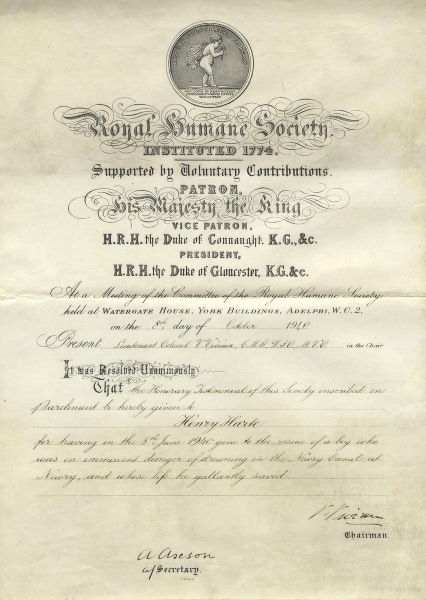
An early recorded rescue dates back to 27 July 1908, as reported in the Newry Telegraph. A fifteen-year-old boy, Michael McParland, found himself in grave danger while swimming near the first lock gates in the Albert Basin. A passer-by, John Copeland, saw the boy "sinking for the second time" and immediately dived in, pulling him to safety. With help from others who had gathered, McParland was resuscitated and taken to the home of the lockkeeper, Mr. Gilmer Williamson, where he was revived with warm clothing and restoratives.
Just days later, Mr. Williamson and his son Robert rescued another boy, James McCann of Magennis Street, who had fallen into the canal near the same lock gates. The Telegraph noted that this marked the twelfth life Mr. Williamson had saved over 22 years, earning him a well-deserved reputation as a local hero.
In 1912, another dramatic rescue was recorded. Francis McGovern, son of Acting Sergeant McGovern of Erskine Street, was struggling in the canal when two men, Cunningham and Hendren, intervened. Their “courageous and selfless actions,” as described by the Newry Telegraph, undoubtedly saved the young man’s life.
The Frontier Sentinel reported a particularly moving incident in July 1927. A six-year-old boy, John Roberts Langlands from Dungannon, fell into the canal at the junction of Edward Street and Custom House Quay. Hearing the cries of his companions, Mr. F. Cooper, a local banking official and member of the Newry Rowing Club, plunged into the water and rescued the boy just as he was going under for the third time. Cooper’s “prompt and plucky action” was widely praised, with hopes expressed that his bravery would be formally recognised.
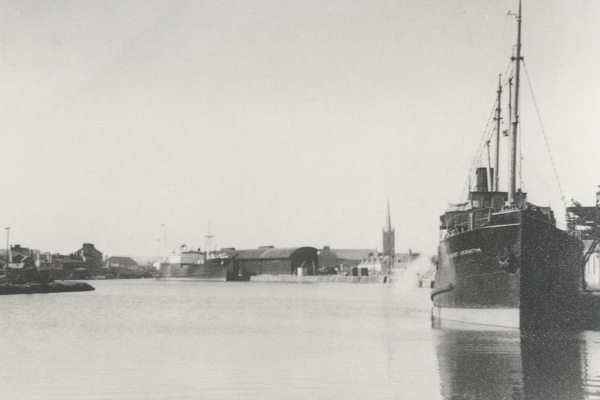
In 1932, the Newry Reporter detailed another rescue at the Albert Basin. Richard Hollywood, a boy from Lower North Street, fell into the water while fishing. His companion alerted workers at the nearby Newry Curing Company. Mr. Samuel Donnelly, the foreman, dived in fully clothed despite being a weak swimmer. He reached Hollywood, but both began to struggle. Fortunately, Mr. Bernard Gallagher, a strong swimmer, joined the rescue and helped bring them to safety. Mr. J. McCommack, the company’s engine driver, administered artificial respiration, and Hollywood was later escorted home by Mr. Samuel O’Hare.
A decade later, in the 1940s, two employees of the Northern Ireland Road Transport Board saved a schoolboy who had fallen into the canal near Clanrye Mills. Using a rope attached to their lorry, Mr. Thomas Ferguson of Newtownhamilton and Mr. Fred Jess of Stream Street pulled the boy to safety. Jess, a Boy Scout, administered artificial respiration, and the boy—still wearing his school satchel—was able to return home.
Perhaps one of the most touching rescues was reported by the Frontier Sentinel on 2 September 1950. Kathleen Magennis, aged 14, fell into the canal and was saved by her eight-year-old brother Liam. The children were from Aughantarraghan, and their father, Mr. P.J. Magennis, was a local cattle dealer. Liam’s quick thinking and bravery exemplify that local heroes truly come in all shapes and sizes.
These stories, drawn from the annals of Newry’s newspapers, remind us of the courage and compassion that have long defined the people of this region. In the second part of this series, we will explore a tragic rescue attempt from the 1930s that claimed the lives of two men, including one who died trying to save another.
Write a comment
Tomorrow Thursday October 16 Newry and Mourne Museum will open its new temporary exhibition, Making Waves: Newry’s rise as a global trade centre, which looks at the development of Newry as an international trading hub. This display is the latest in the Museum’s temporary exhibition programme that produces two new displays annually. Since 2007 there have been over forty exhibitions on display.
The Museum opened in 1986 in a small area of the then Newry Arts Centre and so exhibition space was very limited. This in turn, meant that the number of new exhibitions was restricted. In 2007 the service moved to its new home at Bagenal’s Castle. The restored building now had three main galleries but critically it had a temporary exhibition space. In 2011 a larger exhibition space was developed and launched with the opening of ‘Beliefs and Customs through the Ages in Newry and Mourne’.
The programme allows the Museum the opportunity to look in greater depth at various aspects of this region’s rich culture and history. Themes that have been examined include, local politics, sport, religion, drama, transport, and art, demonstrating the rich diversity of the Museum’s collection. Artefacts that are usually in storage are exhibited, offering visitors something unique to see and a fresh experience.
The development of each new exhibition means that Museum staff engage with a wide range of people, not least the local community, some of whom contributed loans of important material to the various exhibitions. People with lifetime experiences have contributed over the years, providing important detail and background information on the various themes.
Each exhibition must be thoroughly studied and planned. It often takes one year to research the topic that is being displayed. Images are sourced and often copyright permission must be obtained. In a previous article we mentioned that the Museum produces a publication that offers more detail not included in the main exhibition. These too are thoroughly researched before publication.
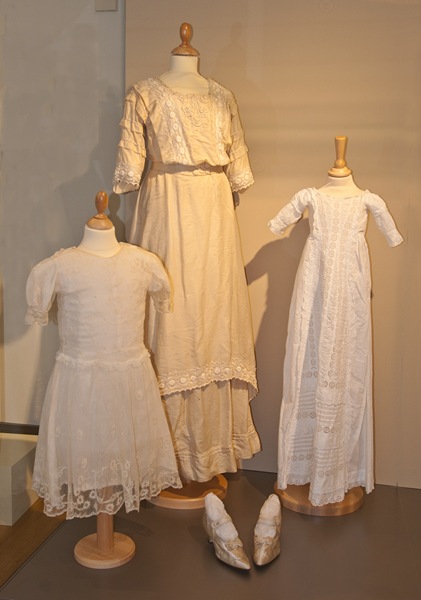
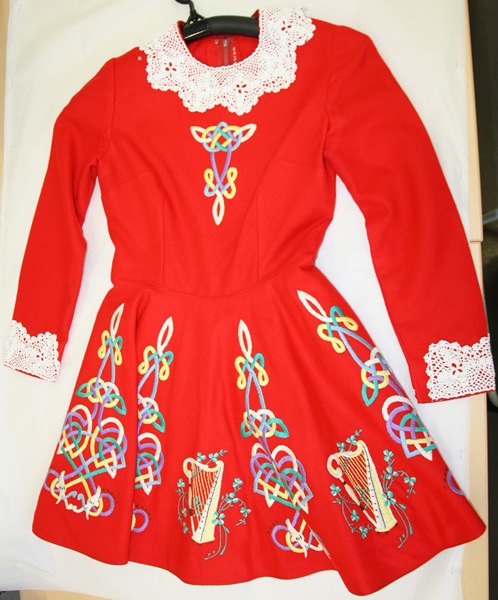
The programme is complemented by the changes in the Museum's costume case, which is remodelled twice a year. Items of clothing have included Captain McParland’s merchant navy uniform, The Right Honourable Turlough O’Donnell’s Q.C. ceremonial robes of a High Court Judge, a Second World War wedding dress, Feis costumes, and Seamus Mallon’s coat.
Having two new displays each year allows the Museum to organise events and activities based around the new exhibitions. For instance, guest speaker Geraline Foley will visit the Newry and Mourne Museum on 18 October at 2pm to give the talk From Canal Street to the Caribbean – Newry links to slavery and the plantation economy.
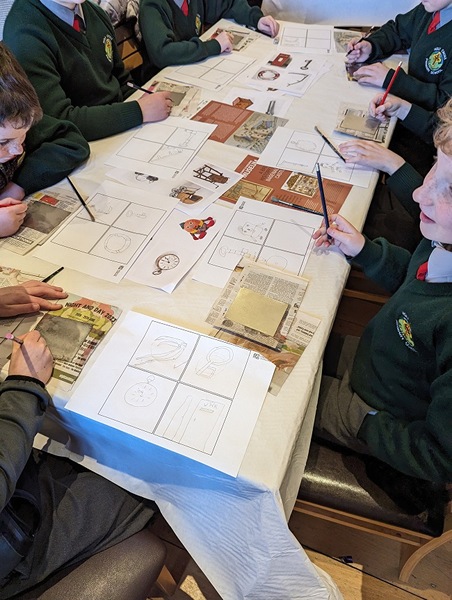
In the past the museum has organised bread making demonstrations to coincide with the Slices of History: Memories of McCann’s Bakery exhibition. For Newry Artists Past and Present local schools attended printing etching workshops, where they created their own piece of art. Some of the exhibitions, such as War Declared: the local impact of World War II and A Great Change – The lives and times of James Harshaw, John Martin and John Mitchel attracted local schools as these subjects are on the curriculum.
Some of the lectures associated with the exhibitions have been recorded or been held online, especially during Covid. This allows those who cannot attend in person the opportunity to engage with the Museum service remotely. Over the upcoming weeks we will be uploading some of these talks on our Facebook page which you can access here: NMDMuseums
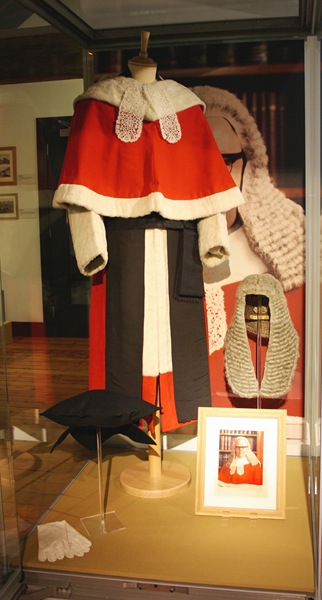
The new temporary exhibition Making Waves: Newry’s rise as a global trade centre will be open to the public on 16 October from 2pm, onwards and the Museum is open from Tuesday to Saturday from 10.00 am – 4.30 pm with free admission, so come along and look at the new display.
For more information on the Museum and what they do please visit their website: www.visitmournemountains.co.uk
Newry & Mourne Museum is open from Tuesday to Saturday, 10.00am - 4.30pm. Free tours are available on Wednesdays at 2.00 pm, which must be booked in advance by calling their Education Officer at 0330 137 4422.
Write a comment
The Cronin link with local government in Newry continued after the death of William Cronin, who had served as town clerk of Newry for almost four decades, when his nephew Gerald took over the role in 1947. Over 43 years in local government, he served as assistant town clerk, and was town clerk for over 30 years.
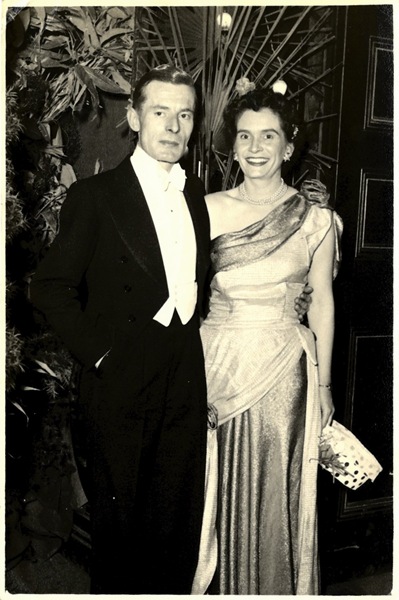
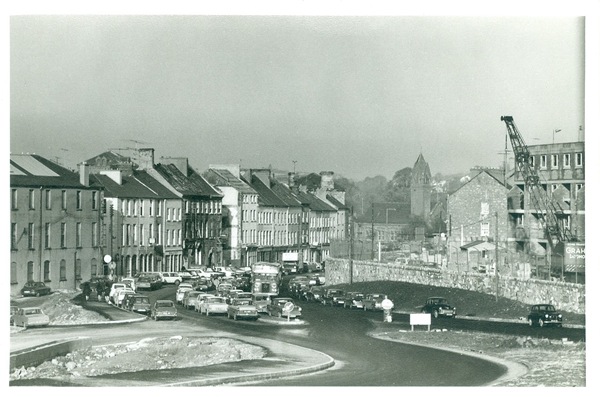
Many notable achievements were completed during his tenure. In the post-war period more than 1,500 new homes were provided and major improvements, such as the installation of bathrooms in the Council’s pre-war housing were carried out. Flooding in the west of the town was alleviated by the construction of a dam in Rooney’s Meadow (now Jennings Park playing fields). The Clanrye river was also cleaned and retaining walls were built, with shrubs and trees planted along its banks.
Many redevelopment schemes were completed, notably in the North Street / Water Street area and the new dual carriageway at Abbey Way, made possible by vesting all the properties from Trevor Hill to William Street. Three modern bridges were constructed over the canal and a footbridge over the river.
In 1951, Newry had the distinction of being the first town in the British Isles to be completely lighted with fluorescent street lamps. Representations were also made to ensure the new harbour would be sited at Warrenpoint and that the town would be provided with a modern hospital building at Daisyhill.
Recognition for these achievements were rewarded when he was honoured with an MBE in the New Year Honours List in 1968.
In the early 1970s Newry was gaining a reputation as one of the most progressive towns in Ireland. The advent of the Troubles halted the progress as the Council dealt with damage and destruction, including the burning of the Town Hall, when Mr Cronin was ordered to lie face down on the stairs as bombs were being planted upstairs and in the hallway.
In 1973 he oversaw the reorganisation of the local urban and rural district councils into the newly formed Newry & Mourne District Council, taking on a new title of District Development Officer.
Outside of his civic duties Gerald Cronin was a member of Greenore Golf Club, and a keen supporter of local charities. In 1942 he was one of 21 founder members of Newry Bachelors’ Club, whose main purpose was to “promote romance and encourage marriage”. To help achieve this goal, an annual dance was organised every February, with the money raised going to local charities. Renowned throughout Ireland for the excellence of their dances, in 1948, so numerous were the applications for tickets that nearly one thousand pounds had to be returned to people who had applied too late, as the dance sold out weeks before the event. Over 500 attended the seventh annual dance in 1949 in Newry Town Hall, where dancers attended from Dublin, Waterford, Limerick and Cork.
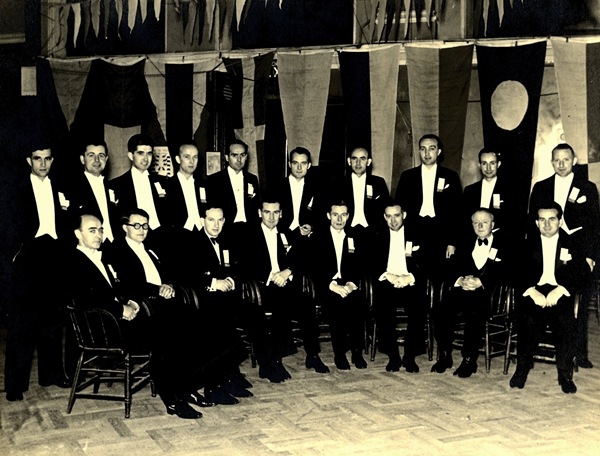
When a member married, he received £10 from the club’s ‘Marriage Fund’. By 1948 only nine of the original members remained a bachelor. On his marriage to Sheila Devenish-Meares in December of that year, he relinquished his membership of the club and his role as Chairman.
As the club developed, a newspaper, the Bachelors’ Press was produced, and a male voice choir was formed. More annual charity events were organised – a party was held for the children from the Mercy Home on the Saturday before Christmas and a popular reunion dinner was also held every November.
Gerald Cronin retired from Newry and Mourne District Council in 1978, receiving warm tributes and a scroll signed by colleagues past and present and a portable television. He died at the age of 79 in August 1993.
Newry and Mourne Museum offers free tours of the main exhibition galleries on Wednesdays at 2.00pm. To book call their Education Officer at 0330 137 4422.
The Museum is open Tuesday to Saturday 10.00am – 4.30pm. For further information email: museums@nmandd.org or visit www.visitmournemountains.co.uk
1 Comment
As Halloween approaches, Newry Museum invite you to explore the rich tapestry of local folklore that has enchanted generations. This week, the spotlight falls on eerie legends, ghostly encounters, and tales of the mystical Fae that once roamed the Mourne landscape.
One of the museum’s most treasured items is Fairies in Mourne, a captivating book by Hugh Irvine. This collection of firsthand accounts reveals the deep-rooted belief in fairy folk—mischievous, magical beings known for playing tricks on unsuspecting humans. Among their most chilling pranks was the swapping of human babies with changelings, fairy children left in their place. One tale from Pontzpass recounts a family’s eerie suspicion that a neighbour’s child was not quite human.

Fairy trees, often solitary hawthorn or ash trees encircled by protective stone, were considered sacred. Cutting one down was said to bring misfortune. Irvine’s book tells of two teachers who, while caravaning near Bloody Bridge, ignored a local’s warning and felled a thorn tree. That night, tragedy struck. As they attempted to photograph the moonlit Blue Lake, one of the men fell 150 feet to his death. Locals whispered that the fairies had exacted their revenge.
Nestled in the heart of Rostrevor, the Fairy Glen has long been steeped in local folklore. It was once believed to be the dwelling place of the Brooneys - a mischievous race of fairies whose antics were so feared that villagers avoided the glen after dark. The winding trail is lined with ancient hawthorn trees, traditionally thought to be fairy portals, where the Brooneys would emerge at nightfall to dance to the haunting strains of a fiddle. Rostrevor’s magical charm has captivated many, including renowned author C.S. Lewis, who is said to have drawn inspiration from the area for his vision of Narnia.
Moyry Castle, too, holds its own dark legend. After its construction, soldiers at Lord Mountjoy’s garrison shot a local man believed to be a spy and a wizard. His large black cat allegedly avenged him by killing the guards and destroying the army’s livestock, leaving the soldiers starving and terrified.

Ghost stories also haunt the museum’s archives. One of the most poignant is the tale of Lassara, daughter of the MacGuinness clan chief. She fell in love with a wandering harper, but their planned elopement ended in tragedy when he was shot on the banks of the Clanrye River. One stormy night she managed to flee her captors and raced up the steps of the keep and jumped into the same waters in which her lover had met his fate. Now Narrow Water Castle is said to be haunted by their two ghosts. On stormy nights you can hear the notes of a harp while the ghostly figure of Lassara drifts down from the battlements into the water below.
Another spectral tale is that of the ghost train of South Armagh. First heard in the early 1900s near Aghyallogue, the train’s phantom whistle echoed through “The Wellington” in Killeen but always vanished before reaching “Barney’s Bridge.” Locals gathered at the gateman’s house for ceilidhs, hoping to hear the train. Though it disappeared for decades, its memory resurfaced when a troop train was blown up near the same townland twenty years later, leading many to believe the ghost train had been a harbinger of doom.
These stories, preserved and shared by the Newry and Mourne Museum, offer a glimpse into the region’s mystical past. Whether you believe in fairies or not, they’re sure to send a shiver down your spine this Halloween.
The Museum is currently offering free tours of the main exhibition galleries on Wednesdays at 2.00 pm. These must be booked in advance by calling our Education Officer at 0330 137 4422.
Newry and Mourne Museum is open Tuesday – Saturday 10.00 am – 4.30 pm. Please call 0330 137 4422 or email museums@nmandd.org for further information.
Visit their website at www.visitmournemountains.co.uk


 |
 |
 |